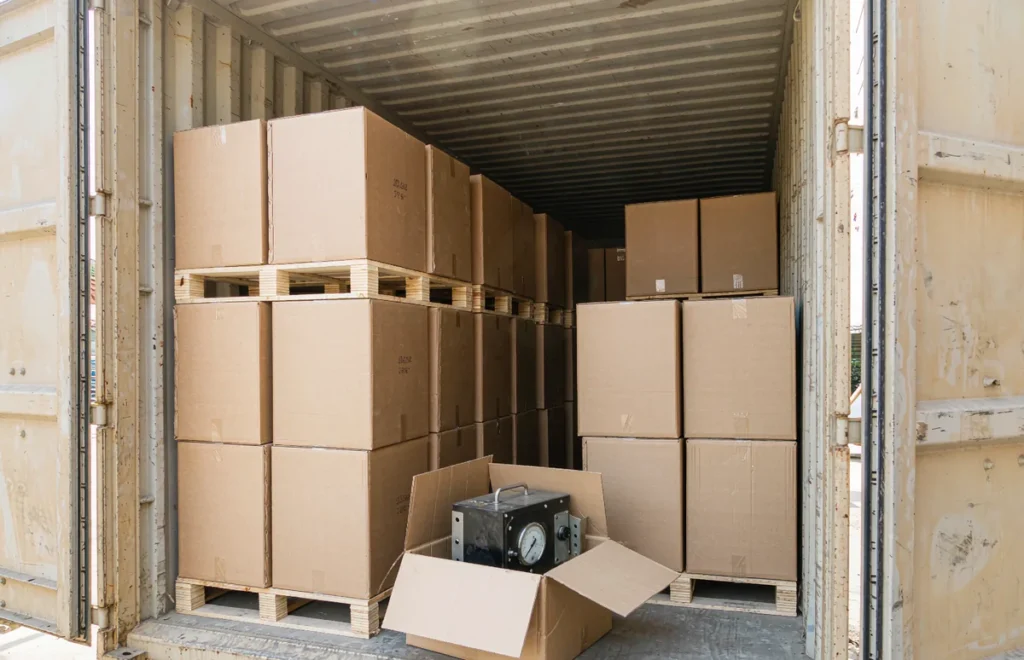
How Many Transformers Fit in a 20GP or 40HQ Container
Buyers ask this question in one of two moods. Some are trying to work out how much freight to budget. Others have already been quoted a container and want to know whether the number is real. Either way, the honest answer is that it depends, but not in a vague way. There is a method, and once you know it you can check anyone’s container figure in about two minutes, including ours.
I work at a transformer factory in Yueqing, Zhejiang, and loading day is part of my job. Transformers are dense, awkward, heavy goods, which means the maths that works for clothing or plastic toys does not work here. Let me take you through the container dimensions, the carton sizes, where the volume limit runs out and where the weight limit takes over, and how to turn a container count into a per-unit freight number.
The Container Numbers You Actually Work With
Manufacturers quote internal dimensions, and shipping lines quote maximum gross weight. Both matter, and neither is the number you should plan against.
A 20GP, the standard twenty-foot general purpose box, measures roughly 5.90 metres long, 2.35 metres wide and 2.39 metres high inside. That is about 33 cubic metres if you filled it perfectly to the walls and ceiling, which nobody does. In practice, with cartons stacked by hand, you get somewhere between 27 and 29 cubic metres of real cargo in. The door opening is slightly narrower and lower than the internal dimensions, which matters for anything palletised.
A 40HQ, the high cube forty, measures roughly 12.03 metres by 2.35 metres by 2.70 metres. That is about 76 cubic metres of space, and real loading lands around 63 to 68 cubic metres. So the 40HQ gives you roughly 2.3 times the volume of a 20GP for the same width and height class.
Now the part people miss. The maximum gross weight of both boxes is very similar, usually around 30,480 kilograms, and once you subtract the tare weight the payload comes out around 28 tonnes for a 20GP and around 26 tonnes for a 40HQ. Some lines rate them lower, and some routes cap the weight further. So the 40HQ gives you more than twice the space but almost no extra weight. For a container full of copper and laminated steel, that single fact decides almost everything.
Why Weight Usually Wins on Transformers
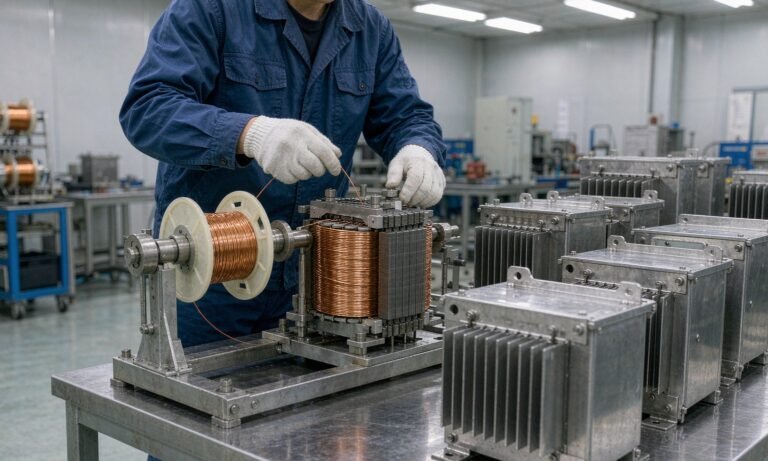
A transformer is a steel core, copper windings and a steel enclosure. There is no air in the product, which is exactly what you want in a transformer and exactly what you do not want in a shipping container.
Compare that with a typical consumer product, where a container is usually volume-limited and the payload never comes close to the maximum. With transformers it goes the other way more often than buyers expect, particularly in a 40HQ. A 20GP full of mid-size units may run out of cubic metres first. Put the same units in a high cube and you will hit the weight ceiling while there is still visible space in the box. That is not a mistake and it is not a reason to squeeze more in. Overloading a container is a serious problem: the line can refuse it, the port can fine you, the truck at destination can be stopped at a weighbridge, and the container floor can be damaged.
One more layer of practicality. Container payload is a marine limit, not a road limit. In several countries the maximum weight a truck may legally carry on the road is lower than what the container can hold, which is why experienced importers of heavy goods buy two 20GP boxes instead of one 40HQ when their inland route is strict. Check your local road limits before you book, not after.
Carton Sizes and Units Per Carton
Everything downstream depends on the carton. Here is how we pack our range, expressed as examples so you can follow the method. The real dimensions and weights for your order come from the packing list, and we send that before you book anything.
Small units in the 500VA to 1kVA class are light enough to go two to a carton, which saves a lot of volume because the carton walls do the work for both. From around 2kVA upward we pack one unit per carton with foam blocks, because a 15 kilogram transformer loose in a shared box will find the weakest corner of the box on the first bump. The 3kVA and 5kVA class units get a heavier double-wall carton and internal bracing, and at that size the carton itself starts to become a real share of the weight.
Two multiplication factors to keep in mind. Add roughly 8 to 12 percent to the product weight for the carton, foam and documentation to get the gross weight per carton, because customs and the shipping line care about gross, not net. And remember that cartons stack on their vertical axis. Turning a transformer carton on its side to gain height is not something we recommend and not something we will pack that way.
Estimated Container Loads by Capacity
The table below uses typical carton figures for illustration, a 20GP planning volume of about 28 cubic metres and a payload of 25,000 kilograms, and a 40HQ planning volume of about 65 cubic metres and a payload of 26,000 kilograms. Both limits are deliberately conservative, because a plan that only works at the absolute maximum is not a plan.
| Capacity band | Units per carton | Example carton, cm | Gross weight per carton | Approx. units in a 20GP | Approx. units in a 40HQ |
|---|---|---|---|---|---|
| 500VA to 1kVA, dual direction or Variac | 2 | 32 x 24 x 24 | About 16 kg | Around 3,000 | Around 3,200 |
| 2kVA class, step down or bidirectional | 1 | 40 x 30 x 28 | About 17 kg | Around 830 | Around 1,500 |
| 3kVA class | 1 | 45 x 33 x 30 | About 24 kg | Around 620 | Around 1,080 |
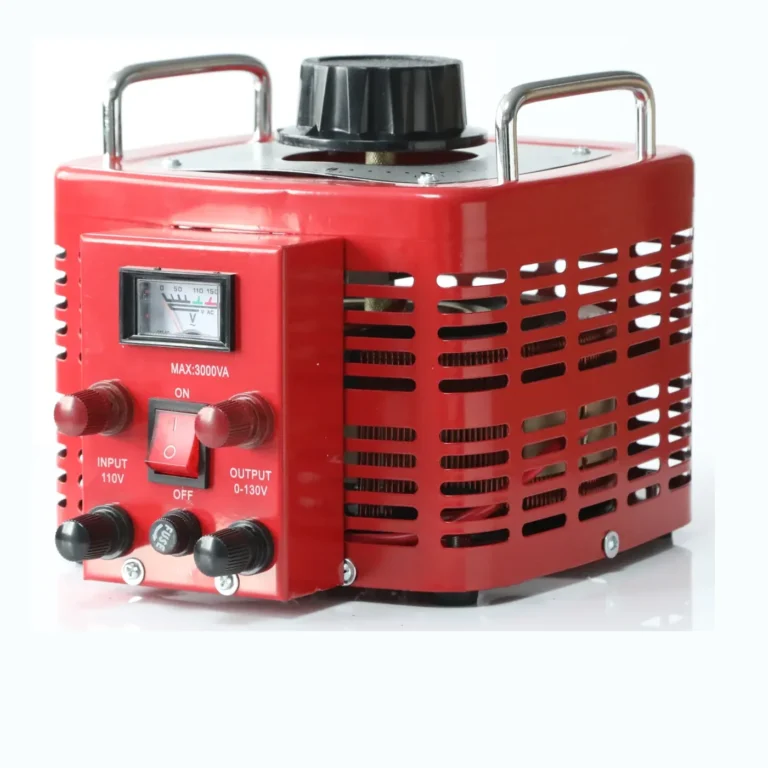
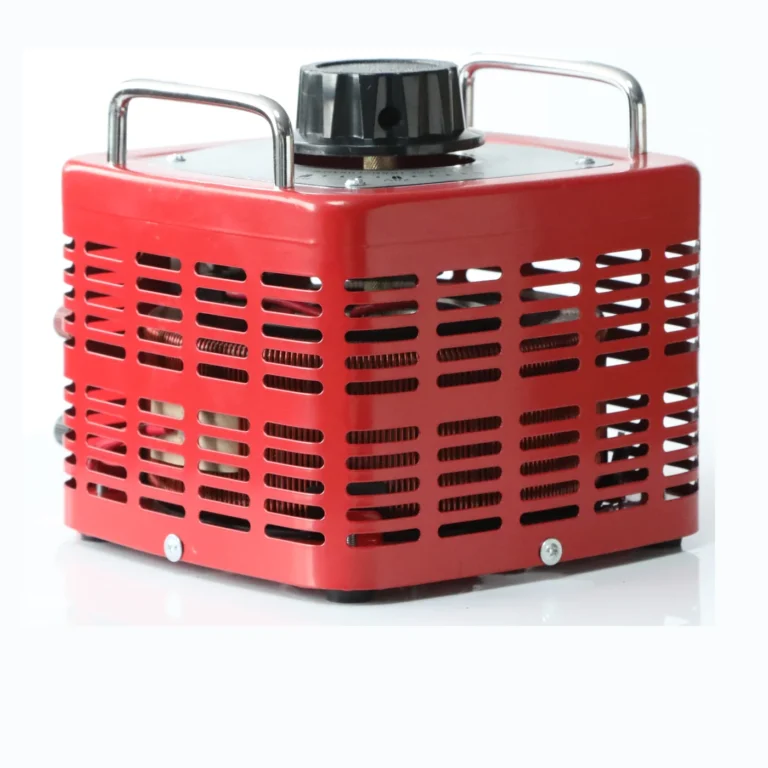
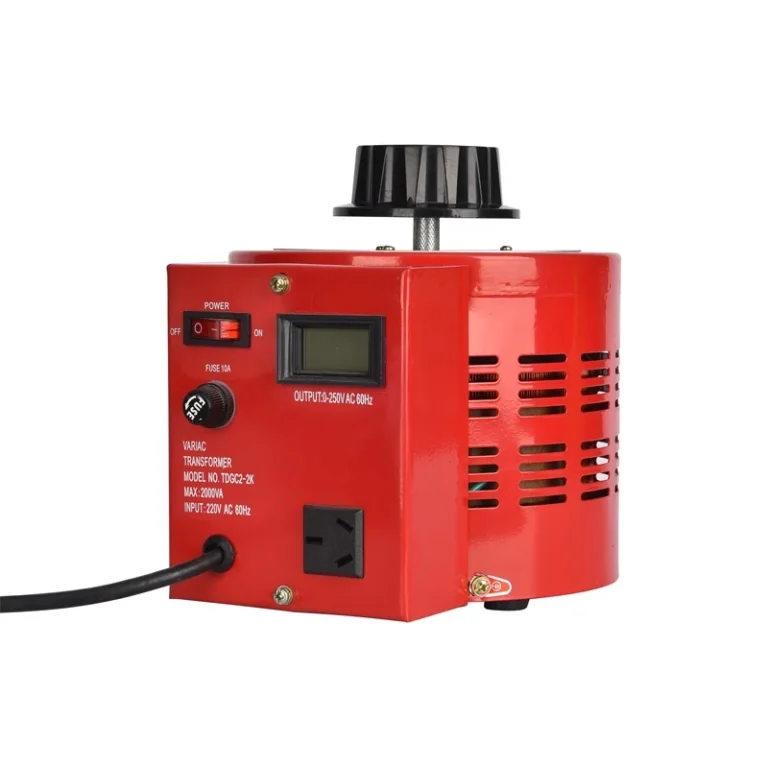
| Variac 3KVA | 1 | 45 x 35 x 32 | About 27 kg | Around 550 | Around 960 |
| 5kVA class, heavy duty | 1 | 52 x 38 x 34 | About 38 kg | Around 410 | Around 680 |
Read the middle column across and you will see the pattern in one glance. The two-kilogram-per-unit difference between the 2kVA and the 5kVA row is not what changes the answer. The carton volume is. A 5kVA unit takes roughly twice the space of a 2kVA unit and more than twice the weight, so the container count drops to about half in a 20GP and under half in a high cube.
You will also notice the 1kVA row being close to the same in both boxes. That is the crossover in action. In a 20GP those small cartons run out of volume just about when they run out of weight, so doubling the box roughly doubles the load in the 40HQ until weight takes over near 3,200 units.
Re-running the Numbers for Your Own Order
You do not need to trust my table. Use your own figures and it takes two minutes.
- By volume: cartons per container equals planning volume divided by carton volume in cubic metres. For a 20GP, divide 28 by the carton volume. For a 40HQ, divide 65.
- By weight: cartons per container equals planning payload divided by gross weight per carton. Use 25,000 kilograms for a 20GP and 26,000 for a 40HQ, and be more conservative if your line rates lower.
- The answer is whichever of the two is smaller. That is the one that stops you first.
- Then sanity-check the layout. Divide the container floor area, about 13.9 square metres for a 20GP and about 28.3 for a 40HQ, by the carton footprint. That gives cartons per layer. Divide the useful stacking height, about 2.29 metres and 2.60 metres, by the carton height to get layers. Multiply the two.
If the layout number comes out well below the volume number, your cartons are an awkward shape and you are losing space to air. That is worth knowing before you finalise an order, because a modest change in carton footprint can be worth hundreds of units in a high cube.
Pallets or Loose Cartons
This one comes down to labour at destination and how rough the last leg is.
Loose loading is denser. Cartons go in by hand, layer by layer, using the full floor and the full height, and you will typically fit 10 to 15 percent more than a palletised load. The trade-off is unloading time and handling. Somebody has to move every carton individually, and on a hot afternoon that is where damage happens.
Pallets cost you volume in two ways. The pallet itself is about 15 centimetres of height that carries nothing, and a palletised load cannot be packed to the same density because the pallets have to sit in straight lines. Standard 120 by 100 centimetre pallets also do not divide neatly into a 2.35 metre container width, so you usually lose a strip of floor along one side. Expect a palletised container to hold 10 to 15 percent fewer units.
My advice, for what it is worth. For small and mid-size units going to a warehouse with a forklift, loose loading with strong cartons is usually the better economic choice. For heavy 5kVA class units, or for any destination where the goods will be moved by hand, palletise. Your back and your claim record will both thank you.
Mixed Orders and What They Really Cost
Most real orders are mixed. A distributor wants some 2000VA, some 3000VA, a few 5000VA and a box of Variacs, because that is what their market asks for. How those quantities turn into a price and a reorder rhythm is covered in our wholesale buying guide.
Be realistic about the cost of mixing. You cannot stack a 52 by 38 centimetre carton on top of a 32 by 24 centimetre carton and pretend the space is not lost. Uneven stacks waste height, and odd corners cannot be filled. As a working rule, a mixed container carries about 85 to 90 percent of the sum of what each model would carry on its own. So if you are planning a mixed load, take your individual totals, add them up, and then take 10 to 15 percent off.
There is a way to reduce that loss, and it costs nothing to ask. Tell us the mix before you order, and we will sequence the packing so the heavy cartons go in first along the floor and against the walls, with the smaller cartons filling the upper layers and the gaps. Loading order matters more than most buyers realise, and it is the reason we ask for the full model list before we start producing rather than a week before the ship sails.
Working Backwards to Freight Per Unit
This is the calculation buyers find most useful, because it turns a container quote into something you can put in a price list.
Take the total ocean freight for the container, add the origin charges, the terminal handling at both ends, the documentation, the customs clearance and the inland delivery if you are using CIF or a door term. That total is your landed logistics cost for the shipment. Divide it by the number of units actually loaded, and you have the logistics cost per unit.
Now watch what happens across the capacity range. If a 40HQ costs you a given amount to move, and it holds around 1,500 units of the 2kVA class, your per-unit logistics cost is that amount divided by 1,500. If the same box holds around 680 of the 5kVA class, the same freight is spread over fewer than half as many units, so the per-unit figure more than doubles. Both statements assume the same container cost, which is roughly true on the same route.
That is the whole reason a 5kVA transformer always looks more expensive landed than the factory price suggests. It is not margin. It is the fact that you are shipping a heavy object by sea, and you are paying per box, not per kilo. If you are pricing these units for resale, build the logistics number in per model rather than averaging across the range. Averaging will make your freight look cheap on the small units and your prices uncompetitive on the large ones.
Two practical notes. Ocean freight moves constantly, so get a current rate from your forwarder the week you plan to book rather than working from a figure six months old. And do not forget the charges that are not freight: destination terminal handling, customs brokerage, duty and the truck at the far end often add up to more than the sea leg on short routes. Ask your forwarder for an all-in landed estimate so you are comparing like with like.
Packing Details That Prevent Claims
A few things we do on every shipment, and a few you should ask for if your route is rough.
Cartons are double-walled for anything above the smallest sizes, with foam corner blocks around the transformer so the steel does not touch the carton wall. Units are bagged against moisture, because a container crossing the tropics can sweat inside, and a damp transformer on arrival is a warranty argument nobody enjoys. Heavy units get internal bracing so the core cannot move inside the enclosure. Every carton is marked with the model, the quantity, the gross weight and the carton number, and the marks match the packing list exactly.
For long sea legs or rough inland routes, ask for the heavier export packing option. It costs a little more per carton and it is the difference between a claim and a delivery. If you want to know how to keep the units healthy after they arrive, including how to store them before installation, our piece on Transformer Shipping and Storage: Keep Units Alive covers moisture, ventilation and stacking limits in more detail.
What to Send Us Before You Book a Container
Give us the model list with quantities, your destination port, whether you want pallets or loose loading, and how strict the road weight limit is on your inland route. We will send you the packing list with carton dimensions, net and gross weight per carton, total cartons and total gross weight, so you can run the numbers above with real figures instead of my examples. Our minimum order is 10 pieces per model, production runs 15 to 25 days, and we ship FOB Ningbo or Shanghai with a 12-month warranty.
If you are still working out which models belong in the mix, our page on step up & down transformers explains what each type does and where it fits. There are also more transformer buying guides on the site covering sizing, customs and the practical side of importing, which is where most of the money in a container order actually gets won or lost.
And if you would rather we just did the arithmetic, send us the order list and we will tell you how many boxes you need, which one it fills, and what the freight comes to per unit. Ten minutes of messages beats paying for a container that leaves a third of its capacity on the quay.
Container Loading Questions Buyers Ask Most
These are the ones that reach us every week, answered the way I would answer them on a call.
How many transformers fit in a 20GP container?
It depends on carton size. Using typical cartons and a planning volume of about 28 cubic metres with a 25,000 kilogram payload, a 20GP holds roughly 3,000 units in the 500VA to 1kVA class, around 830 of the 2kVA class, around 620 of the 3kVA class and around 410 of the 5kVA class. Always confirm against your own packing list.
How many fit in a 40HQ compared with a 20GP?
A 40HQ gives you roughly 2.3 times the volume, about 65 cubic metres of real cargo against 28, but only about 26 tonnes of payload instead of 25. So doubling the box roughly doubles the load for small units, while larger units hit the weight ceiling first. Expect around 1,500 of the 2kVA class and around 680 of the 5kVA class.
Which limit comes first for transformers, volume or weight?
It depends on the box. In a 20GP, volume usually runs out first for transformers, because the cartons fill the space before the payload is reached. In a 40HQ the same units often reach the weight ceiling while space remains visible. Calculate both and take the smaller answer. Also check your destination road weight limit, which can be stricter.
Should I ship transformers on pallets or loose in the container?
Loose loading is 10 to 15 percent denser and usually cheaper. Pallets cost you the pallet height and some floor space, but they make unloading far faster and reduce handling damage. For small and mid-size units going to a warehouse with a forklift, go loose. For heavy 5kVA class units, or anywhere the goods get moved by hand, palletise.
How do I work out the shipping cost per transformer?
Add the ocean freight to the origin charges, terminal handling, documentation, clearance and inland delivery. That total is your logistics cost for the shipment. Divide it by the units actually loaded and you have the cost per unit. The same container holds far fewer 5kVA units than 2kVA units, so per-unit freight more than doubles across that range.
Send us your order list and we will work out the container for you. Tell us the models and quantities, your destination port, and whether you want pallets or loose loading. We will send the packing list with carton dimensions and weights so you can see exactly what fits, normally the same working day.
Or talk to us directly: WhatsApp +86 197 3022 6757 · Email sales@wilmall.com
MOQ 10 pcs · Lead time 15-25 days · FOB Ningbo or Shanghai · 12-month warranty