Step Down Transformer for Salons: 110V Equipment Guide
A salon is one of the trickiest places to size a transformer, and it is almost never because of the voltage. It is because of the arithmetic. Five styling stations with five 1875W hairdryers looks like 9375W on paper, which would send anyone shopping for an absurdly large unit. Real life is different. Three dryers run at once, the steamers are going, the towel warmer is on, the reception lights are burning, and the box on the floor still has to keep up without tripping at the busiest hour of a Saturday. Get that arithmetic right and a salon runs beautifully. Get it wrong by a size and you will hear about it from the first stylist whose dryer cuts out mid-blowout.
I work at a transformer factory in Yueqing, China, and salon orders come to me from hair studios, barbershops, nail bars, day spas, lash and brow salons, and small chains kitting out several branches at once. The orders themselves are simple. The sizing conversation is where the value is, so let me walk you through it the way I would over WhatsApp.
Why a Salon Cannot Be Sized One Appliance at a Time
The short answer is that salon equipment is greedy and it runs in parallel. A hairdryer does not sip power and taper off like a battery charger. A 1875W dryer pulls close to its full rating for as long as the stylist holds the trigger, and on most models that figure barely drops when you switch from hot to warm, because the motor and the airflow are still working. So the load on your transformer is not a gentle average. It is a hard, flat draw that starts and stops dozens of times an hour.
The second reason is that every station wants to work at the same time. A salon does not have one busy stylist. It has four or five, and they all start a blow-dry within ten minutes of each other because that is how appointments are booked. That is when the transformer either copes or it does not.
And then there is the electrical detail people miss. A straightener is rated maybe 40W to 60W, which sounds trivial, but it is a resistive heater and it draws full power whenever the thermostat is on, and it does that with a 1875W dryer running on the same station. Add a steamer at 1800W in the treatment room, a towel warmer, an LED lamp, and the total is nothing like the single-appliance figures you were looking at when you bought the equipment.
What the 110V Equipment in a Salon Actually Draws
Here is what lands on the load sheet when a salon sends me their list. Take your own figures off the nameplates where you can, because models vary a lot.
- Professional hairdryers, 1200W to 1875W, and they pull that figure continuously while they run.
- Flat irons and curling wands, typically 40W to 120W, cycling on and off as the thermostat works.
- Steamers and facial steam units, 500W to 2000W, with a heating element that runs for long stretches.
- Towel warmers and hot towel cabinets, 200W to 800W, on for most of the day.
- Massage chairs and massage tools, 60W to 300W, mostly small motors.
- Foot spas and nail stations, 200W to 800W, with a heater and a pump running together.
- Nail drills, sterilizers and UV or LED lamps, 20W to 200W each, one per nail table.
- Wax heaters, airbrush and oxygen machines, 50W to 400W, and they are usually left on all day.
- Reception and mirror lighting, fans and audio, 100W to 600W for the room.
What does not need a transformer, and this is worth checking because it can cut the size of your order: modern LED lighting, phone chargers, laptops and most newer electronic beauty devices with a 100-240V, 50/60Hz rating. Those run straight off your 220V supply with a plug adapter. On a salon fit-out with twenty small devices, that check can drop you a whole size, or two.
| Salon equipment | Typical running watts | Duty pattern | Sizing note |
|---|---|---|---|
| Professional hairdryer | 1200 – 1875 W | Flat draw while in use | The single biggest load at any station |
| Flat iron or curling wand | 40 – 120 W | Cycles with thermostat | Small, but it is on all day |
| Steamer or facial steam unit | 500 – 2000 W | Long heating periods | Treat it like a small appliance, not a gadget |
| Towel warmer or cabinet | 200 – 800 W | On for most of the day | Always-on load, easy to forget |
| Foot spa or nail station | 200 – 800 W | Heater plus small pump | Count it if two run together |
| Massage chair or tool | 60 – 300 W | Small motors | Minor, add it into the total |
| Mirror and reception lighting | 100 – 600 W per room | Steady, all day | LED loads are often not converted at all |
How to Add Up a Salon: Stations, Not Appliances
Here is the method I use, and it takes about five minutes. Count the stations instead of the devices. For each styling station, assume a hairdryer plus a straightener plus a clipper or lamp, and treat it as 2000VA while it is working. Then decide how many stations genuinely work at the same minute during your busiest hour. Add the treatment room loads on top, add 25 to 30 percent headroom, and you have your figure.
Let me run a real example. A four-station hair salon. At peak, three stylists have dryers running, which is 5625W, and two straighteners are cycling at 60W each, call it 120W. The treatment room has a 1500W steamer going, a 400W towel warmer, and the room lighting and music come to 300W. Total is roughly 7945W. Add 30 percent and you are at about 10.3kVA. That is not one box on the floor. That is either a large unit in the back room with 110V circuits run to the stations, or three separate units serving three stations on separate feeds.
Now the same salon at a quiet hour. One dryer, one straightener, the towel warmer and the lights. That is 1875W plus 60W plus 400W plus 300W, about 2635W, and a single 3000VA unit would cover the whole room. Which is exactly why I ask buyers how the salon actually operates instead of just asking for station count.
| Salon size | Realistic peak at busy hour | What we usually suggest |
|---|---|---|
| 1 station, home studio | Around 2500 W | One ST-2000, RCD built in |
| 2 to 3 stations | 3000 – 6000 W | One unit per station, or one larger unit per pair |
| 4 to 6 stations | 6000 – 11000 W | Split into two or three zones, one unit per zone |
| Treatment rooms and spa | Add 1 – 3 kW per room | Separate unit for the treatment side |
| Nail bar | 500 – 2000 W per table group | Small unit per group, cheap to duplicate |
Counting Simultaneity at the Busy Hour
This is the number that decides your order, and you know it better than we do. Think about your worst Saturday. How many dryers are actually running at the same time? For most salons with four stations, the honest answer is two or three, because someone is always mixing colour, sweeping, or talking to a client with the dryer off. If you tell us three, we size for three and add headroom.
There is also a trick that costs nothing and buys you a size. If your stations are 110V appliances on separate transformer units, the peaks do not stack as badly, because a dryer starting on one unit does not load the same winding as a dryer on another. Splitting a salon into two zones instead of one central box is often cheaper than buying the single huge unit, and it keeps you running if one unit ever needs service.
Per Station Units or One Big Unit?
For salons I usually lean towards one unit per station or one unit per pair of stations, and there are two reasons. Fault isolation is the first. If a box fails on a busy Saturday, one station goes down instead of the whole salon, and a spare unit from the back room fixes it in five minutes. Cable length is the second. Short runs from a unit under the station to a socket at the mirror mean less voltage drop and a dryer that heats the way it is supposed to.
A central unit in the back room still has its place. It suits a fit-out where the building already has 110V circuits, or where you want the noise and heat away from the salon floor. If you go that route, keep the unit in a ventilated position and make sure the circuits and breakers downstream match the load at each zone.
The Units We Build for Salon Orders
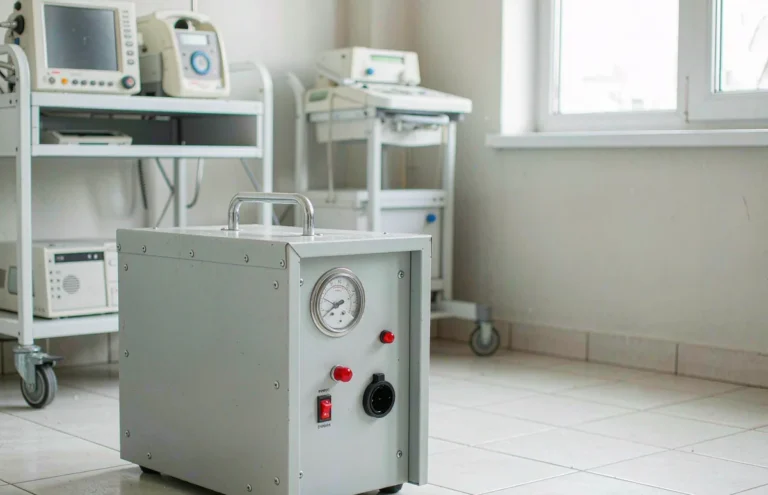
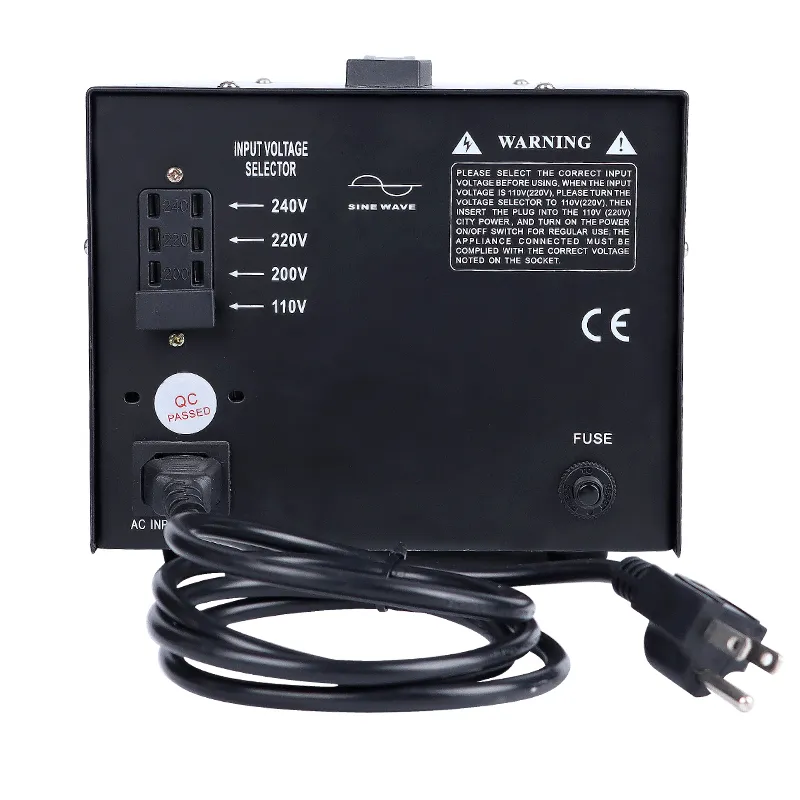
We are a factory, not a trading company, so I can tell you exactly what comes off our line. The ST-2000 is a 2000VA step down transformer, 220V in and 110V out, with RCD protection built in. It is the unit I quote for a single station with a dryer, a straightener and a lamp, and it is the unit most home studios and small barbershops buy. The RCD earns its place in a salon more than almost anywhere else, because there is water at every basin and wet hands on every socket.
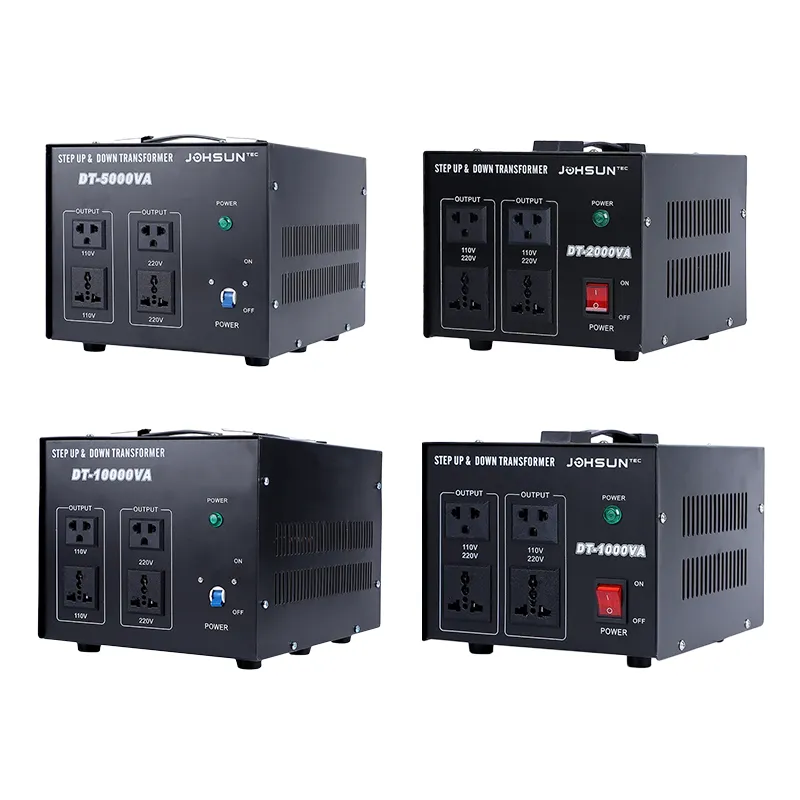
When the load climbs past what one station needs, the STU series takes over. STU-3000 and STU-5000 are bidirectional, stepping up as well as down, and they carry the heavier side of salon work: a pair of stations on one unit, treatment rooms with steamers, spa equipment and the nail bar. Bidirectional matters here because salons buy equipment from everywhere, and one day you will bring in a 220V machine that needs to go the other way.
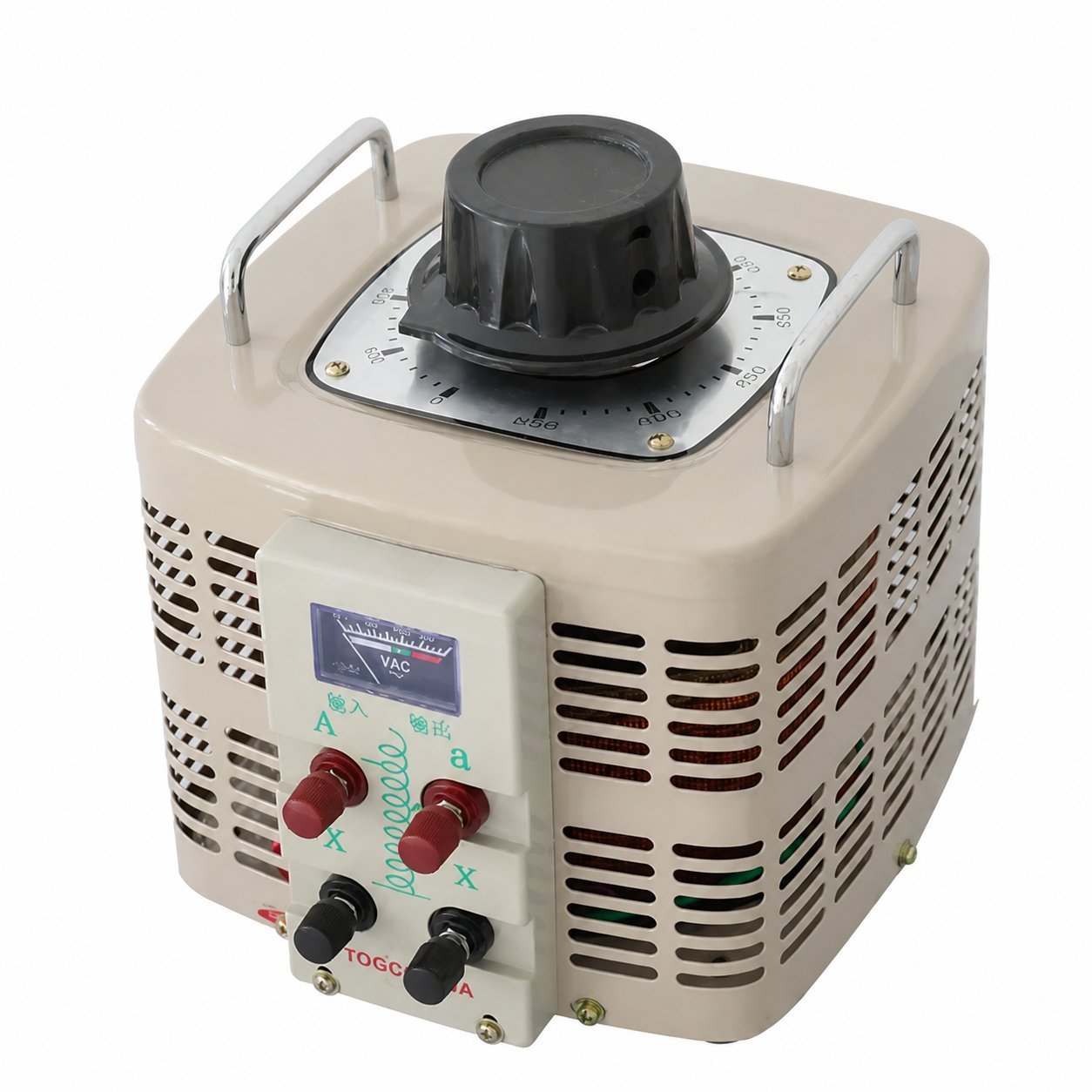
Our DT-1000VA is a smaller bidirectional automatic unit. It suits a single nail table, a reception desk or a brow station where a modest load needs to work in either direction without anyone thinking about it. And the Variac range at 500VA, 1KVA, 2KVA and 3KVA gives you adjustable voltage, which salons find useful when a batch of imported devices behaves differently at 105V than at 115V. It is worth understanding the difference the voltage makes, and if you want to compare step up, step down and adjustable options, our page on variable transformers (variacs) sets it out clearly.
Wet Floors, RCD and Simple Safety
RCD protection is the first thing I raise with salon buyers, and I would rather lose a sale than see someone skip it. On the ST-2000 it is part of the build, so a fault on the 110V side trips the unit locally instead of waiting for a breaker at the far end of the building. In a room with basins, wet floors and hands that have just come out of a shampoo bowl, that is not a luxury. Do not trade it away to save a few dollars per unit.
Earthing comes next. The enclosure has to be bonded to the building earth, and the 110V side should be a proper circuit with a proper socket at each station, not a chain of extension leads taped along the mirror. We see this in almost every salon photograph that lands in my inbox, and it is the easiest thing on this list to fix before opening day.
Ventilation matters too. A transformer is a magnetic device and it runs warm under load. Sliding one into a closed timber cupboard under a basin is how a good unit becomes a short-lived one. Give it air, keep the vents clear, and it will run for years in a salon that operates six days a week.
Noise Is the Other Reason We Split the Load
A transformer hums under load. It is not loud, but a big unit working hard twenty centimetres from a client’s ear is not what you want in a styling area. Splitting the salon into two or three smaller units, placed in the back room or a service cupboard, keeps the noise where the clients are not. It also spreads the heat, and it means the box doing the hard work is not sitting under the mirror where someone will eventually kick it.
MOQ, Lead Time and Testing
The commercial details, since buyers ask them first. Minimum order is 10 pieces, whether you are fitting one salon or rolling out a chain. Lead time sits at 15 to 25 days, depending on quantity and whether you want custom labelling. We ship FOB Ningbo or Shanghai, and every unit carries a 12-month warranty. Each box includes a test record from the batch your unit came from, showing input voltage, output voltage under load and no-load current, because we test 100 percent of what we build in our own factory here in Yueqing.
Customisation works well for salon orders. We can fit the socket type your country uses, set the output to 110V or 120V to match your equipment labels, supply longer output leads so a unit can sit in a cupboard and still reach the mirror, print your salon or distributor label on the faceplate, and pack units individually so they can go straight to each station on opening day.
What to Send Us for a Sized Quote
You do not need a specification document to talk to us. Send what you have: the number of styling stations, the number of dryers and their wattage, a list of the treatment room and nail equipment, your mains voltage and frequency, the socket type at your stations, and how many units you think you need. Tell us how many stations work at the same time on your busiest day, because that single number changes the answer more than anything else. From that we can size the units, quote the quantity, and turn the quote around the same working day.
Some reading that helps while you put that list together. If you are still choosing dryers and irons, our guide to a Hair Dryer Step Down Transformer: 220V to 110V Guide covers the appliance side in detail. And there is a full set of more application guides on the site, covering everything from steamers to spa equipment.
If any of the numbers are unclear, send the list anyway. Sizing a step down transformer for a salon is routine work for us, and ten minutes on WhatsApp beats ordering the wrong capacity for every station in the room.
Salon Transformer Questions Buyers Ask Most
These are the messages that come through every week, answered the way I would answer them on a call.
What size step down transformer do I need for a salon with several stations?
Count stations, not appliances. Treat each working styling station as about 2000VA while a 1875W dryer is running, then decide how many stations truly work at the same minute. A four-station salon peaking at three dryers plus a steamer lands near 10kVA, which is better handled by two or three units than one large one.
Why can I not just add up all the hairdryers in the salon?
Because they never all run at once. Five 1875W dryers add to 9375W on paper, but in a working salon two or three are in use at the same time, and the rest are off or cooling. Size on realistic simultaneous use, then add 25 to 30 percent headroom, and you will buy the right capacity instead of an oversized box.
Can one transformer run a whole salon, or should I buy one per station?
Both work, but we usually suggest one unit per station or per pair of stations. If one unit fails you lose a single station rather than the whole salon, cable runs stay short so voltage drop is small, and you can keep the humming and the heat away from the styling floor and in a back room.
Do salon straighteners and nail lamps need a step down transformer?
Usually yes, if they are 110V models, because a straightener draws 40W to 120W whenever its thermostat is on, all day long. Nail lamps, drills and small devices add up across a nail bar. Check each label though, since some newer electronic beauty devices are rated 100-240V and run straight off your 220V supply.
Is RCD protection important for a salon transformer?
It is the first thing I raise with salon buyers. Water at every basin, wet floors and wet hands make the 110V side of a salon circuit a genuine risk. The ST-2000 has RCD protection built in, which trips locally on a fault instead of waiting for a breaker elsewhere in the building. Do not cut it to save a few dollars.
Send us your station count and equipment list, and we will size it for you. Tell us how many stations you have, how many run at once at your busiest hour, what 110V equipment sits on each one, and which country you are in. We will come back with a recommended unit, a quantity and a price, normally the same working day.
Or talk to us directly: WhatsApp +86 197 3022 6757 · Email sales@wilmall.com
MOQ 10 pcs · Lead time 15-25 days · FOB Ningbo or Shanghai · 12-month warranty