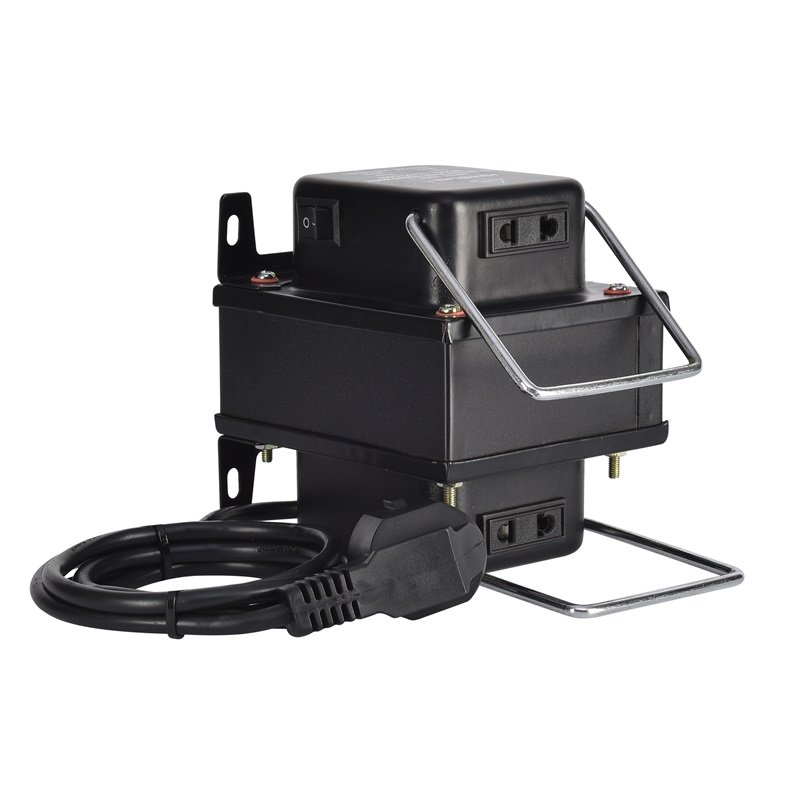
How Does a Low Voltage Transformer Work? A Simple Explanation
You do not need an electrical engineering degree to understand how a low voltage transformer works. Honestly, you need about five minutes and a decent analogy. The one I use with buyers on WhatsApp is money changing: your wall socket hands out mains voltage in one currency, your light fixtures want a smaller currency, and the transformer is the exchange counter in between.
I build these units in our factory in Yueqing, China, so I have held every part I am about to describe. This article walks through what is physically inside the box, why it steps 120V or 220V down to 12V, 24V or 36V, and the two or three details that actually change how you should buy one.
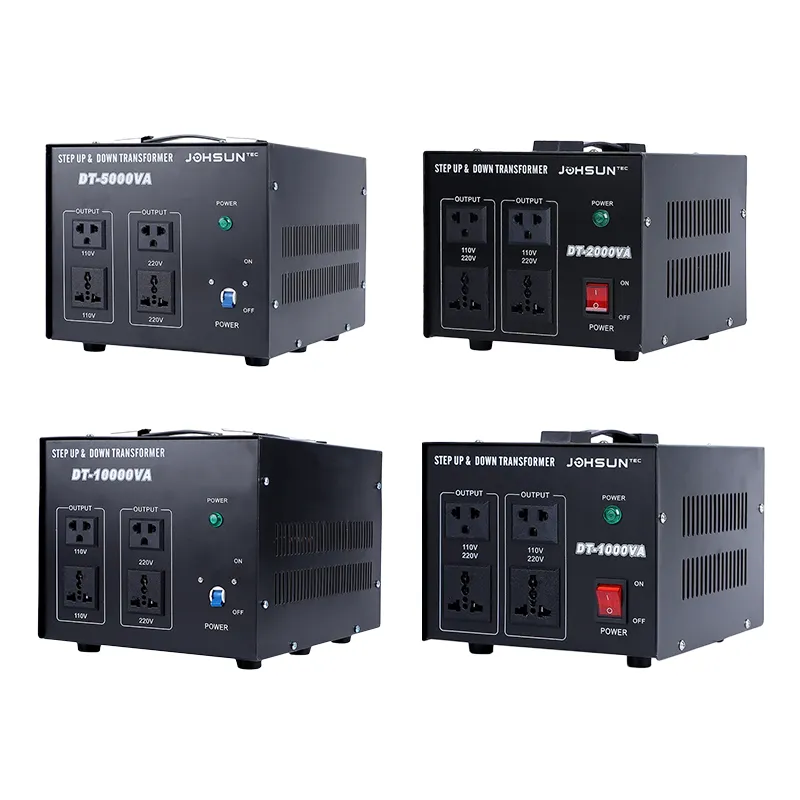
Inside the Box: Two Coils and a Steel Core
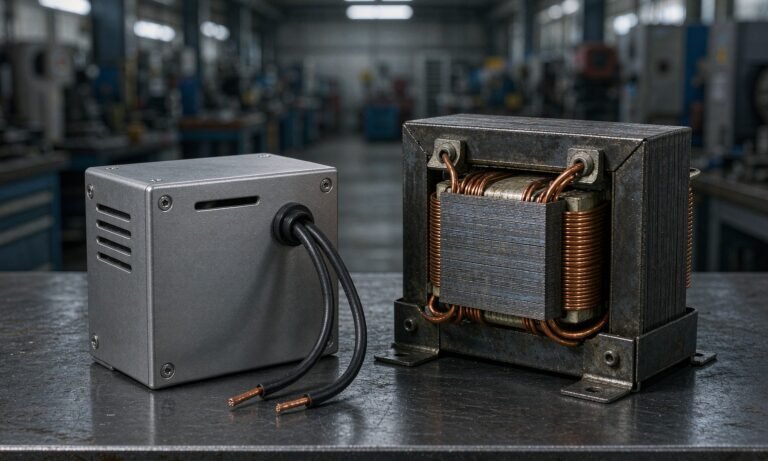
Open up any magnetic low voltage transformer and you find three parts. Two coils of wire and a core that connects them magnetically. The coil on the input side is called the primary, and it connects to your wall mains. The coil on the output side is called the secondary, and it feeds your 12V or 24V loads. Nothing connects the two coils directly, no shared wire, they only talk to each other through the core.
Here is the thing: the core does not conduct electricity between the coils. It conducts magnetism. When mains voltage pushes current through the primary, it creates a magnetic field in the core, and that field reaches across to the secondary coil and induces a voltage there. Energy crosses the gap as magnetism, then turns back into electricity on the output side. That is the whole mechanism.
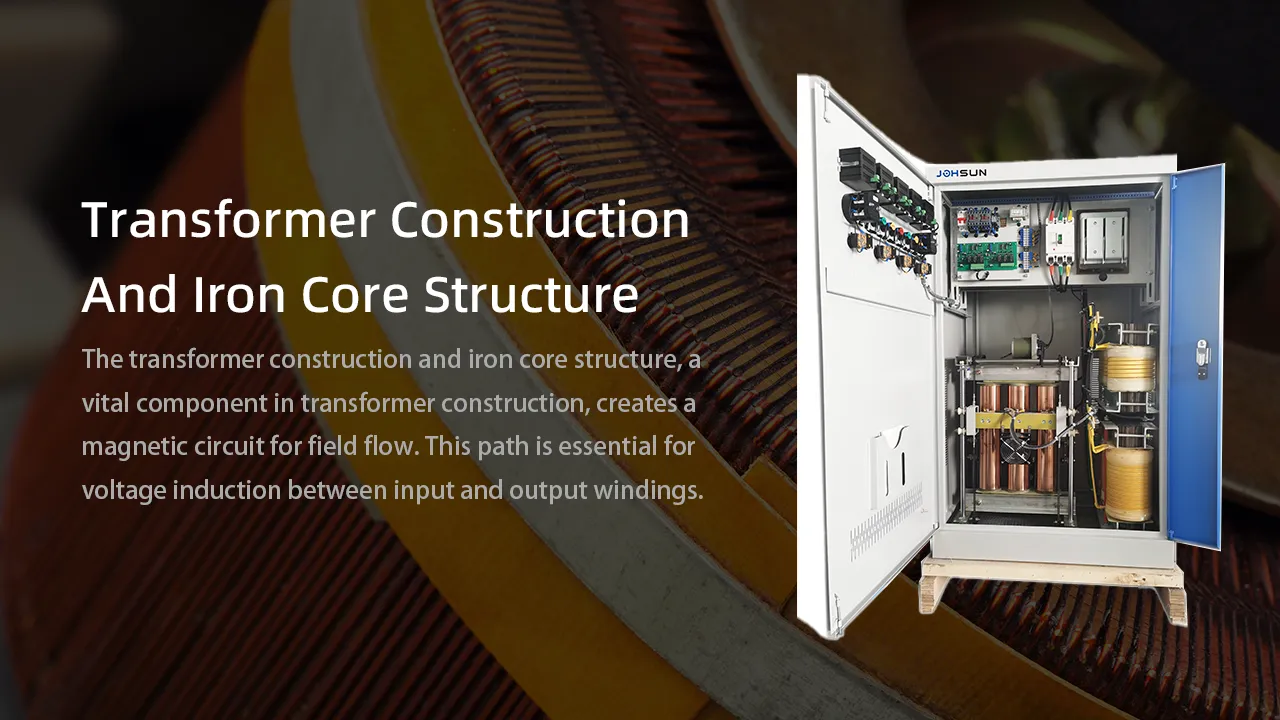
The core itself is a stack of thin steel laminations, usually shaped like a letter E and I fitted together, which is where the name “EI transformer” comes from. We wind most of our low voltage units on EI cores because they are cheap, proven and easy to mount in a panel. A round doughnut-shaped core, called toroidal, does the same job in a smaller, quieter package. The difference between the two is worth a read in our toroidal vs EI transformer comparison if you are choosing between them.
Turns Ratio: the Simple Math That Sets the Output Voltage
Why does one transformer give you 12V and another one 24V? It comes down to how many turns of wire are on each coil. If the primary has ten times more turns than the secondary, the output voltage is roughly one tenth of the input. Feed that unit 220V and you get about 22V on the secondary, feed it 120V and you get about 12V. The ratio of turns is the ratio of voltages. That is genuinely the whole rule.
This is why a transformer built for 220V input behaves differently on a 120V grid. The turns ratio is fixed at the factory, so the output voltage changes with whatever mains voltage you feed in. Buy a low voltage transformer for a 220V country and connect it to a 120V supply and your fixtures will run at half brightness or not at all. Check your mains voltage first, always.
One caveat real transformers have that the textbook picture skips: under load, the output sags a little. That is normal. Good units are wound with the secondary slightly high at no load, so it settles near the rated voltage when lamps are actually drawing current. We set that compensation on the winding machine at the factory, and it is one reason a cheap untested unit reads fine on a bench but dims badly on the job.
Why the Core Warms Up and Why the Unit Hums
Two things about a working transformer surprise people the first time. It gets warm, and it makes a soft hum. Both are normal, and both come from the core. The magnetic field that flips direction fifty or sixty times a second causes tiny losses inside the steel, which turn into heat. Those thin laminations exist to keep that heat down, which is why a well-built core uses many thin sheets rather than one thick block of metal.
The hum is the core steel physically flexing a microscopic amount each time the magnetic field reverses, sixty times a second in most countries. You hear a 60Hz buzz. A loose mounting bolt, a thin enclosure panel or a half-tight cover makes it louder, so part of our job at the factory is tightening every fixing and adding rubber pads where the unit sits in its housing. If a transformer arrives sounding like a beehive, nine times out of ten it is loose hardware, not a broken transformer.
Warm is fine. Hot enough that you cannot hold your hand on it is a warning sign. If that happens with a correctly sized unit, the usual causes are an overloaded secondary, a shorted cable on the output side, or poor ventilation around the enclosure. We cover that fault-finding in our troubleshooting guides, but the short version is: check your load before you blame the box. For buyers who run a low voltage transformer near its rated capacity all day, we recommend leaving a little breathing space around the housing and mounting it off the floor. A 100VA lighting unit barely warms up, but the same box loaded to the edge for eight hours on a machine line will run noticeably hotter. Leave the margin at the design stage and the temperature argument disappears entirely.
Autotransformer vs Isolated Design: Same Idea, Different Safety
Not every transformer is built the same way, and the difference matters when the load is a person. In an autotransformer, the primary and secondary share a single continuous winding, with a tap taken off partway down. It is cheaper, smaller and slightly more efficient, which makes it popular for simple voltage adaptation where the load is a motor or a heating element. But there is no physical separation between the mains side and the output side.
In an isolated design, the two coils are wound separately and only linked by the magnetic core. The output side floats completely free of the mains, which is a genuinely safer setup for lighting in wet places, for control circuits and for anything an operator might touch. Most low voltage lighting and machine-safety work should use an isolated unit. If you want the full breakdown of when each type is the right call, our isolation transformers section explains the difference in practical terms.
The shape of the core does not decide isolation. You can wind an autotransformer or an isolated transformer on the same EI or toroidal core. The safest common arrangement for 12V lighting is an isolated toroidal transformer, because the round core is light, quiet and easy to mount inside a weatherproof housing. But an isolated EI unit does exactly the same safety job for a lower price. Do not overpay for a round core if your enclosure has room for an EI.
Why 50Hz or 60Hz Changes Which Transformer You Buy
The frequency of your mains matters more than most first-time buyers expect. Transformers are designed around a supply frequency, because the core losses and the magnetic behaviour both depend on it. A transformer wound for a 50Hz country will run a little hotter and noisier on a 60Hz supply, but it generally survives. Run a 60Hz-designed unit on 50Hz, though, and the core can saturate and overheat, which is a real fire risk.
Before you import a low voltage transformer, check both numbers on your grid: the voltage and the frequency. Tell us both when you write in. A unit we export to Brazil for 127V 60Hz is wound differently from one we export to Germany for 230V 50Hz, and we build to your grid, not to a generic default. That is the kind of detail a factory can handle that a marketplace listing cannot.
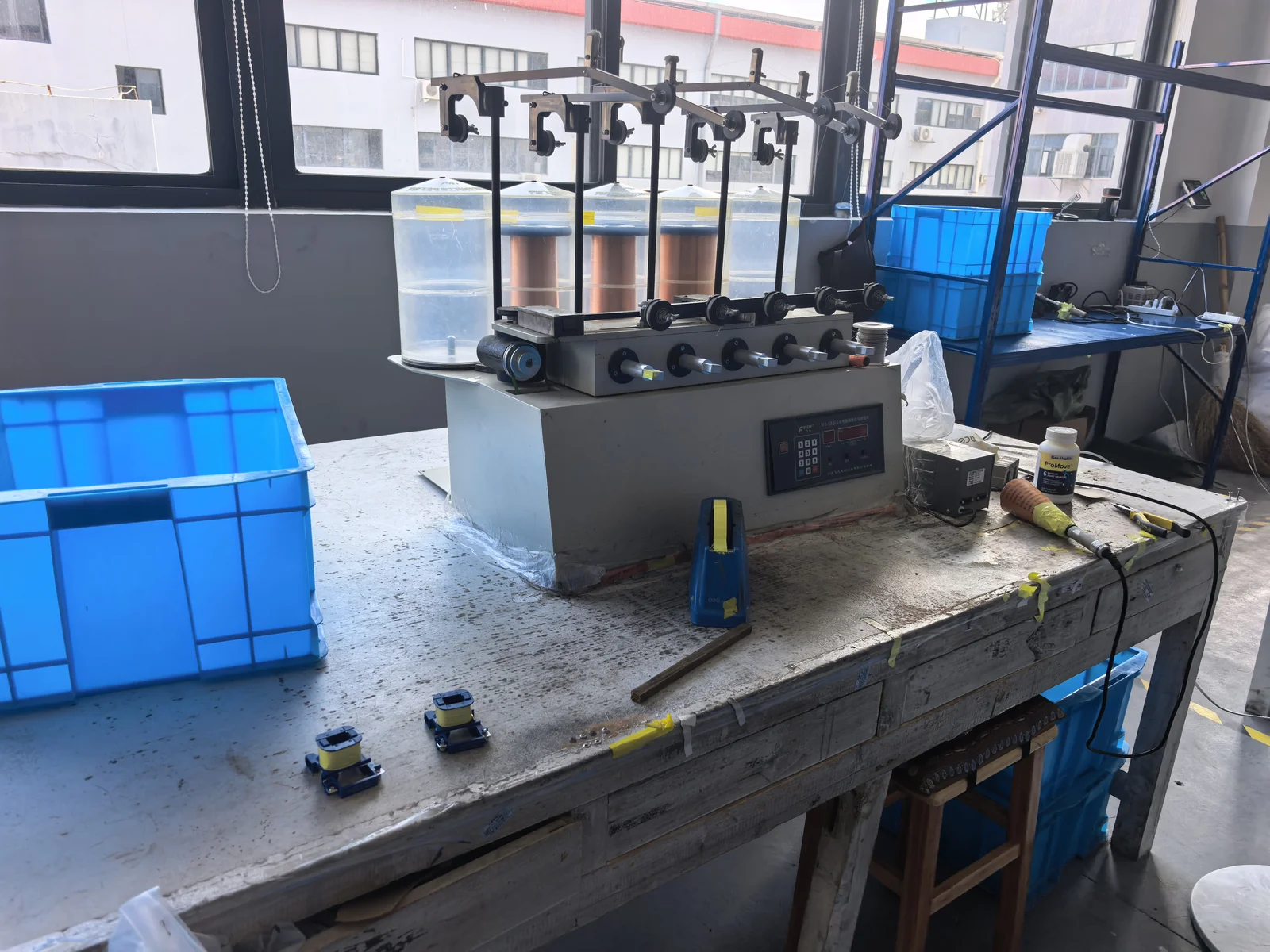
From Copper Wire to a Tested Unit: What the Factory Does
When a low voltage transformer leaves our workshop, it has already been through steps you cannot see from a product photo. We wind the coils on automatic machines with copper wire sized for the real VA rating, stack the core under pressure, and then test each unit under load with the meter readings written into a batch record. Input voltage, no-load current, output voltage at full load, temperature rise. If a unit does not hit the figures, it does not get a label.
That test record travels with your order. When you buy ten units or a thousand, you get the same paperwork we keep for our own quality control. It sounds like marketing when suppliers write it, which is why we would rather show you the meter photo than argue about it. Every low voltage transformer we ship is wound and 100% tested in our own factory in Yueqing, and the 12-month warranty is on top of that, not instead of it. One more thing worth knowing before you place an order: the voltage taps. Many of our low voltage units come with a couple of extra input taps, so the same transformer can be connected for 220V or 380V on the primary. That flexibility costs almost nothing at the winding stage, and it means one stock item can serve customers on different grids. When you write to us, mention whether you need single input or multi-tap, and we will quote accordingly.
Low Voltage Transformer Working Questions, Answered
These are the questions customers send us after reading a first explanation like this one.
How does a low voltage transformer step 220V down to 12V?
It uses the turns ratio between two coils. In a low voltage transformer, the primary coil connects to your 220V mains and the secondary coil has far fewer turns, so the voltage induced on it is proportionally lower. A unit wound for 12V output simply has roughly eighteen times fewer turns on the secondary.
Why does my low voltage transformer hum when it is working?
The steel core inside a low voltage transformer flexes microscopically every time the magnetic field reverses, sixty times a second on most grids, and that movement makes the hum you hear. It is normal. A loose mounting screw or a thin enclosure makes it louder. Loud buzzing usually means loose hardware, not a failing transformer.
Is an isolation transformer safer than an autotransformer for 12V lighting?
Yes, for lighting that people can touch, an isolated low voltage transformer is the safer choice because the secondary winding is completely separate from the mains. An autotransformer shares one continuous winding, so the output is not fully isolated. For outdoor or workshop lighting, choose an isolated unit.
Can I use a transformer made for 60Hz on a 50Hz power supply?
Running a 60Hz transformer on 50Hz is risky because the core can saturate and overheat. The reverse direction, a 50Hz unit on 60Hz, usually runs slightly hotter but survives. Always tell us your mains frequency and voltage when ordering so we wind the low voltage transformer for your actual grid.
Why does the output voltage drop when I connect my lights?
Every low voltage transformer sags a little under load, because the winding resistance and core losses consume a small share of the output. Good units are wound slightly high at no load so they settle near the rated voltage when lamps draw current. A big drop usually means an overloaded or undersized unit.
Want a low voltage transformer wound for your exact mains voltage and frequency? Send us your grid voltage, Hz, output voltage and VA requirement. We will confirm the design and send a quote from the factory.
Or talk to us directly: WhatsApp +86 197 3022 6757 · Email sales@wilmall.com
MOQ 10 pcs · Lead time 15-25 days · FOB Ningbo or Shanghai · 12-month warranty