
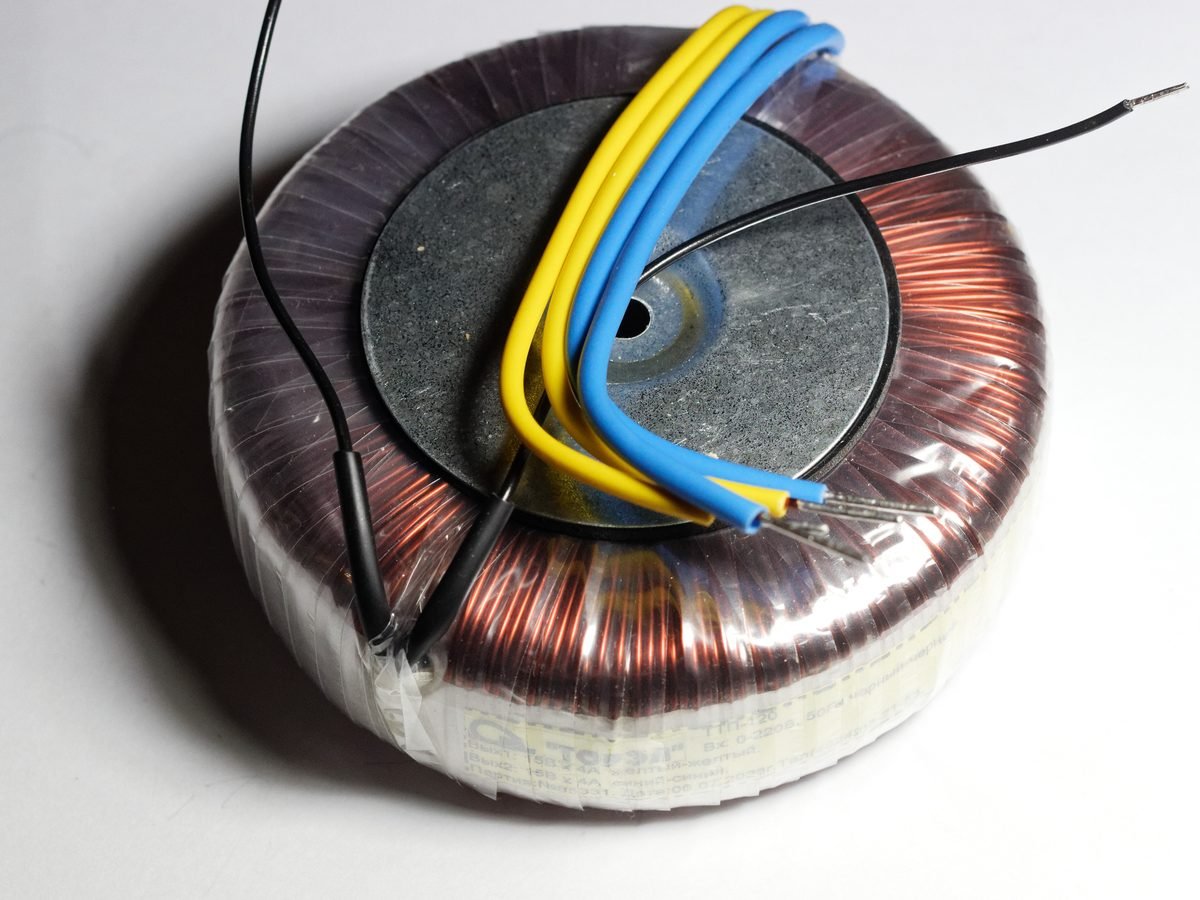
Toroidal Transformer 50VA-3000VA Ring Core
A toroidal transformer gets its name from the core: instead of stacked E-I laminations, the core is one continuous strip of grain-oriented silicon steel wound into…
- Factory-direct pricing, no middleman markup
- Custom voltage, capacity and branding (OEM)
- MOQ from 10 pcs, production 15–25 days
- 12-month warranty with reliable support
A toroidal transformer gets its name from the core: instead of stacked E-I laminations, the core is one continuous strip of grain-oriented silicon steel wound into a seamless ring. That single change removes the air gaps where a conventional core leaks flux, and the result is a transformer that runs cooler, hums less, and puts far less stray field into the circuits around it. We wind toroidal transformers from 50VA up to 3000VA in our own factory in Yueqing, China, and every unit is tested before it leaves the bench. If you are building audio equipment, medical devices, test instruments or anything else where noise and heat matter, this is the core geometry you want, and we build it in the ratings that actually get ordered.
Key Specifications
| Specification | Value |
|---|---|
| Models | TT-50 / TT-100 / TT-200 / TT-300 / TT-500 / TT-1000 / TT-2000 / TT-3000 |
| Capacity Range | 50VA to 3000VA (custom ratings on request) |
| Core Type | Continuous-wound grain-oriented silicon steel ring, seamless |
| Full-Load Efficiency | Above 95% (typically 95-98% depending on rating) |
| Input Voltage | 110V / 220V / 230V / 240V / 380V AC (single winding or dual primary) |
| Output Voltage | Any single or dual secondary from 6V to 240V AC |
| Frequency | 50Hz / 60Hz |
| Winding Material | Oxygen-free copper, vacuum varnish impregnated |
| Stray Field | Very low – no air gap in the magnetic path |
| Temperature Rise | Typically below 45 degrees C at full load |
| Mounting | Centre bolt with metal or resin centre pot, rubber pads included |
| Shielding | Optional electrostatic screen between primary and secondary |
| Warranty | 12 months, replacement-first |
What You Get
- Toroidal transformer wound to your specified primary and secondary voltages
- Continuous ring core, not cut or glued laminations
- Oxygen-free copper windings, vacuum varnish impregnated for low hum
- Centre mounting bolt with rubber isolating pads and metal washers
- Optional electrostatic screen for sensitive audio and medical circuits
- Batch test report with turns ratio, no-load current and insulation resistance
- 12-month replacement-first warranty
Why Choose This Model
A toroidal core beats a stacked lamination core in four ways that show up in the finished product. First, efficiency: with no air gap and the flux running along the grain of the steel, both no-load loss and copper loss drop, and full-load efficiency lands above 95 percent on most ratings. Second, stray field: the closed magnetic circuit means almost nothing leaks out, so you can mount the transformer near a phono stage, an ADC input or a sensor front end without picking up hum. Third, size and weight: for the same rating a toroid is typically around half the weight and noticeably shorter than a laminated equivalent, which matters when the enclosure is already tight. Fourth, audible noise: the core is one continuous piece with no loose laminations to buzz, and vacuum impregnation locks the windings in place, so the mechanical hum that plagues cheap transformers is largely gone. The trade-offs are real and worth stating plainly: a toroid has a higher inrush current at switch-on, so you may need a soft-start or a suitably rated fuse, and a toroid costs more per VA than a basic E-I core. Where the application cares about noise, heat or space, the extra cost pays for itself; where it does not, an EI core is the sensible buy. We build both, and we will tell you honestly which one your job needs.
How to Size It
Sizing a toroidal transformer is mostly about the steady load plus enough margin for the inrush. Add up the continuous VA of everything the secondary will feed, then apply a margin: we suggest 1.3x for resistive loads, 1.5x for rectifier and capacitor-input supplies, and 2x or more where motors, solenoids or large contactors switch on and off. Do not size purely on the average current, because a capacitor-input supply draws its current in short, high pulses near the peak of the waveform, and a transformer that looks adequately rated on a multimeter will still run hot. Tell us the load type, the duty cycle and the ambient temperature inside your enclosure, and we will size it for you and quote it the same day. If you already have a drawing or a sample of the transformer you are replacing, send it over; matching an existing unit is the fastest route to a firm quote.
How It Works
The physics is worth understanding because it explains the whole product. In a conventional E-I core, the magnetic path runs through flat laminations that butt against each other, and every joint is an air gap. Air has roughly a thousand times the magnetic reluctance of silicon steel, so those gaps cost you flux, and the flux that cannot stay inside the core escapes as stray field. A toroidal core has no joints at all: it is one continuous spiral of grain-oriented steel, and the grain runs around the ring in exactly the direction the flux wants to travel. That is why efficiency lands above 95 percent, why the stray field is low enough to mount the transformer next to a moving-magnet cartridge or a 24-bit ADC, and why the unit runs cool. The geometry has one consequence you should plan for. Because the core has no gap to limit inrush, a toroid will draw a large magnetising current for the first few cycles at switch-on – often ten to fifteen times the running current. On a 50VA unit nobody notices. On a 3000VA unit it will trip an undersized breaker. We recommend a slow-blow fuse or a type C or D curve breaker sized for the inrush, and on larger ratings a soft-start circuit. Tell us the rating and we will tell you what to fit.
Typical Applications
- High-fidelity amplifiers, pre-amplifiers and DAC power supplies
- Studio equipment, mixers and outboard audio gear
- Medical devices and laboratory instruments
- Test and measurement equipment
- LED lighting systems and architectural lighting
- Renewable energy inverters and control electronics
- Replacing noisy or overheating E-I transformers in existing enclosures
Testing Before Shipment
Every toroidal transformer we ship is tested before it is packed, and the results go on a report that ships with the order. We check the turns ratio on each winding against the design value, measure the no-load current and no-load loss at rated voltage, and verify the insulation resistance between windings and between each winding and the core. On units with a screen we confirm the screen is continuous and correctly terminated. We then run each transformer at full load into a resistive bank long enough to confirm the winding temperature stabilises inside the design limit. Nothing goes into a carton on the strength of a batch sample – the unit in your box is the unit that was tested. If you need specific type-test data, dielectric strength testing to a particular standard, or CE documentation for your market, tell us at quotation stage and we will include it.
Ordering, Samples and Shipping
Ordering is straightforward. Standard ratings from 50VA to 3000VA are made to order with a 10 pcs minimum, on a 15-25 day lead time. Samples are available and are paid by T/T before production starts; if you then place a production order, the sample cost is credited against it. Because every unit is wound to your voltage specification, we need four things to quote: the primary voltage (or dual primary voltages), the secondary voltage or voltages, the rating in VA, and the quantity. If you have a drawing, a photograph of the unit you are replacing, or a sample you can send us, that speeds everything up and removes any guesswork about mounting or termination. Standard shipping is FOB Ningbo or Shanghai, and we work with your forwarder or ours. Smaller sample quantities can go by air courier if you need them quickly.
Toroidal transformers, wound and 100% tested in Yueqing, China. MOQ 10 pcs, lead time 15-25 days, FOB Ningbo or Shanghai.
More from This Range
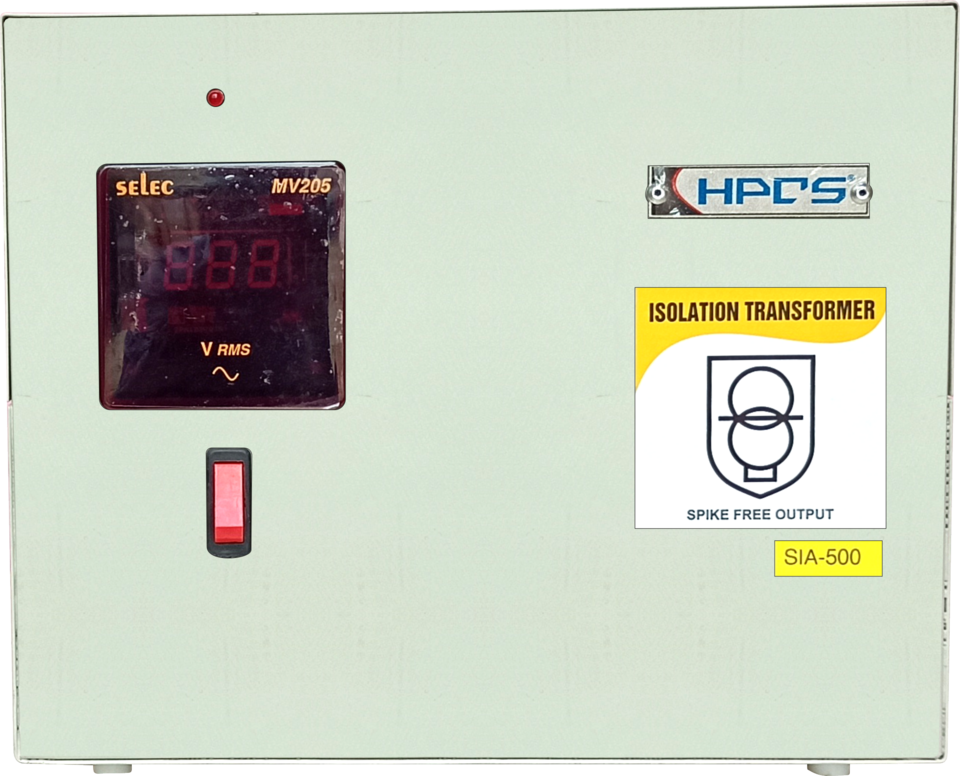
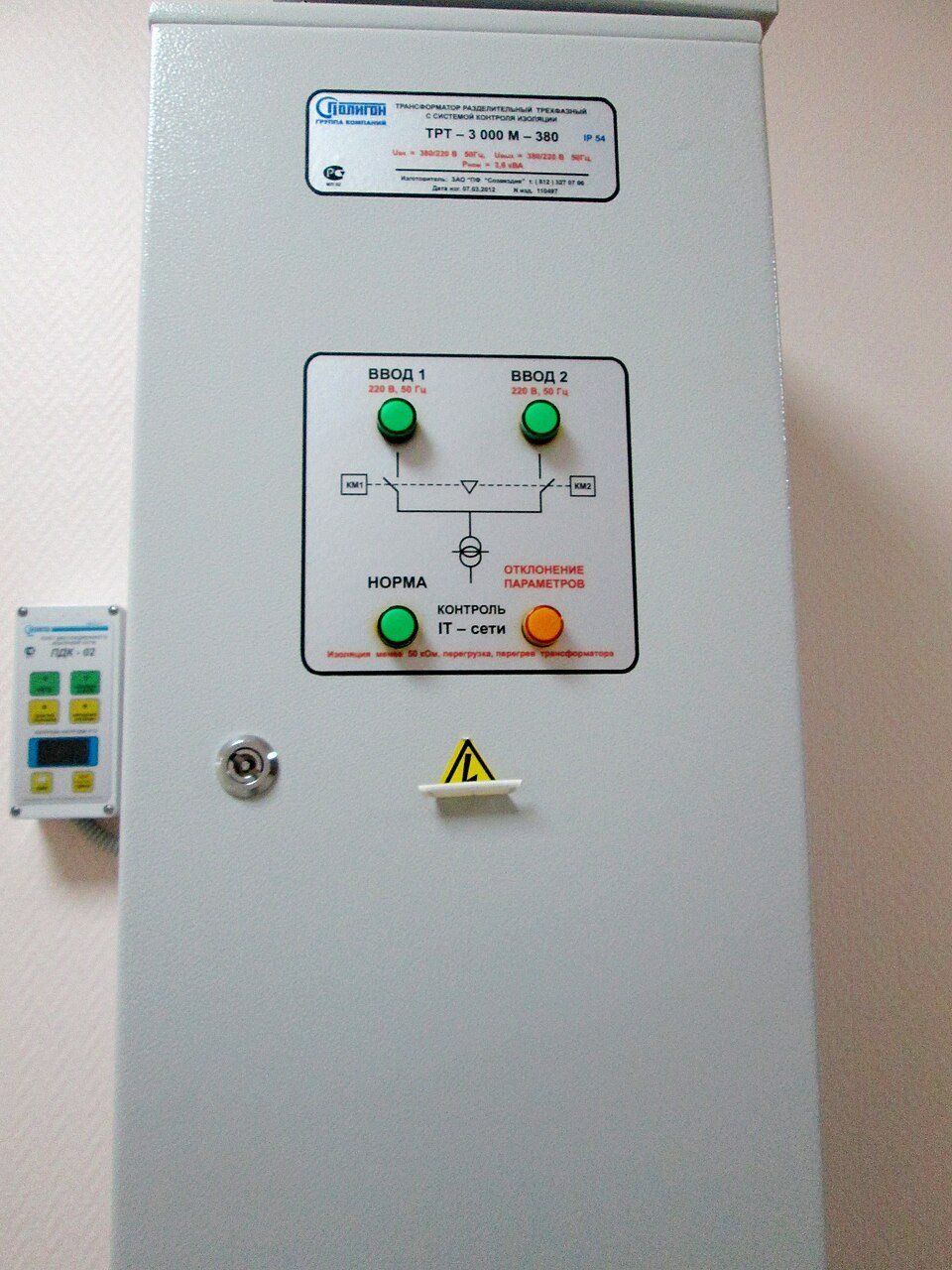 ISO-115 Audio Isolation TransformerHi-Fi and studio isolation
FAQ
What is a toroidal transformer?
A toroidal transformer uses a core made from a single continuous strip of grain-oriented silicon steel wound into a seamless ring, instead of the stacked E-I laminations used in a conventional transformer. The closed ring means no air gap, so efficiency is higher and stray magnetic field is much lower.
What sizes do you supply?
Standard ratings run from 50VA to 3000VA, covering TT-50 through TT-3000. We also wind custom ratings and custom voltage combinations on request, with the same 10 pcs minimum order.
Can I specify my own input and output voltages?
Yes. Every unit is wound to order, so you specify the primary (110V, 220V, 230V, 240V, 380V, or dual primary) and the secondary (any single or dual winding from 6V to 240V). Dual primaries for 110V and 220V operation are common and cost very little extra.
Why does a toroidal transformer hum less than a standard one?
Laminated cores are built from separate sheets that can vibrate against each other and produce audible buzz. A toroidal core is one continuous wound strip with no loose parts, and we vacuum impregnate the windings with varnish so they cannot move. The result is a mechanically quiet transformer.
What is the MOQ and lead time?
MOQ is 10 pcs for made-to-order units and the lead time is 15-25 days. Samples are available and are paid by T/T before production. Shipping is FOB Ningbo or Shanghai.