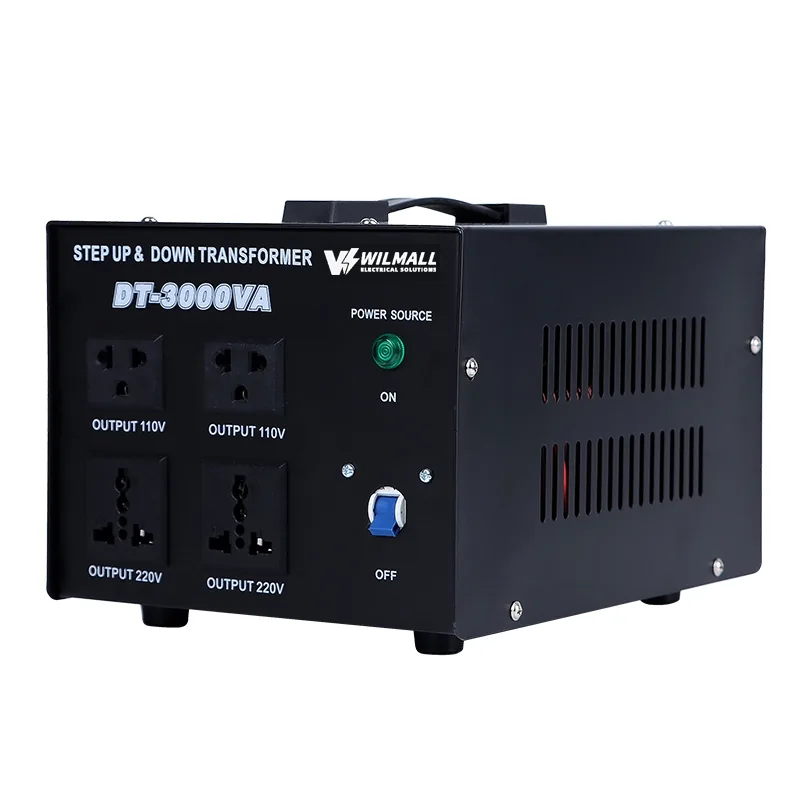
220V to 110V Transformer for the Philippines
Quick answer: the Philippines runs on 220V, 60Hz — close enough to US mains frequency that most 110V US appliances can run here, but only with a step down transformer. Size 20–30% above the load: blender 1500VA, fridge 2000VA. It’s one of the most common voltage conversions in Southeast Asia.
Key Takeaways
- Philippines runs 220V/60Hz; US 110V appliances need step down.
- Dual-voltage devices (100-240V) need no transformer.
- Size for start-up surge on fridges and compressors.
- Factory-direct with OEM for resellers.
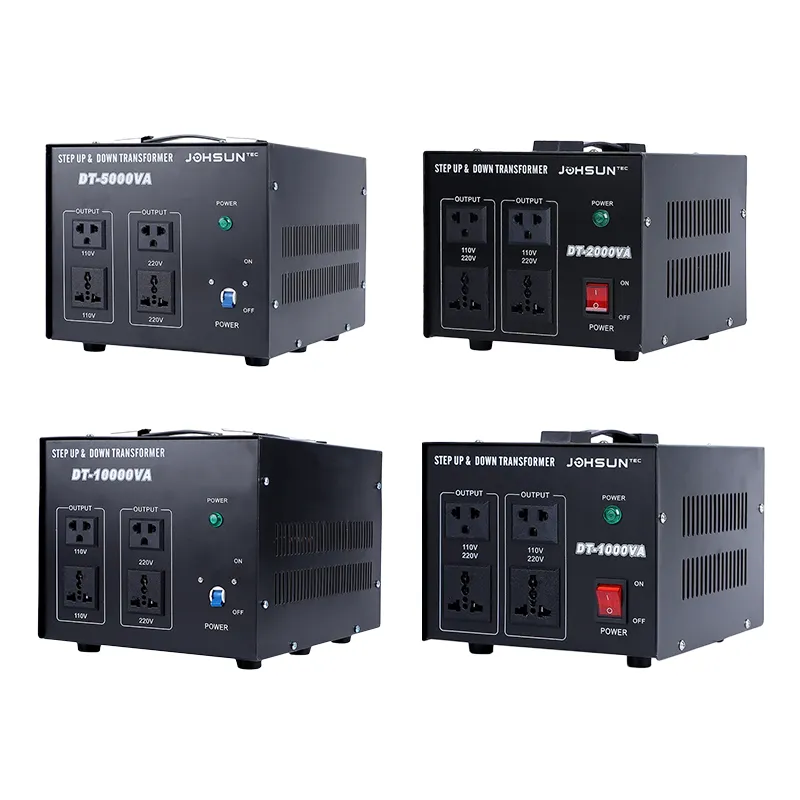
Quick Size Guide
| Appliance | Transformer |
| Blender | 1500VA |
| Fridge | 2000VA |
| Multiple loads | 3000VA+ |
Philippine Voltage Reality
The Philippines uses 220V at 60Hz — the same frequency as the US, but double the voltage. That’s why so many Filipino households and businesses buy US appliances (from Amazon, OFW balikbayan boxes, importers) and need a step down transformer to run them safely.
Which Appliances Need It in the Philippines?
- US-bought blenders, food processors, mixers
- US rice cookers, coffee makers, small kitchen appliances
- US power tools, sewing machines
- Japanese appliances (110V, 50/60Hz)
- US electronics, TVs, game consoles
Many “dual voltage” appliances (laptop chargers, phone chargers) handle 100–240V automatically — those don’t need a transformer. Check the label: if it says 110V only, you need one.
What Size Step Down Transformer for the Philippines?
| Appliance | Recommended transformer |
| Phone / laptop chargers (if not dual voltage) | 500VA |
| TV, gaming console, small appliances | 1000VA |
| Blender, rice cooker, coffee maker | 1500VA |
| Refrigerator, washing machine, microwave | 2000VA |
| Multiple appliances or heavy loads | 3000VA+ |
Refrigerators and air purifiers with compressors spike at start-up — size for the surge.
Where to Buy: Factory Direct vs Local
- Local appliance stores in Manila, Cebu, Davao sell “voltage transformers” — but quality varies, and cheap units are often electronic switchers fine only for chargers.
- Factory direct: copper-wound transformers, honest ratings, OEM for resellers, bulk pricing — shipped to Manila and other ports in 15–25 days production plus freight.
For distributors and online sellers, factory-direct with your branding is the profitable route.
Safety Checks for Philippine Buyers
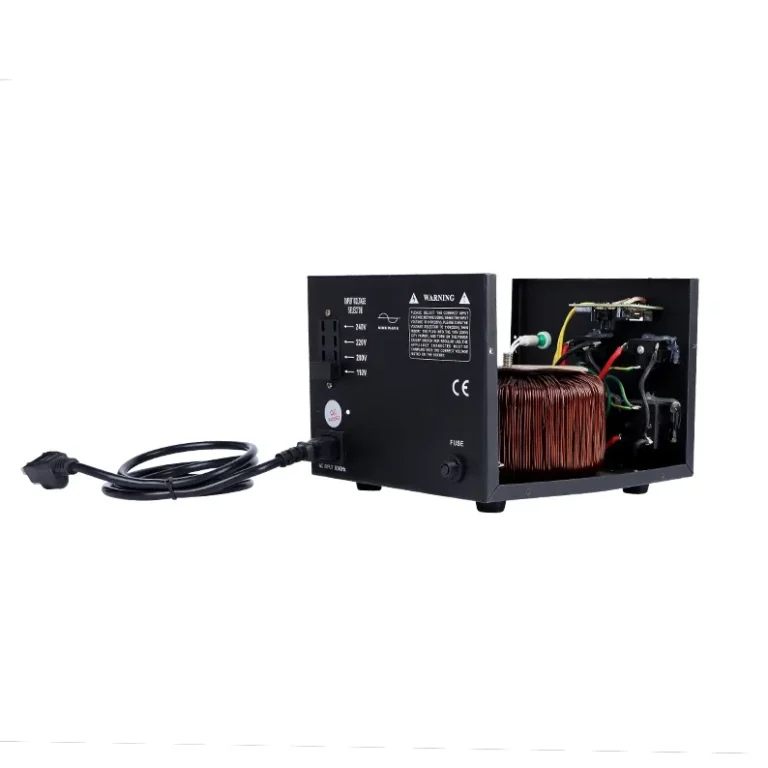
- Copper windings, honest VA rating — aluminium-wound cheap units overheat.
- Fuse/MCB protection — basic safety every unit should have.
- US output socket to match your appliance plug.
- CE / RoHS / ISO9001 certified production.
FAQ
Is Philippines 110V or 220V?
220V, 60Hz. US 110V appliances need a step down transformer.
Will my US appliance work in the Philippines?
Yes, with a properly sized step down transformer — the frequency matches (60Hz), only the voltage needs converting.
Do dual-voltage appliances need a transformer?
No — if the label says 100–240V, it handles Philippine mains directly.
Can I run a US refrigerator in the Philippines?
Yes, with at least 2000VA for the compressor start-up surge.
Do you ship to Manila?
Yes — Manila and other Philippine ports. Contact us for freight pricing.
Still not sure which model fits?
Tell us your appliance, wattage and country — we reply within 24 hours with a straight recommendation.
Related Posts
- Voltage in Southeast Asia: A Buyer's Guide to 220V and 110V
- Step Down Transformer 220V to 110V: Sizing and Safety
The 20% Sizing Rule for Philippine Homes
When you size a transformer for the Philippines, start with the running wattage of everything you plan to run at the same time, then add 20 to 30 percent headroom. A 1500W air conditioner, for example, should sit on a 2000VA transformer because the compressor spikes hard at start-up. A blender rated 700W is comfortable on a 1000VA unit. The mistake we see most from Philippine buyers is adding up the wattage of appliances they never run together, which leads to an oversized, more expensive transformer. List the appliances that actually run simultaneously, such as a TV, a sound system, and a fan, add the margin, and pick the next standard size. If you are unsure, send us your appliance list and we will confirm the right VA rating within 24 hours. Sizing correctly the first time saves you money, and it keeps the transformer running cool, which matters in the Philippine climate.
The 60Hz Advantage in the Philippines
The Philippines runs on 60Hz, which is the same frequency as the United States and Japan. That makes it one of the easiest markets for US-spec appliances: a transformer rated for 60Hz will run a US appliance exactly as designed, with no frequency mismatch. The situation is different for appliances from Europe or other 50Hz regions, which may need a frequency check before use. All our transformers are rated for both 50Hz and 60Hz, so they work in the Philippines, the US, Japan, and any other market your appliances came from. This dual-frequency rating is printed on every label, and it means you never have to worry about frequency when you buy a step down unit from us. For resellers, this is a useful selling point, because Philippine buyers often own appliances from multiple countries and want one transformer that handles them all.
Typhoon Season and Power Stability
Philippine power can be unstable during typhoon season and in areas with frequent brownouts. Voltage dips, surges, and short interruptions stress any appliance, and the transformer in the middle takes the strain too. A few habits protect your equipment: unplug the transformer when a brownout or outage hits, wait a few seconds after power returns before plugging back in, and use a surge protector between the transformer and your sensitive electronics. Our ST series includes a thermal cut-out, which trips if the unit overheats, and the STU series adds built-in RCD leakage protection. If your area has frequent outages, these features are worth having. For shops and resellers, passing this advice to customers reduces warranty claims and builds trust. A transformer that is protected from grid stress will serve you for many years, even through typhoon season.
Warranty and After-Sales for Philippine Buyers
Before you buy, ask about the warranty terms, because they vary a lot between suppliers. Some factories promise a warranty but expect you to ship a failed unit back to China, which is rarely worth it for a household transformer. Our policy is replacement-first: if a unit fails within the 12-month warranty, we ship a replacement with the next container to Manila or Cebu and settle the details afterwards. Every order includes the batch test certificate, so you have documented proof that your units were load-tested and hi-pot tested before packing. We also answer sizing and application questions after the sale, so if you buy a new appliance later, you can ask us whether your transformer still covers it. For Philippine buyers, whether you are a household in Quezon City or a distributor in Makati, the after-sales relationship is what turns a one-time purchase into a long-term supply.
The 20-30% Headroom Rule Applied to Philippine Appliances
Let us put the headroom rule into Philippine terms with concrete numbers. A US-spec 1.5 horsepower window air conditioner draws roughly 1200W running but spikes to about 3000W at compressor start-up. A 2000VA transformer handles the running load with margin but can struggle with the surge, which is why we recommend 3000VA for window AC units. A 600W blender needs 1000VA, a 1500W rice cooker needs 2000VA, and a US-spec refrigerator typically needs 2000VA to 3000VA because the compressor starts and stops throughout the day. For a typical Filipino home running a TV, a sound system, a fan, and occasionally a rice cooker together, a 2000VA unit covers the mix comfortably. If you add an air conditioner or a fridge to the same transformer, move up to 3000VA. These numbers assume 220V Philippine mains and 60Hz, which our units are rated for, so the only variable is your actual appliance list.
The Cost Comparison: Factory Direct vs Local Philippine Retail
Philippine buyers often ask whether it is worth ordering from the factory instead of buying from a local electronics shop. The honest comparison: a local shop in Manila or Cebu may charge two to three times the factory price for the same size transformer, and the local range is usually limited to a few popular sizes. Buying factory direct gives you the full range, a better price, the batch test certificate, and the option to customise, but it means waiting for shipping and handling the import paperwork. For a single household unit, the local shop is convenient, and if the price difference is small, it may be the practical choice. For a distributor, an office, or a family buying several units, factory direct is clearly better value. A common middle path is to buy one unit locally to meet an urgent need while ordering the rest from the factory. Send us your quantity and we will quote a price that makes the comparison easy.
A Simple Checklist Before You Plug In
Before you connect your appliance to a new transformer in the Philippines, run this two-minute checklist. Confirm the transformer input matches your wall voltage, 220V, and the output matches your appliance, 110V or 100V for Japanese gear. Confirm the VA rating covers the appliance with 30% headroom. Place the unit on a dry, ventilated surface, off the floor. Plug the transformer in first, listen for abnormal hum, and measure the output with a multimeter if you have one, a 220V to 110V unit should read roughly 105 to 115V. Then connect your appliance and start with the smallest load. This checklist takes two minutes and prevents the most common returns and field failures.