220V to 110V Transformer for Nigeria
Quick answer: Nigeria runs on 230V, and with frequent generator use the supply can be rough — so a step down transformer for 110V appliances needs sizing with extra margin (30%+). US and Japanese appliances need 220V-to-110V conversion; choose a unit with fuse/MCB protection and honest copper windings.
Key Takeaways
- Nigeria runs 230V; US/JP 110V appliances need step down.
- Generator power needs 30%+ margin and fuse protection.
- Avoid cheap aluminium-wound or electronic switchers.
- Copper windings, honest VA, certified production.
Quick Size Guide
| Appliance | Transformer |
| Blender | 1500VA |
| Fridge | 2000VA |
| Pump/freezer | 3000VA+ |
Nigeria’s Voltage Reality
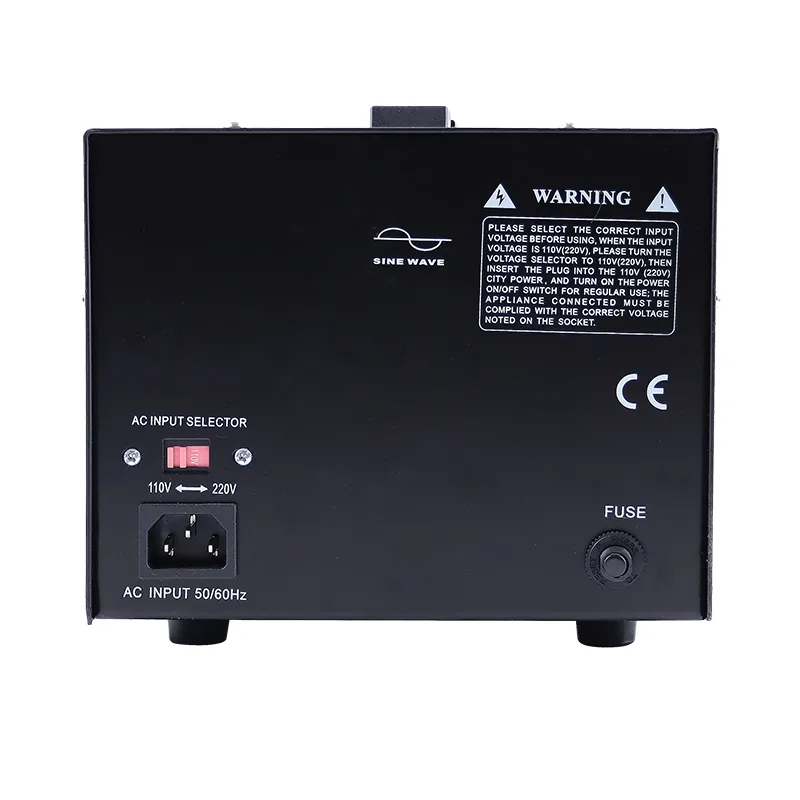
Nigerian mains is nominally 230V, 50Hz. If you own US or Japanese appliances — blenders, fridges, power tools, electronics — they are 110V and will not survive being plugged straight in. A step down transformer converts your 230V supply to 110V safely.
Generator Output Isn’t Always Clean
Here’s what many Nigerians know from experience: grid supply is intermittent, and most homes and shops run on generators. Generator output fluctuates as loads switch on and off — sometimes dipping well below 230V. This matters for transformer sizing:
- Size with extra margin (30%+), because brownouts make transformers run hotter.
- Choose units with fuse/MCB protection — generator surges punish unprotected gear.
- For severe fluctuation, consider a stabilizer too — tell us your situation and we’ll recommend the combination.
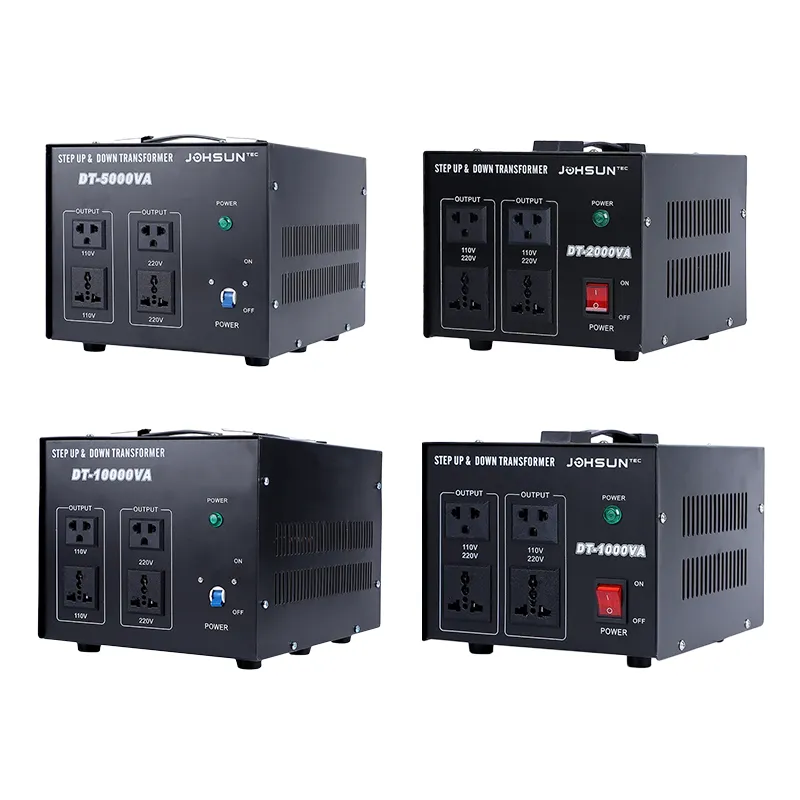
What Size Step Down Transformer for Nigeria?
| Appliance | Recommended transformer |
| Phone / laptop chargers | 500VA |
| TV, fans, small electronics | 1000VA |
| Blender, mixer, sewing machine | 1500VA |
| Refrigerator, freezer, washing machine | 2000VA |
| Water pump, deep freezer, workshop tools | 3000VA+ |
Fridges and pumps spike 3-5x at start-up — size for the surge.
Quality Matters: Don’t Buy the Cheapest
The Nigerian market has many cheap “transformers” that are actually undersized aluminium-wound units or electronic switchers. They overheat, hum loudly, and fail when you need them most. A real transformer has:
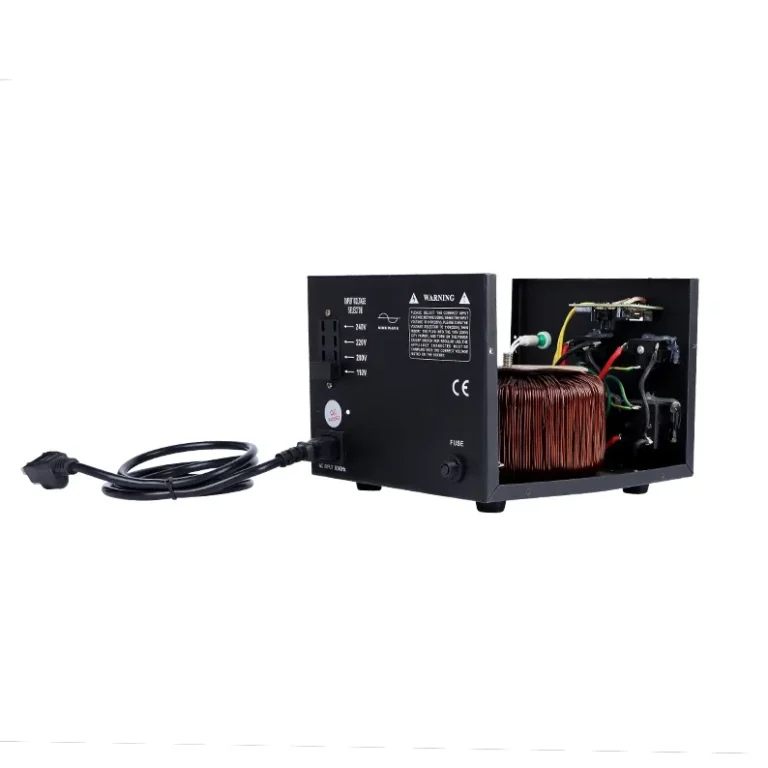
- Copper windings — cool, quiet, long-lived
- Honest VA rating — not inflated for marketing
- Fuse/MCB protection — basic safety
- CE / RoHS / ISO9001 certified production
Buying for Home or Resale
We supply both end users and Nigerian distributors — with OEM branding and carton design for resellers, MOQ from 10 pcs. Shipping to Lagos, Port Harcourt and other ports is routine. Send us your requirement for a quote.
NEPA and Load Shedding: When the Power Goes Out
In Nigeria, grid power can be intermittent, and many homes and shops switch to generators several times a day. Each power interruption and restart stresses a transformer, especially if appliances are left plugged in and switch on together when power returns. The practical protection is a small habit: when the grid drops, unplug the transformer or switch it off, and wait a few seconds after power returns before plugging back in. If you are running a fridge or a freezer through a transformer, that habit protects the compressor as much as the transformer, because compressors are at their most vulnerable right after a power cut. If your area experiences frequent outages, consider a transformer with a thermal cut-out, which our ST series includes, so the unit protects itself if it is left running under repeated stress. For resellers, mentioning this habit to customers reduces warranty claims and builds trust in the brand.
Sizing for Nigerian Appliances: A Practical Example
Let us walk a typical Nigerian home: a 32-inch US-spec TV at about 80W, a satellite decoder at 30W, a laptop charger at 65W, and a ceiling fan at 75W. The running total is about 250W. Add 30% headroom and you land around 325W, so a 500VA transformer is the right size for those appliances. Now add a chest freezer, which draws about 150W running but spikes to 400-500W on start-up. The total picture changes: 250W plus 150W is 400W, plus the freezer surge pushes the requirement toward 1000VA to be safe. That is why we tell buyers to list the appliances that will run at the same time, not just the biggest one. A 1000VA unit covers most Nigerian households comfortably, while shops running several appliances together often step up to 2000VA or 3000VA. Send us your list and we will confirm the size.
Where to Buy: Factory Direct vs Local Lagos Market
In Nigeria you can buy transformers from electronics markets in Lagos, from local importers, or directly from the factory in China. The local market is convenient and you can inspect the unit before paying, but prices carry the importer’s margin and stock availability can be limited to a few popular sizes. Buying factory direct from us gives you a better price, the full range of sizes and custom options, and the batch test report, but it means waiting for shipping and handling import paperwork yourself. A common approach for small buyers is to buy locally for immediate needs and order factory direct for volume or for sizes the local market does not stock. For resellers, factory direct is usually the right move, since the margin covers the extra lead time. If you want to compare, send us your required quantity and sizes, and we will quote FOB Ningbo or Shanghai with the freight estimate to Lagos or Apapa.
The 12-Month Warranty and Batch Test Certificate
Every transformer we ship carries a 12-month warranty with a replacement-first policy, and the documentation includes the batch test certificate. The test certificate records the results of the load test and hi-pot test for your batch, so you have written proof that the units were checked before packing. This matters in Nigeria because buyers and customs both appreciate documented quality, and a reseller with a test certificate can show customers a tangible reason to trust the product. The warranty covers manufacturing defects, and we handle claims by shipping a replacement with the next container rather than requiring you to return the failed unit, which is impractical for small orders. Keep the batch number and your invoice to make a claim simple. If you are comparing suppliers, ask to see a sample test certificate before you commit, it tells you more about the factory than any marketing page.
Installing Your Transformer: Position and Ventilation
Where you place the transformer in a Nigerian home or shop affects how long it lasts. Put it in a dry, ventilated spot, off the floor, and away from direct sunlight, kitchen heat, and water sources. Leave space around the unit so air can move through the ventilation slots, and do not stack things on top of it. In dusty environments, wipe the case occasionally and keep the slots clear, because dust traps heat and the transformer will run hotter than it should. If the unit must live inside a cabinet, add ventilation holes at the top and bottom, or fit a small fan for continuous loads. A transformer that runs cool keeps its insulation young, and that is the single biggest factor in service life after sizing. These placement habits cost nothing, and they prevent the most common cause of early failure in hot, dusty, humid environments like Lagos or Port Harcourt.
Testing a Transformer Before First Use
When you receive a transformer, spend two minutes checking it before plugging anything in. First, inspect the case for shipping damage, especially the corners and the socket area. Second, check the label matches what you ordered: the input voltage should match your mains, and the output should match your appliance. Third, plug the transformer in alone and listen for abnormal hum or buzzing, a quiet hum is normal, but a loud buzz or a burning smell means a problem. Fourth, measure the output with a multimeter if you have one, a 220V to 110V unit should read roughly 105 to 115V. If everything looks right, connect your appliance and start with the smallest load. This two-minute check catches the rare factory defect and the occasional shipping knock before it damages an appliance, and it is the same sequence we recommend to every customer, from a Lagos household to a distributor with a container.
Choosing Between ST and STU Series for Nigeria
Most Nigerian buyers choose between the ST fixed step down series and the STU auto-selecting series. The ST units are simpler and slightly cheaper, and they are the right choice if you only ever need 220V to 110V conversion in a home or shop that stays on one mains voltage. The STU units detect the input voltage automatically, whether 110V or 220V, which suits buyers who move equipment, who run appliances from different sources, or who want one unit that works anywhere. Both series are copper-wound, fuse-protected, and carry the same 12-month warranty. If you are buying for resale in the Nigerian market, a mix of both covers more customers, with the ST 1000VA and 2000VA as the volume sellers and the STU as the premium option for travelers and expats. Tell us your application and we will recommend the series that fits your need and budget.
FAQ
What voltage is Nigeria?
230V, 50Hz. US 110V appliances need a step down transformer.
Can I run a US freezer in Nigeria?
Yes, with a properly sized transformer — at least 2000VA for the start-up surge.
Why does my transformer hum loudly?
Loud hum often means undersized windings or loose laminations — a quality copper-wound unit should hum softly.
Do I need a stabilizer for generator power?
If generator output fluctuates badly in your area, a stabilizer plus transformer is the robust combo — tell us your load and supply situation.
Do you ship to Nigeria?
Yes — Lagos, Port Harcourt, Onne and other ports. Contact us for freight pricing.
Still not sure which model fits?
Tell us your appliance, wattage and country — we reply within 24 hours with a straight recommendation.