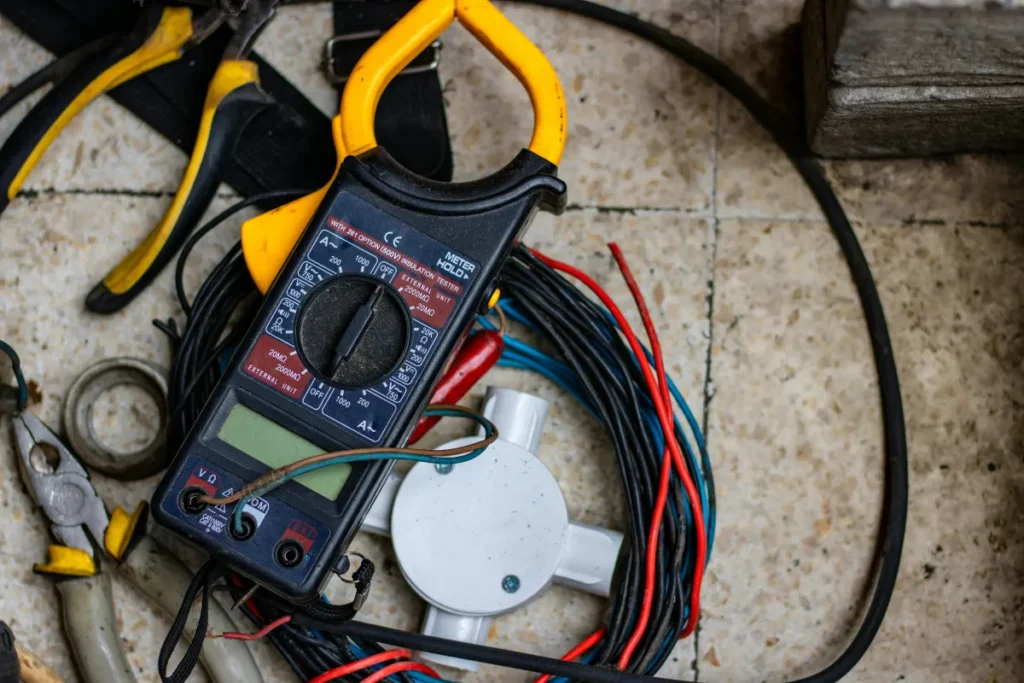
Transformer Efficiency and No-Load Loss Explained
Transformer efficiency is the ratio of output power to input power. Understanding efficiency, no-load loss and full-load loss helps buyers choose the right transformer and run it economically over its lifetime. This guide covers the key concepts for step-down, step-up and isolation transformers used in homes, workshops and small industry.

What transformer efficiency means
efficiency is the ratio of output power to input power. A transformer rated 2000VA that delivers 1800W to the load has 90% efficiency at that load. The remaining 10% (200W) is dissipated as heat in the windings and core.
No-load loss vs full-load loss
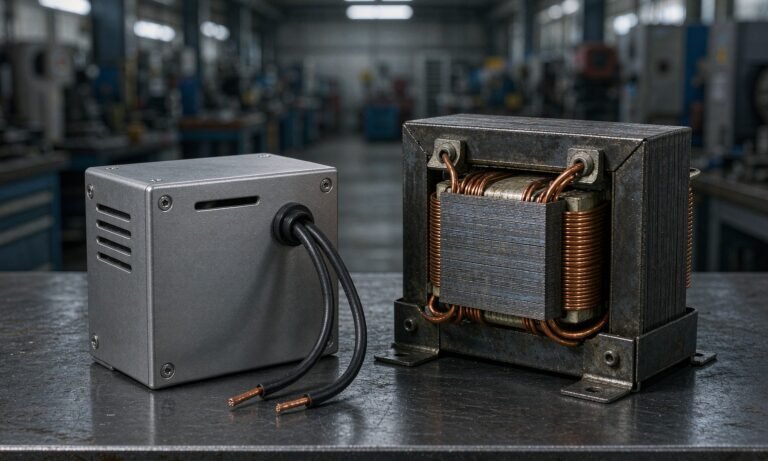
No-load loss (also called iron loss or core loss) is the power consumed even when no load is connected. It comes from magnetising the transformer core. Full-load loss (copper loss) is the I²R loss in the windings, which increases with load. A quality transformer minimises both, but no-load loss is always present and constant.
Why efficiency matters for buyers
- Operating cost. Higher efficiency means lower electricity bills over the transformer life.
- Heat output. A more efficient transformer runs cooler, which extends its life.
- Capacity sizing. An inefficient 2000VA transformer may only deliver 1700W before overheating.
- Continuous duty rating. Efficiency drops slightly at partial load, so a transformer sized for the realistic load runs more efficiently than an oversized one at low load.
Typical efficiency values for low-voltage transformers
| Transformer size | Typical efficiency at full load |
|---|---|
| 500VA | 88-92% |
| 1000VA | 90-94% |
| 2000VA | 92-95% |
| 3000VA | 93-96% |
| 5000VA | 94-97% |
How to maximise transformer efficiency
Size the transformer to run at 50-80% of its nameplate rating continuously. Avoid no-load operation (turn off when not in use). Keep ventilation good so the windings run cool. Copper winding conducts better than aluminium and gives 1-3% better efficiency.
No-load loss in real installations
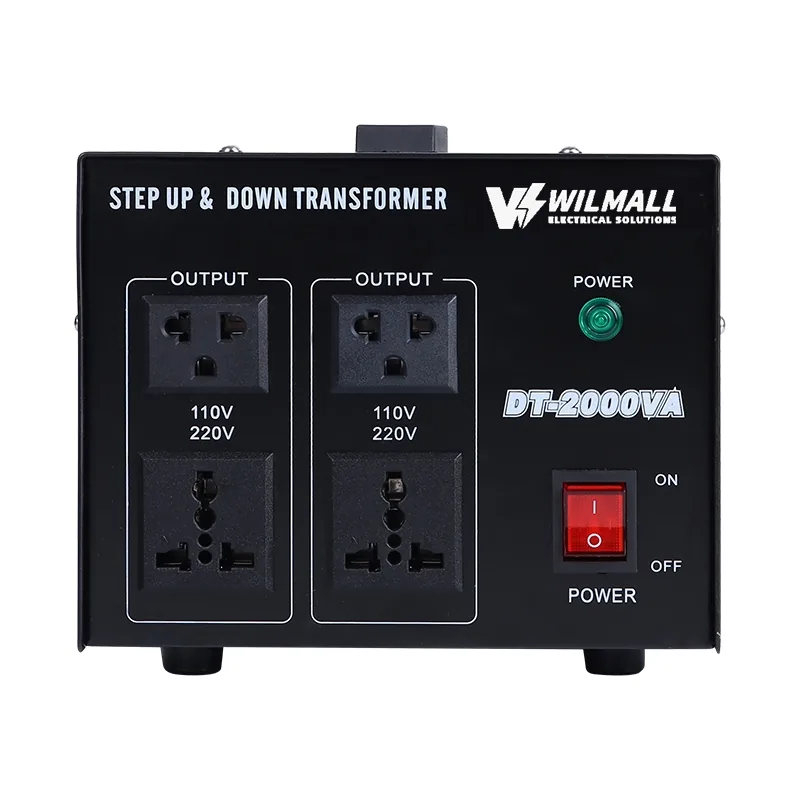
For a 2000VA transformer with no-load loss of 15W, the annual no-load energy consumption is about 130 kWh. At USD 0.10 per kWh, that is USD 13 per year. Over 10 years, USD 130 — about 10% of the transformer purchase price. Choosing a low-no-load-loss transformer pays back over its lifetime.
Why Wilmall transformers are efficient
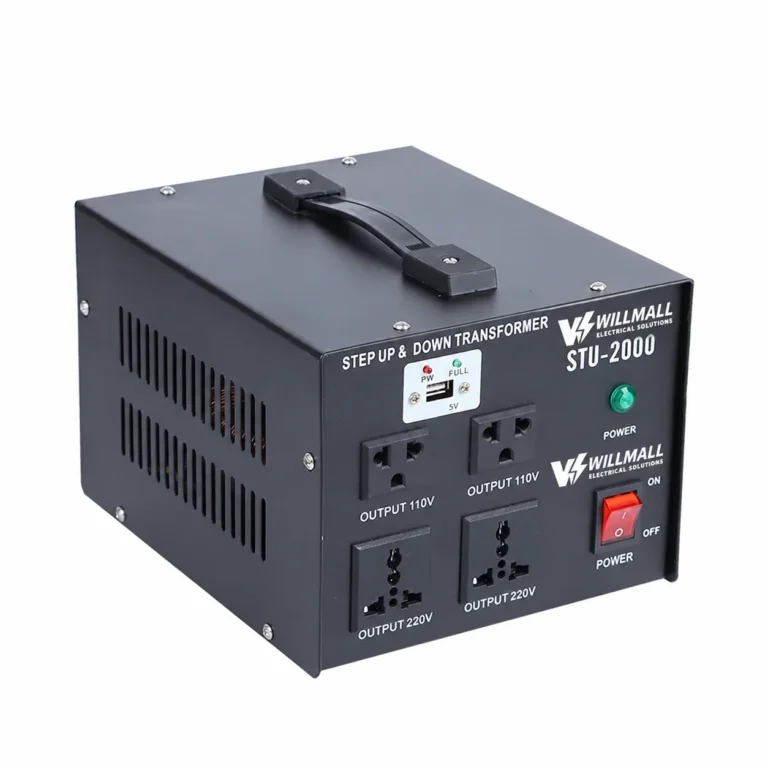
Wilmall builds ST and STU series step-down transformers with copper windings and grain-oriented silicon steel cores. No-load loss is typically 3-5% of rated power — well below industry average for low-voltage transformers. Every unit is tested at full load before packing.
Common mistakes
- Leaving the transformer on 24/7. No-load loss adds up.
- Oversizing. A 5000VA transformer running at 10% load wastes more energy than a smaller correctly-sized unit.
- Choosing aluminium winding. Aluminium windings run hotter and less efficiently.
Estimating the Yearly Cost of No-Load Loss
To put no-load loss in money terms, use a simple formula: watts of loss multiplied by hours of operation, divided by 1000, multiplied by your electricity rate. A transformer with 30W of no-load loss left on 24/7 uses about 0.72 kWh per day, roughly 263 kWh per year. At a typical commercial rate of $0.15 per kWh, that is about $39 per unit per year, just for sitting there doing nothing. Now run the same math for a fleet: a distributor with 200 units in stock and on display could be spending close to $7,800 a year on no-load losses before a single sale. That is why we size the core honestly and use quality silicon steel with low core loss, and why we tell buyers to switch off transformers that are not in use. If your application runs the transformer only a few hours a day, a standard unit is fine. If it runs continuously, such as in a server cabinet or a 24-hour shop, the efficiency difference between copper and aluminium windings and between good and cheap steel becomes a real operating cost, not a spec-sheet detail.
What is a good efficiency for a low-voltage transformer?
A quality low-voltage transformer should achieve 90-95% efficiency at full load. Wilmall ST series reaches 92-95% depending on size.
What is no-load loss in a transformer?
No-load loss is the power consumed even when no load is connected, from magnetising the core. It is always present and typically 3-5% of rated power for quality EI-core transformers.
Is aluminium or copper winding more efficient?
Copper winding conducts better and gives 1-3% better efficiency than aluminium. Copper also runs cooler and lasts longer.
Does an oversized transformer waste more energy?
Yes. A 5000VA transformer running at 10% load wastes more energy than a smaller correctly-sized unit. Size for 50-80% of nameplate rating.
Where can I buy an efficient step-down transformer?
Wilmall builds ST and STU series step-down transformers with copper winding and grain-oriented silicon steel cores. Factory direct from Yueqing, China, with MOQ 10 pcs.
Related reading
Get a factory-direct quote
Email sales@wilmall.com or WhatsApp +86 197 3022 6757.
How to measure transformer efficiency
Efficiency is measured by comparing output power to input power at a given load. In a factory, transformers are tested at no-load (to measure core loss) and at full load (to measure total loss). The efficiency curve peaks around 60-80% of rated load, which is why transformers perform best when not run at 100%.
Why no-load loss is always there
No-load loss comes from the magnetic hysteresis and eddy currents in the core. It exists the moment the transformer is energised, whether or not anything is plugged in. This is why you should switch off a transformer at the wall when it is not in use for extended periods.
Efficiency and transformer temperature
An efficient transformer runs cooler because less power is lost as heat. Lower temperature extends insulation life and allows the transformer to run closer to its continuous rating. This is one reason copper-wound, grain-oriented-core transformers are worth the slightly higher purchase price.
Efficiency for continuous-duty applications
For appliances that run 24 hours (refrigerators, pumps, servers), efficiency matters most because the transformer is always loaded. A 3% efficiency improvement on a 2000W continuous load saves 60W — about 525 kWh per year, worth real money on an electricity bill.
How Wilmall verifies efficiency
Every Wilmall ST and STU series transformer is tested at no-load and full load before packing. Batch test records include the measured losses and efficiency, so you can verify the unit meets its specification. Ask for the test report with your order.
How to measure transformer efficiency
Efficiency is measured by comparing output power to input power at a given load. In a factory, transformers are tested at no-load (to measure core loss) and at full load (to measure total loss). The efficiency curve peaks around 60-80% of rated load, which is why transformers perform best when not run at 100%.
Why no-load loss is always there
No-load loss comes from the magnetic hysteresis and eddy currents in the core. It exists the moment the transformer is energised, whether or not anything is plugged in. This is why you should switch off a transformer at the wall when it is not in use for extended periods.
Efficiency and transformer temperature
An efficient transformer runs cooler because less power is lost as heat. Lower temperature extends insulation life and allows the transformer to run closer to its continuous rating. This is one reason copper-wound, grain-oriented-core transformers are worth the slightly higher purchase price.
Efficiency for continuous-duty applications
For appliances that run 24 hours (refrigerators, pumps, servers), efficiency matters most because the transformer is always loaded. A 3% efficiency improvement on a 2000W continuous load saves 60W — about 525 kWh per year, worth real money on an electricity bill.
How Wilmall verifies efficiency
Every Wilmall ST and STU series transformer is tested at no-load and full load before packing. Batch test records include the measured losses and efficiency, so you can verify the unit meets its specification. Ask for the test report with your order.
How to compare transformer efficiency
When comparing two transformers of the same size, check three numbers: no-load loss, full-load loss, and efficiency at 50%, 75% and 100% load. A transformer that peaks at 75% load and stays above 93% across the range is a good purchase. Ask the supplier for the test report to verify.
Efficiency in the real world
A 2000VA transformer at 92% efficiency loses 160W at full load — that heat must go somewhere. It warms the case, the room and the wiring. A 95% efficient unit loses only 100W, runs cooler and consumes less. Over a 10-year life, the difference is significant in both energy cost and reliability.
The relationship between VA and watts
VA is apparent power; watts is real power. For a resistive load they are equal. For a motor load, the power factor is below 1, so the transformer must supply more VA than the watts consumed. This is why the VA rating — not the wattage — determines the transformer size.
Final word on efficiency
Efficiency is not a luxury specification; it is a real operating cost. For continuous-duty applications it directly affects the electricity bill. Wilmall ST and STU series are built with copper winding and grain-oriented silicon steel, tested at no-load and full load, with the efficiency documented in the batch report.
Efficiency versus price: the trade-off
A high-efficiency transformer costs more upfront but pays back through lower running cost and longer life. For a 2000VA transformer used continuously, a 3% efficiency improvement saves about 525 kWh per year. At USD 0.10 per kWh, that is USD 52 saved per year — the price difference pays back in under two years.
How to check efficiency claims
Ask the supplier for the no-load and full-load test measurements. A transformer with documented efficiency above 93% at full load is a quality unit. If the supplier cannot provide test records, the efficiency claim is unverified. Wilmall provides batch test records with every order.
The role of the core material
The transformer core material determines no-load loss. Grain-oriented silicon steel reduces hysteresis and eddy-current losses compared with standard electrical steel. Wilmall ST series uses grain-oriented silicon steel, which is why our no-load loss is typically 3-5% of rated power.
Final recommendation
For any transformer purchase, compare efficiency at the actual operating point, not just the nameplate. A transformer running at 60-80% load with 93%+ efficiency is the economical and reliable choice. Wilmall documents efficiency on every batch test report.