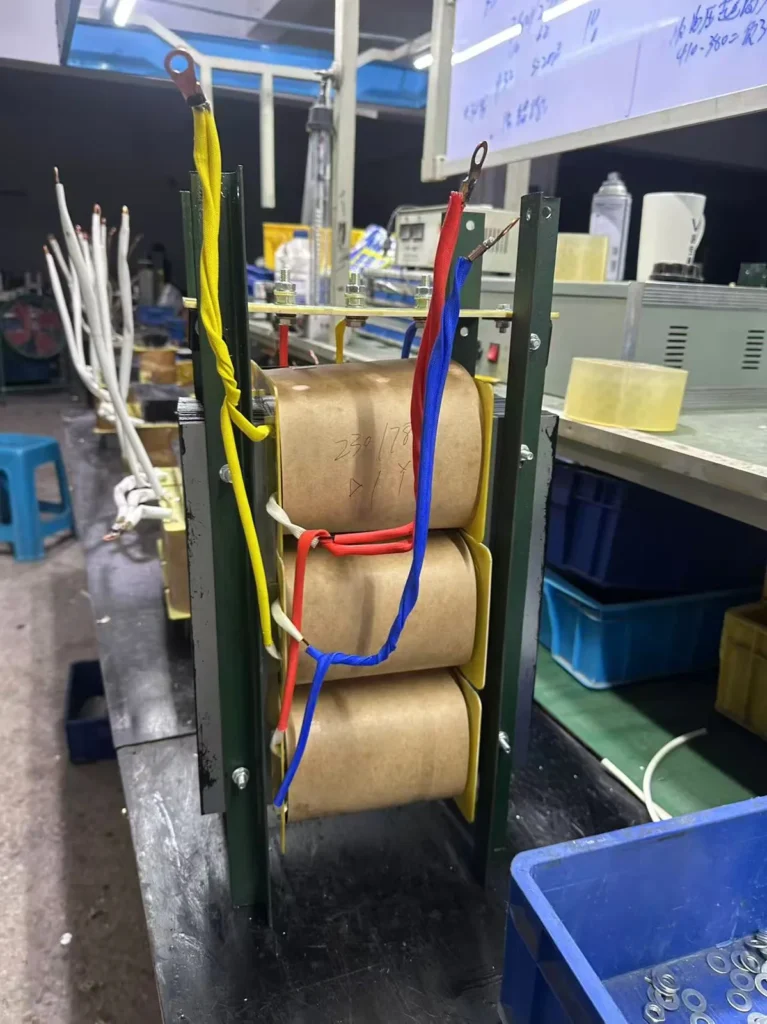
Step Down Transformer for Kenya: 240V to 110V Guide
Kenya runs 240V at 50Hz, similar to the UK. If you are shipping to Nairobi, Mombasa, or Kisumu for the local market, or supplying a hotel or importer in East Africa, you need to step down the voltage from 240V to 110V for any single-voltage 110V US or Japanese appliance. Here is what buyers in Kenya actually order and what documents you need.
Kenya voltage, frequency and plugs
Kenya runs 240V at 50Hz. The grid is reasonably stable in Nairobi and Mombasa but can have brownouts in other cities, so a transformer with surge tolerance is worth the extra cost. The standard outlet is Type G, the British three-pin rectangular plug. This is the same plug used in the UK, and any appliance you buy with a UK plug will fit Kenyan outlets.
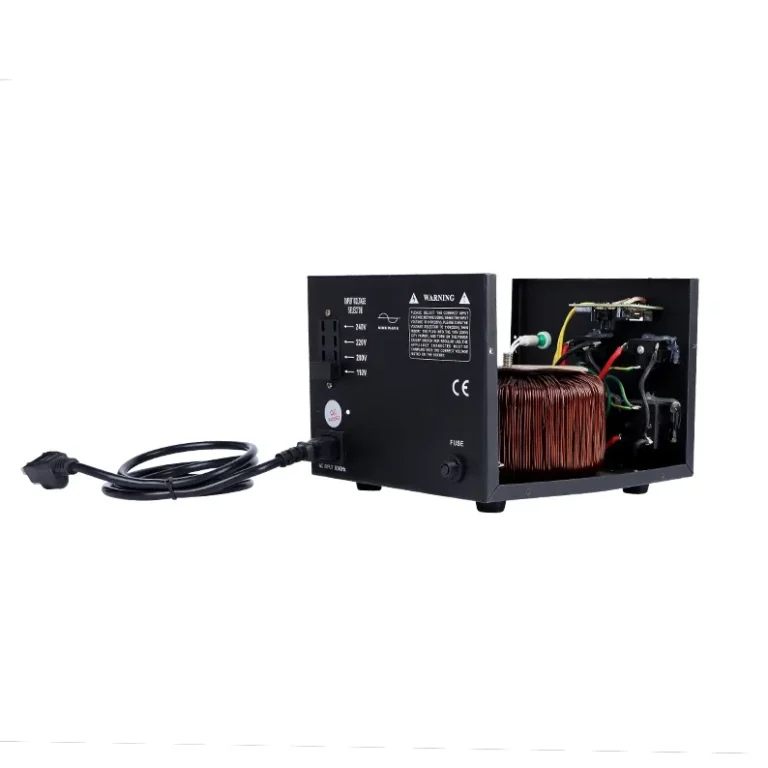
For 110V US appliances, you need a step down transformer that takes 240V input and outputs 110V to 120V, with a Type G input plug and a US-style Type A or B output socket. Our ST series ships with a Type G plug on the input side for the UK and East African markets.
240V vs US 110V
The voltage difference is more than double. A 110V US appliance connected directly to 240V Kenyan mains will fail within seconds, just like in any 220V market. The internal windings or heating elements are designed for half the voltage, and overvoltage burns them out fast.
A step down transformer solves this by halving the voltage to 110V before it reaches the appliance. Our ST series is rated for 220V to 240V input and 110V to 120V output, which covers Kenya, Uganda, Tanzania, and the rest of the East African 240V grid.
Sizing the right VA for the Kenyan market
For a single 110V appliance under 700W (TV, audio gear, sewing machine, small kitchen appliance), the ST-1000 (1000VA) is the right pick. For 110V kitchen equipment over 700W (microwave, espresso machine, large toaster oven), the ST-2000 (2000VA) with RCD is safer. For workshops running 110V power tools, the ST-3000 (3000VA) or ST-5000 (5000VA) handles the surge.
For Kenyan importers and resellers, the most common sizes are 1000VA and 2000VA. We can mix multiple sizes in one 20ft container order with a 10 pcs minimum per model.
KEBS and PVoC documents
Kenya uses the PVoC (Pre-Export Verification of Conformity) scheme for imported electrical products. For transformers, you need a PVoC certificate from an approved inspection body like SGS, Bureau Veritas, or Intertek. We can ship with the test reports (CE, IEC, ISO 9001) and the commercial invoice your customs broker needs to apply for PVoC in China.
For larger orders going through KEBS (Kenya Bureau of Standards) directly, we can also provide the type test reports and factory audit documents that smooth out customs clearance in Mombasa or Nairobi.
Lead time is 15 to 25 days after deposit for samples, and 30 to 40 days for full container orders. We ship FOB Ningbo or Shanghai to Mombasa. Most Kenyan buyers consolidate via a freight forwarder in Mombasa for road transport to Nairobi.
For neighboring markets with similar 240V grids, see our Tanzania guide and Uganda guide.
East Africa regional logistics
Kenya is the gateway for East Africa, and buyers in Nairobi often distribute to Uganda, Tanzania, Rwanda and even the DRC. The voltage is the same 240V across the region, so one transformer model covers the whole market. If you are a regional importer, the smart order is a mix of 1000VA and 2000VA for households, plus 3000VA for the growing number of shops and workshops.
The freight route matters as much as the product. Mombasa port clears most cargo, and the road leg to Nairobi takes a day. For buyers further inland, the railway from Mombasa to Nairobi cuts cost for full containers. We quote FOB Ningbo or Shanghai, and most Kenyan customers arrange their own forwarder, but we can also quote DDP Mombasa or DDP Nairobi for buyers who want a door price.
Voltage stabilizer recommendations
Kenyan mains quality is decent in Nairobi, but smaller towns and rural areas see voltage swings that can be hard on transformers and the appliances behind them. If your customers are outside the big cities, we recommend adding a stabilizer ahead of the step down, or buying our STU series, which includes basic surge handling in the same unit.
For sensitive 110V electronics, gaming consoles, audio gear, office equipment, a stabilizer is cheap insurance and it protects the transformer from the input side, which extends its life. For heating appliances, a stabilizer is optional, but the surge protection it adds is still worth the price in areas with frequent brownouts.
Tell us the target towns and the appliance mix, and we will size both the transformer and the stabilizer in one proposal. If you are importing for resale, the stabilizer is an easy upsell with a healthy margin, and it solves the complaint that kills repeat orders, fried electronics.
Second-hand US appliances in Kenya
Kenya imports a large volume of used US appliances, from fridges to washing machines to kitchen gear, and every single 110V unit needs a step down transformer before it can run on Kenyan 240V mains. This second-hand market is one of the biggest drivers of ST-1000 and ST-2000 sales in East Africa.
The specific challenge with used appliances is that their labels are often worn and their actual power draw can be higher than the original spec, because older motors are less efficient. If you are buying a used US fridge with a faded label, size the transformer one step up from what the label suggests. A label saying 200W often draws 300W in practice.
Power tools and workshops
Workshops in Nairobi and Mombasa run US-spec power tools, circular saws, grinders, and drills, on 110V through step down transformers. Tools are the harshest load a transformer sees because the motor surges hard on every start, and the duty is repetitive through the workday.
For a single tool bench, the ST-2000 is the practical size, it handles the surge of a 1500W saw with margin. For a multi-tool workshop, one ST-3000 per bench covers a saw, a grinder, and a drill without tripping, and the fan-ventilated case option is worth the premium in a dusty workshop.
Generator compatibility
Many Kenyan businesses and some homes run on generators during the frequent load-shedding, and a generator-fed transformer has its own quirks. Generators often output unstable voltage, especially under changing load, and some small generators have a modified sine waveform. A step down transformer works with both, but the input voltage swings mean the 110V output swings proportionally.
If you are powering a transformer from a generator, add a stabilizer between the generator and the transformer, and check the generator’s frequency. A generator running at 48Hz instead of 50Hz makes motors run slow and hot. For generator-fed setups, we recommend the STU series with surge handling, and we can supply a matched stabilizer in the same order.
Retail shelf strategy for Kenya
Kenyan retailers selling transformers need a shelf strategy that matches how customers buy. The impulse sale is the 1000VA, priced to move, for the customer who just bought a US blender or iron. The considered sale is the 2000VA, which the customer buys when the shopkeeper explains the surge rule. The professional sale is the 3000VA and the isolation units, bought by workshops and clinics.
Display the transformer with the matching appliance category on the shelf label, “for US kitchen appliances,” “for power tools,” so the customer self-selects. Retailers who add the sizing card to the counter report fewer returns and more upsells to the 2000VA.
After-sales support network
The transformer business in Kenya is won or lost on after-sales. Customers who have had a cheap unit fail once are wary, and they buy from the supplier who answers questions and backs the product. Our support model for Kenyan distributors includes a WhatsApp line that answers sizing questions in the local time zone, and a replacement-first warranty for manufacturing defects.
For a distributor, the practical setup is a small service shelf with a few spare units of each popular size, so a warranty claim is swapped on the spot and the failed unit is returned to us in the next container. This keeps the customer’s machine running and the reputation intact, and it is the model our Nairobi distributors run.
Kenyan buyers should also know that the transformer input plug is not negotiable, the Type G plug is the only one that fits Kenyan outlets, and a transformer with a European or US input plug will not work without an adapter. We ship the ST series with the Type G plug as standard for Kenya, Uganda, Tanzania and the UK markets. If you are importing for resale and your customer base spans several East African countries, the Type G plug covers all of them, because the whole region uses the same British-style outlet.
If you are still deciding between sizes, start with the 2000VA as your core stock and add the 1000VA as the entry level. The two sizes cover the entire Kenyan appliance market, from a single blender to a full household kitchen, and the stock mix keeps your shelf simple and your customers covered.
What voltage does Kenya use?
Kenya runs 240V at 50Hz, similar to the UK. Outlets are Type G (the British three-pin rectangular plug). For 110V US appliances you need a step down transformer from 240V to 110V, and a Type G to Type A or B plug adapter on the input side.
Is 240V Kenya the same as a UK step down transformer?
Functionally yes. UK runs 230V, Kenya runs 240V, both at 50Hz. A transformer rated for 220V to 240V input will work fine on either. Our ST series is rated 220V to 240V input, 110V to 120V output, so it covers both markets with no adjustment.
What documents do I need to import transformers into Kenya?
Kenya uses the PVoC (Pre-Export Verification of Conformity) scheme. For transformers, you need a PVoC certificate from an approved inspection body (like SGS, Bureau Veritas, or Intertek). We can ship with the test reports and ship from China with FOB Ningbo or Shanghai to Mombasa or Nairobi.
What size step down transformer do most Kenyan buyers order?
For household use, the 1000VA and 2000VA ST series are the most popular. For small shops and offices running multiple 110V appliances, the 3000VA to 5000VA STU universal converter is the better pick. We can mix sizes in one container order with a 10 pcs minimum per model.