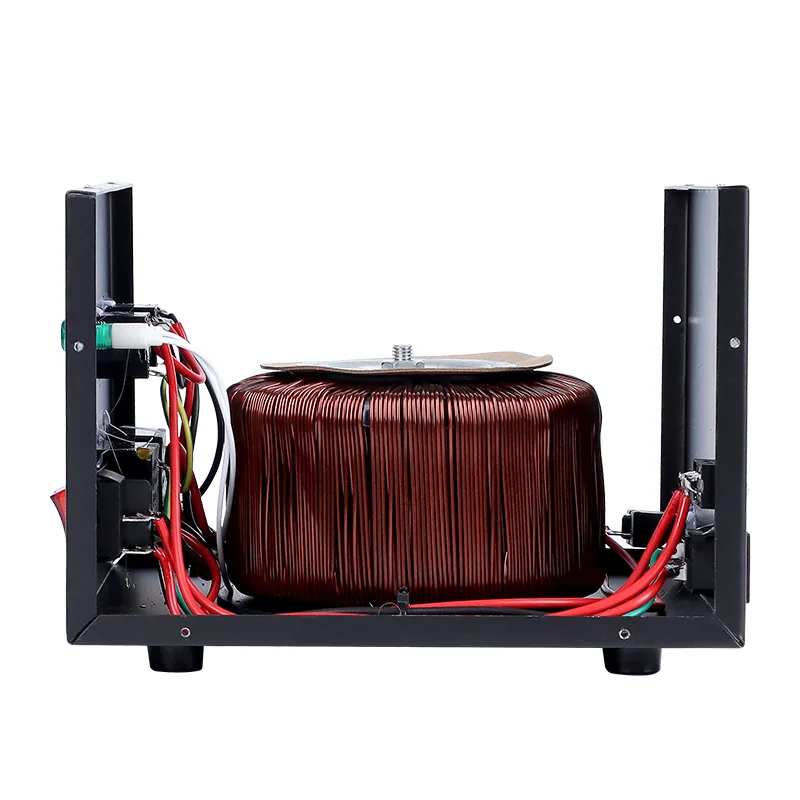
Step Down Transformer for Dishwasher: 220V to 110V Guide
A dishwasher is one of the heaviest appliances in the home, and a US 110V model in a 220V country needs a serious transformer — not a travel gadget. Dishwashers combine a motor, a heating element, and a control board that has to run reliably for years through hundreds of cycles. This guide covers sizing, the heating element question, and what to check before you wire one in.

Why dishwashers are a special load
A dishwasher is three appliances in one: a pump motor that surges at every cycle, a heating element that draws heavy current for the wash and dry phases, and a control board that manages the whole sequence. The motor gives the surge, the heater gives the continuous load, and the board gives the sensitivity. All three decide the transformer size together.
The practical result: a dishwasher label showing 1200W needs a 3000VA transformer, not a 1500VA one. The pump motor surges past the label number at start, and the heating element runs long cycles. Under-sizing a dishwasher transformer is the most common cause of early failure in this appliance class.
Step down transformer size for dishwasher
| Dishwasher | Wattage | Surge + heater | Recommended transformer |
|---|---|---|---|
| Compact / countertop (US 110V) | 800-1100W | motor + heater | 2000VA |
| Standard built-in (US 110V) | 1100-1500W | motor + heater | 3000VA |
| Large / heavy-duty | 1500-1800W | motor + heater | 3000-5000VA |
| Dishwasher + kitchen appliances | combined | simultaneous | 5000VA |
The STU-3000 is the honest recommendation for a standard US dishwasher: the pump surge and the heating element fit comfortably with margin. The ST-2000 works for compact models only. If the dishwasher shares a circuit with anything else — and kitchens being kitchens, it often does — step to the 5000VA STU-5000 and stop thinking about it.
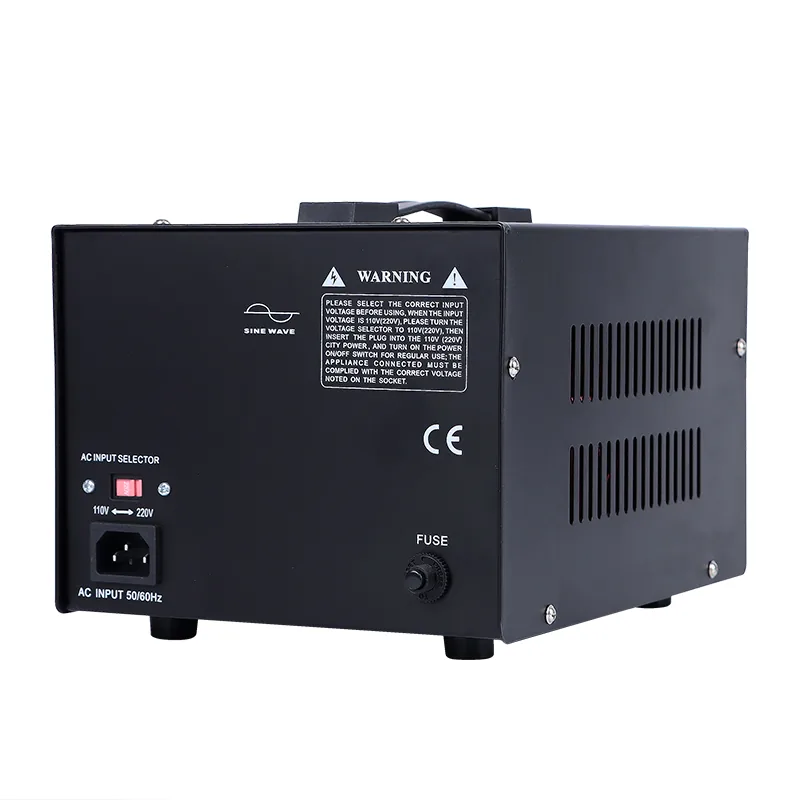
Hardwired vs plug-in installation
Built-in dishwashers are usually hardwired, which means the transformer needs terminal output instead of a socket. Order the terminal version and have an electrician land the cables, keeping the transformer in a dry, ventilated cabinet next to the machine. Countertop models use the plug-in version. Tell us which you have when ordering and we match the output configuration.
Water, heat and RCD protection
Dishwashers combine water, heat and electricity — the three ingredients of electrical danger. RCD protection on the transformer is essential: it trips on any leakage current in milliseconds, protecting against faults through wet floors or damp cabinets. The STU series includes RCD as standard. If the dishwasher is in a kitchen with a concrete floor or near a sink, this is not a place to save money.

Why copper winding matters for dishwashers
The heating element runs long, hot cycles, and the transformer absorbs that heat. Copper winding conducts better than aluminium, runs cooler, and survives years of daily dishwasher cycles. On a heavy continuous load like this, the winding material is the difference between a transformer you install once and one you replace every couple of years.
Common mistakes with dishwasher transformers
- Sizing on the label watts. The pump surge plus heater needs the bigger unit.
- Using a travel converter. Dishwashers are the opposite of travel loads.
- Hardwiring a plug-in transformer. Order the terminal version for built-ins.
- No RCD near water. Dishwashers are wet by design; protection is non-negotiable.
- Aluminium winding for heavy duty. Copper is the longevity decision here.
Why buy from a factory directly
Wilmall supplies the ST and STU series step down transformers to appliance importers across the Middle East, Africa, Asia and Latin America. Copper winding, RCD protection, terminal and plug-in variants, and batch test records with every shipment. MOQ 10 pcs per model, 15-25 day lead time, FOB Ningbo or Shanghai.
Dishwasher heating element and water temperature
The dishwasher heating element heats the wash water and dries the dishes, and it runs long, hot cycles. If the transformer output sags, the water takes longer to heat, the wash cycle extends, and dishes come out colder and wetter. If the output runs high, the element overshoots and the control board sees out-of-spec power. Accurate, stable output from the transformer keeps the wash cycle exactly as designed.
This is why the heating element, not the pump, is often the real reason a dishwasher transformer fails — the element load is sustained, and sustained load is what stresses the transformer.
Installation checklist for the kitchen
Install the transformer in a dry, ventilated cabinet, off the floor, away from the dishwasher plumbing. Give it clearance on all sides for airflow. Check the RCD test button monthly, and have the electrician verify the earth connection on both sides. In a kitchen with water and heat, these checks are the difference between an installation you forget and one you regret.
The connection diagram that ships with every Wilmall unit helps the electrician land the terminals correctly the first time.
Buying for resale: the kitchen range
Appliance distributors stock the 2000VA and 3000VA sizes for the dishwasher market, with 5000VA for households that run the dishwasher and the rest of the kitchen from one unit. Terminal and plug-in variants both sell — know which your market needs.
Private labelling from MOQ 10 pcs, and we can print the compatible appliance list on the carton so your customers match the right size at a glance.
The short version
A dishwasher needs a transformer sized for the pump surge plus the sustained heater load — the STU-3000 for most units — with RCD, copper winding and terminal output for built-ins. That is the whole dishwasher transformer story.
Frequency and the dishwasher
Dishwashers use pump motors that run on either frequency in most modern machines, with the control board converting internally. Older US machines with AC pump motors run slightly slower on 50Hz, which means a slightly longer wash cycle. Most owners never notice. If the machine is old and motor-critical, check the label before ordering.
The transformer only changes voltage, so the frequency tolerance of the machine is the only question. For dishwashers, the answer is almost always acceptable.
Installation checklist for the kitchen
Install the transformer in a dry, ventilated cabinet, off the floor, away from the dishwasher plumbing. Give it clearance on all sides. Check the RCD test button monthly, and have the electrician verify the earth on both sides. In a kitchen with water and heat, these checks are the difference between an installation you forget and one you regret.
The connection diagram that ships with every Wilmall unit helps the electrician land the terminals correctly the first time.
Ordering, shipping and lead time
Send us your dishwasher model, the wattage, whether it is built-in or countertop, and your country voltage. We confirm the transformer size and the output configuration (terminal or plug-in) in writing, then produce in 15-25 days and ship FOB Ningbo or Shanghai. MOQ 10 pcs per model.
Warranty and support
Every Wilmall transformer carries a 12-month warranty, and we keep common spares for fast resolution. A dishwasher failure means hand-washing for a week, so the warranty matters. Batch test records ship with every order, and we respond to support enquiries within 24 hours.
The STU series is built for heavy kitchen duty — the same units we supply for commercial kitchens. The warranty and the test records make them an easy sell for appliance distributors.
The short version
A dishwasher needs a transformer sized for the pump surge plus the sustained heater load — the STU-3000 for most units — with RCD, copper winding and terminal output for built-ins. That is the whole dishwasher transformer story.
Buying for resale: the kitchen range
Appliance distributors stock the 2000VA and 3000VA sizes for the dishwasher market, with 5000VA for households that run the dishwasher and the rest of the kitchen from one unit. Terminal and plug-in variants both sell — know which your market needs. Private labelling from MOQ 10 pcs per model.
Frequently asked questions
Dishwasher Sizing: The Heater, Pump, and Motor Combo
A dishwasher combines a heating element, a wash pump, and a drain motor, and the power profile changes through the cycle. The heater draws the most, typically 1200W to 1800W on a US-spec machine, and the pumps add their draw during the wash and rinse phases. The practical sizing is 2000VA to 3000VA for a standard dishwasher, which covers the heater and the pumps with margin. The dishwasher runs through a full cycle of an hour or more, so the transformer must handle continuous duty and the repeated cycling of the heater. Our ST series is built for this. If the dishwasher runs at the same time as other kitchen appliances, add their wattages. The heater cycling is the moment the transformer is tested, and the headroom keeps the water hot for a proper clean. Send us the nameplate rating and we will confirm the size.
Dishwasher Cycle and the Peak Load Moment
The dishwasher’s peak load moment is when the heater and the wash pump run together, which happens during the main wash phase. That is the moment an undersized transformer sags, the water stays lukewarm, and the cycle underperforms. The 2000VA to 3000VA sizing covers this peak with margin, so the heater and pump both get the current they need. The transformer also handles the repeated cycling of the heater through the wash, rinse, and dry phases. If you notice the dishes are not coming out clean or the water seems cool, check the transformer size against the dishwasher’s nameplate input rating. The right transformer makes the dishwasher behave exactly as it did in the country it was built for.
What size transformer do I need for a dishwasher?
A standard US dishwasher needs a 3000VA transformer. Compact models work on 2000VA. The pump surge plus the heating element decide the size, not the label watts.
Can I hardwire a transformer to a built-in dishwasher?
Yes. Order the terminal-output version and have an electrician land the cables. We build both terminal and plug-in variants.
Why does a dishwasher transformer need RCD?
Dishwashers combine water, heat and electricity. RCD trips on leakage in milliseconds, protecting against faults through wet floors or damp cabinets.
Can I order dishwasher transformers with my brand?
Yes, private labelling from MOQ 10 pcs per model, with terminal or plug-in output to match your market.
Related reading
- Step Down Transformer 220V to 110V: Sizing and Safety
- How to Size a Transformer for a Washing Machine
- Step Up and Down Transformer Products
Get a factory-direct quote
Email sales@wilmall.com or WhatsApp +86 197 3022 6757 with your dishwasher model and country. We confirm the size and output configuration within 24 hours. MOQ 10 pcs.