Why Do Transformers Hum? Noise Causes and Fixes | Wilmall
Why Do Transformers Hum? Noise Causes and Fixes
Almost every transformer makes a soft hum, and every buyer who hears it asks the same question: is this normal or is the unit failing? A why do transformers hum investigation usually ends in “it is normal physics” — but sometimes the noise is a genuine warning sign. Knowing the difference saves you from replacing good equipment and from running failing equipment until it dies.
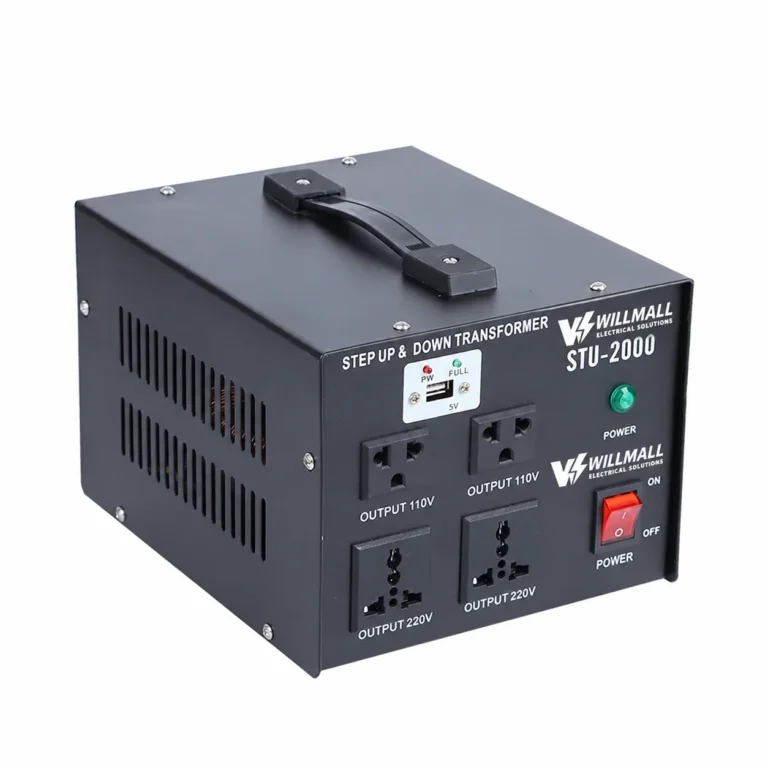
Wilmall Transformers, a low-voltage transformer factory in Yueqing, Zhejiang, has been manufacturing ST/STU step up and step down transformers, TC control transformers and TDGC2 variable transformers for export for 15 years. Every unit we ship is noise-tested on the production line. This guide explains the physics of transformer hum, the causes that turn a quiet hum into a loud rattle, and the practical fixes you can apply in the field.
The Physics: Why Do Transformers Hum at All?
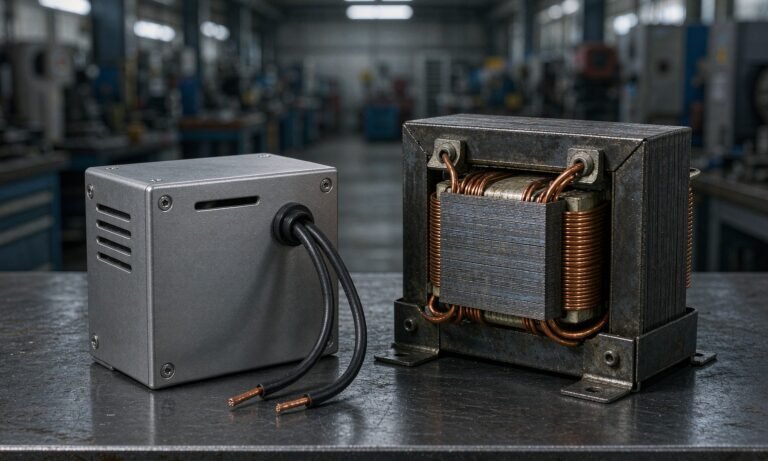
Transformer hum is mechanical vibration, not electrical sound. The core of a transformer is built from thin laminations of silicon steel. When alternating current flows through the primary winding, the magnetic field in the core alternates at the mains frequency — 50 Hz in most countries, 60 Hz in the Americas. This field causes the steel to physically stretch and shrink slightly with every half cycle, an effect called magnetostriction.
Because the steel changes length twice per full cycle, the core vibrates at twice the mains frequency: 100 Hz on a 50 Hz supply and 120 Hz on a 60 Hz supply. That vibration is transmitted through the windings, the mounting brackets and the enclosure, and it becomes the hum you hear. This hum is unavoidable in any iron-core transformer. A well-built transformer hums quietly; a poorly built one hums loudly — or worse, rattles.
What Else Contributes to the Sound
- Magnetostriction of the core steel — the dominant source.
- Loose laminations — if the core stack is not tightly clamped, individual sheets vibrate and produce a sharper buzz.
- Winding movement — the coil can vibrate slightly inside its bobbin under load.
- Enclosure resonance — the metal case amplifies certain frequencies like a loudspeaker cone.
- Mounting resonance — a rigidly bolted transformer transfers vibration into the panel or floor, which radiates it loudly.
Normal Hum vs Warning Signs
The first step in any diagnosis is to decide whether the sound is normal. Use this quick reference:
| Symptom | Likely Cause | Action |
|---|---|---|
| Soft, steady 100/120 Hz hum at idle | Normal magnetostriction | None — expected operation |
| Louder hum when load increases | Higher flux and winding forces under load | Normal if within rating; check loading |
| Buzz or rattle, especially at start-up | Loose laminations or brackets | Tighten core clamps and mounting screws |
| Sudden loud hum with no load change | DC offset or supply voltage too high | Measure input voltage; check for DC bias |
| Hum plus overheating and smell | Overload or shorted turns | Stop the unit; reduce load or replace |
If the hum is loud but the transformer runs cool, holds its output voltage and shows no smell, it is almost always a mechanical or supply-side problem rather than a winding failure.
Main Causes of Excessive Transformer Hum
1. DC Offset in the Supply
Modern grids carry a small direct-current component that comes from half-wave rectifiers, solar inverters and other non-linear loads connected to the same feeder. DC offset drives the transformer core into partial saturation, so it takes a larger magnetizing current each half cycle and the core vibration becomes much stronger. The classic symptom is a unit that was quiet for years suddenly humming loudly after new equipment is added to the same installation. A DC-blocking capacitor or a series blocking device on the primary is the fix.
2. Supply Voltage Too High
Transformers are designed for a nominal input voltage. If the supply runs 5–10% high, core flux rises and magnetostriction grows; a 240V transformer on a 250V grid hums noticeably more. Verify the input with a multimeter and reconnect to a lower tap if possible.
3. Loose Core Clamps and Mounting
After years of thermal cycling, the core clamp bolts and the frame mounting screws can work loose. A loose stack of laminations buzzes — the sharp, rattling sound that operators describe as “like a box of bees”. Tightening the clamp bolts to the manufacturer’s torque, or simply re-tightening the mounting screws, often removes the rattle completely. If the transformer is bolted directly to a thin metal panel or floor, the panel itself radiates the noise; adding rubber isolation washers makes a dramatic difference.
4. Overload and Harmonics
Running a transformer above its VA rating increases the leakage flux and the winding forces, which raises the noise level. Non-linear loads such as rectifiers, variable speed drives and switched-mode supplies inject harmonics that distort the core flux waveform and produce additional audible components. Re-distribute the load or move to a larger rating, and consider a drive-rated transformer where harmonics are heavy.
5. Mechanical Resonance
Every structure has a natural frequency. If the transformer’s vibration frequency — or its harmonics — coincides with the natural frequency of the mounting plate, cabinet or floor, the sound level multiplies dramatically. A small rubber pad under the feet or a flexible mount breaks the resonance.
Practical Fixes for Transformer Hum
- Verify the input voltage. Measure at the transformer terminals, not at the wall. High input is the most common avoidable cause.
- Check the load. Compare the connected load against the nameplate VA. Continuous load above 80% of rating is asking for both noise and heat.
- Tighten everything. Core clamps, terminal screws, mounting bolts — re-torque per the manual. Loose metal is a noise amplifier.
- Decouple the mounting. Fit rubber isolation washers or spring mounts between the transformer and the panel. This is often the single most effective fix for annoying hum.
- Move it away from resonant surfaces. Re-mounting a transformer off a thin steel plate can drop perceived noise by half.
- Investigate DC offset. If the hum started after new inverters or half-wave loads appeared on site, discuss a DC-blocking solution with an electrician.
- Reduce harmonics. For drive-heavy panels, use a transformer with a higher k-factor rating or add a line reactor.
How Wilmall Keeps Transformer Noise Low
Transformer hum can be designed out to a large degree, which is what buyers experience as “a quiet transformer”. The measures we take on every ST, STU, TC and TDGC2 unit include:
- High-grade cold-rolled silicon steel with low magnetostriction, chosen for low core loss.
- Precise core stacking and strong clamping to keep laminations tight and buzz-free.
- VPI varnish impregnation — vacuum pressure impregnation bonds the windings and core, which both improves insulation and damps vibration.
- Production-line noise testing of every unit against a reference standard before dispatch.
These are the same reasons a Wilmall transformer is quiet out of the box while a cheap import from a non-specialist supplier hums noticeably from day one.
Frequently Asked Questions
Is a hum always a sign that a transformer is about to fail?
No. A steady soft hum is normal electromagnetic behavior. The warning signs are a sudden change in loudness, rattling, overheating, or a burnt smell — those justify shutting the unit down and inspecting.
Why does my transformer hum louder at night?
At night the grid voltage often rises because demand falls, and background noise drops. Both effects make the same hum easier to hear. Check the input voltage with a multimeter to confirm whether the supply is drifting high.
Why do transformers hum noise levels vary between identical units?
Small differences in core steel, clamping pressure and how the unit is mounted produce unit-to-unit variation. What matters is that the level is within the manufacturer’s reference and stable over time.
Can I reduce transformer hum with a soft mount?
Yes, decoupling the transformer from the mounting surface with rubber isolation washers or spring mounts is usually the most effective fix for audible hum, because it stops the panel or floor from radiating the vibration.
Does hum increase as a transformer ages?
It can. Loose clamps, drying varnish and accumulating dust change the core’s mechanical response. Re-tightening and cleaning every few years keeps an old unit quiet.
What should I do if my transformer hums and gets hot?
Stop it immediately. Overload and shorted turns both produce this combination. Verify the load against the rating and check the output voltage; if the load is within spec but the unit still runs hot, the winding may be damaged and the unit should be replaced.
Choose a Transformer That Stays Quiet
Transformer hum is a design quality indicator. Wilmall Transformers manufactures quiet, low-loss transformers in Yueqing, Zhejiang, with 15 years of export experience serving the Middle East, Southeast Asia, Africa, South America and Central Asia. Factory direct pricing, MOQ from 10 units, 15–25 day lead times, CE/RoHS compliance and a 12-month warranty. Request a quote through the website form, contact us on WhatsApp, or email info@wilmall.com — we will help you select the right rating for your load.
Magnetic Hum vs Electrical Hum: Which Is Which?
Transformer hum has two main sources, and knowing which one you are hearing points to the fix. Magnetic hum comes from the core: the alternating magnetic field makes the steel laminations vibrate at twice the mains frequency, 100Hz on a 50Hz supply. This is normal and present in every transformer to some degree. Electrical hum is different: it usually comes from loose parts, a cracked core, or DC offset on the mains, and it sounds louder or harsher. A quiet, steady hum is normal and harmless. A loud buzz, a rattle, or a hum that changes with load deserves investigation. If the unit is new and hums loudly, check the mounting bolts, the case, and whether the unit is sitting on a surface that amplifies vibration. If the hum is accompanied by heat or a burning smell, unplug it immediately.