Toroidal vs EI Transformer: Which One Should You Buy?
Two core designs dominate the low-voltage transformer market: toroidal and EI (laminated). Both convert voltage, but they differ in efficiency, size, noise and price. This guide compares them side by side so you can choose the right one for your project — whether you are a distributor stocking for resale or a buyer converting a single appliance.
Quick answer: which transformer core is better
Toroidal transformers win on efficiency, size, weight and noise, but cost 30-60% more. EI transformers win on price, availability and ease of repair. For most household voltage conversion — running a 110V appliance from 220V mains — a well-built EI transformer is perfectly adequate. For audio equipment, medical devices, or anything sensitive to hum and magnetic leakage, a toroidal is worth the extra money.
What EI and toroidal actually mean
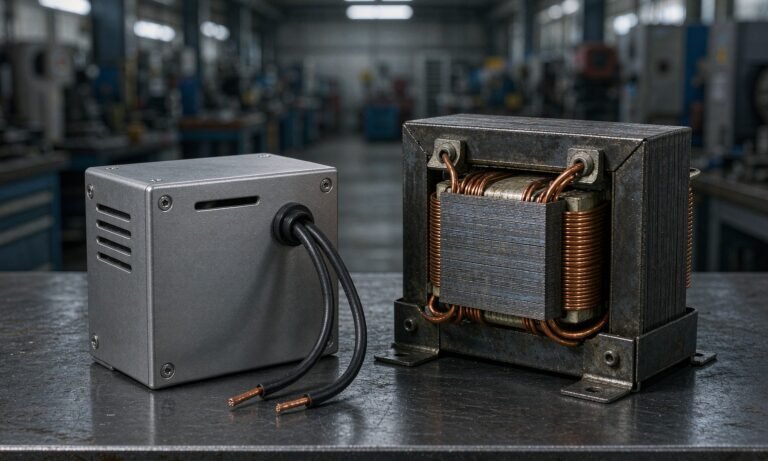
EI transformers are named after the shape of their core: E-shaped and I-shaped laminated steel sheets stacked together, with copper windings wound around the centre leg. They are the classic transformer design used in power supplies, battery chargers, and voltage converters for decades.
Toroidal transformers use a donut-shaped core made from a continuous strip of grain-oriented silicon steel, with the winding wrapped around the whole ring. The closed circular magnetic path reduces wasted magnetic flux, which is the main reason toroids are more efficient and quieter.
Toroidal vs EI: side-by-side comparison
| Factor | Toroidal | EI (laminated) |
|---|---|---|
| Efficiency | Higher (95-98%) | Good (88-95%) |
| Size and weight | 40-50% lighter and smaller | Bulkier, heavier |
| Noise / hum | Very low | Audible hum, more vibration |
| Heat at idle | Low | Higher idle loss |
| Magnetic leakage | Low | Higher |
| Inrush current | Higher at switch-on | Lower |
| Price | 30-60% more | Lower |
| Availability | Less common | Everywhere |
Which one should you buy
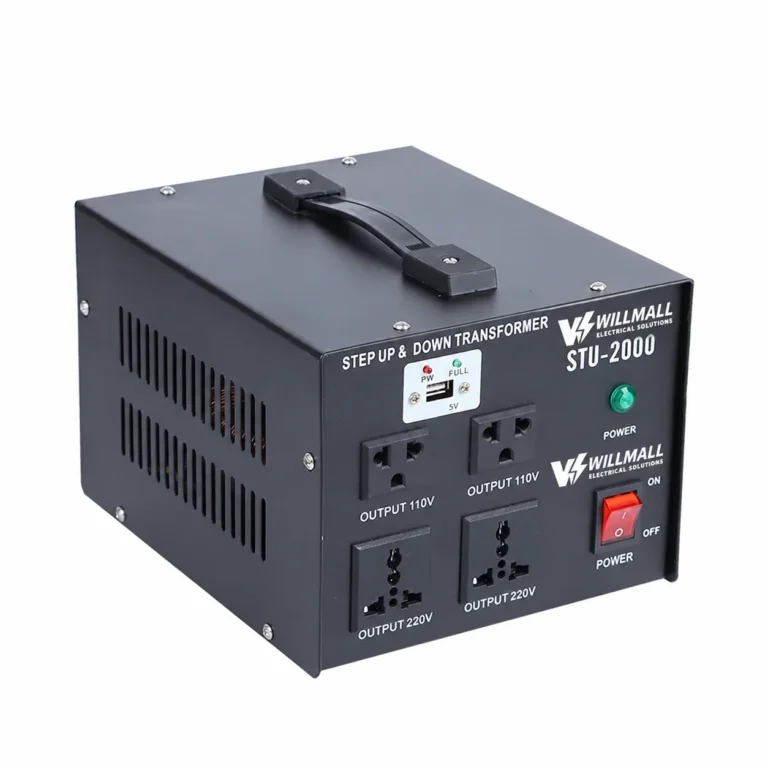
Choose an EI transformer when budget is the main driver, the load is simple (motors, heaters, lighting, kitchen appliances), or size and weight do not matter. This is why most 220V to 110V step-down converters sold around the world use EI cores — they deliver dependable service at the lowest cost.
Choose a toroidal when you are powering audio or hi-fi equipment, when noise must be minimal, when you need the smallest footprint, or when idle power loss matters for always-on equipment.
Why audio lovers care about toroidal cores
Toroidal transformers have lower magnetic leakage and less mechanical hum — two things that matter when a transformer sits inside or near an amplifier. Magnetic leakage can induce hum into nearby audio circuits, and mechanical vibration is picked up by sensitive electronics. That is why most quality audio power supplies use toroids.
For most other applications the difference is not audible or measurable in daily use. A properly rated EI transformer runs cool and quiet enough for appliances, tools and lighting.
Toroidal vs EI for step-down voltage converters
For a 220V to 110V step-down converter, the core type affects three things in practice: weight, price and how long it lasts. A 2000VA EI converter weighs noticeably more than a 2000VA toroid, which matters for shipping cost when you import by container. The price difference at the same rating is typically 30-60% in favour of EI — a significant saving on a bulk order of 100 or 1000 units.
Serviceability matters in emerging markets. If an EI transformer fails after years of use, a local winding shop can often rewind the coil and put the unit back to work. A toroid is harder to rewind and is usually replaced instead. For distributors selling into markets with limited repair infrastructure, that is a real after-sales advantage for EI units.
How to tell which core a transformer has
You can identify the core type by shape and weight. An EI transformer is rectangular or square with visible laminations on the top and sides, and it feels heavy for its rating. A toroidal transformer is round or oval, often covered by a bell-shaped shroud, and has a single bolt through the centre. If you can read the label, the words “toroidal” or “ring core” usually appear; otherwise, the shape settles it.
Lifespan and maintenance
Both designs last decades when run within rating and kept dry. The most common failure is heat — running a transformer above 80% of its nameplate rating continuously, or blocking ventilation, shortens winding life quickly. Keep the unit off the floor, allow air flow around the case, and check the wiring terminals every couple of years for corrosion. Neither core type needs regular maintenance beyond keeping it clean and dry.
Common misconceptions
- Toroidal is always better. Not for price-sensitive bulk buying or where mounting flexibility matters — EI cores bolt onto flat panels easily.
- EI transformers always hum loudly. Quality EI cores with tight lamination are quiet; most hum comes from poor clamping or DC offset on the mains.
- Toroids cannot be repaired. True — a burned toroid is usually replaced, while an EI core can be rewound locally, which matters in markets with limited service.
Frequently asked questions
Core Loss and Efficiency: What Actually Differs
Beyond price and shape, the two cores differ in efficiency at a practical level. A toroidal core has lower no-load loss because the continuous grain-oriented steel strip follows the magnetic flux direction with no gaps, so a toroid loses less energy when idle and runs cooler at the same load. That matters for units left plugged in 24/7, such as audio equipment or always-on appliances, where the no-load loss adds up over a year. An EI core, with its stacked laminations and air gaps at the joints, has slightly higher core loss but is still perfectly efficient for most household use. For a step-down transformer running a fridge or a TV a few hours a day, the difference in electricity cost is small. For continuous-duty applications, or for buyers who care about every watt, the toroid’s lower core loss is a real advantage. The honest answer is that both are fine for most buyers, and the decision usually comes down to price, noise, and size.
How to Verify the Core Type Before You Buy
You do not need to open a transformer to know its core type. A toroidal transformer is round, with a hole in the middle and the windings wrapped around the ring, and it is usually covered by a metal or plastic case that shows the round profile. An EI transformer is rectangular or square, with a stamped core visible through the ventilation slots, and the E-shaped laminations are easy to spot. Weight is another clue: for the same VA rating, a toroid is lighter because the core uses less steel. If you are buying online and the listing shows a rectangular unit, it is almost certainly EI, and if it shows a round unit, it is toroidal. When the listing is unclear, ask the seller directly which core it uses, because the two are not interchangeable for buyers who care about noise or mounting. Our listings state the core type for every unit, and the label on the unit matches the listing.
Mounting and Placement Differences
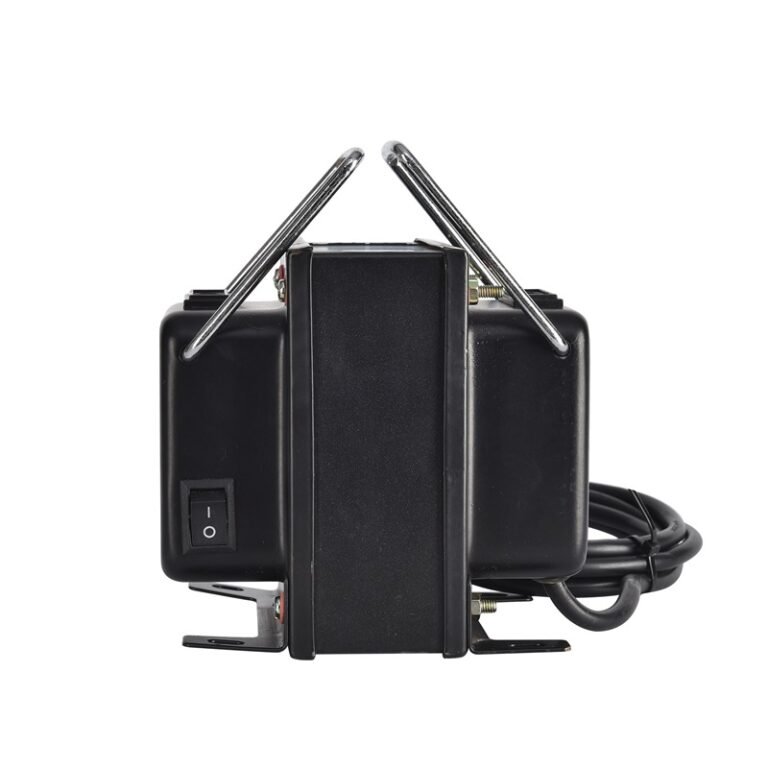
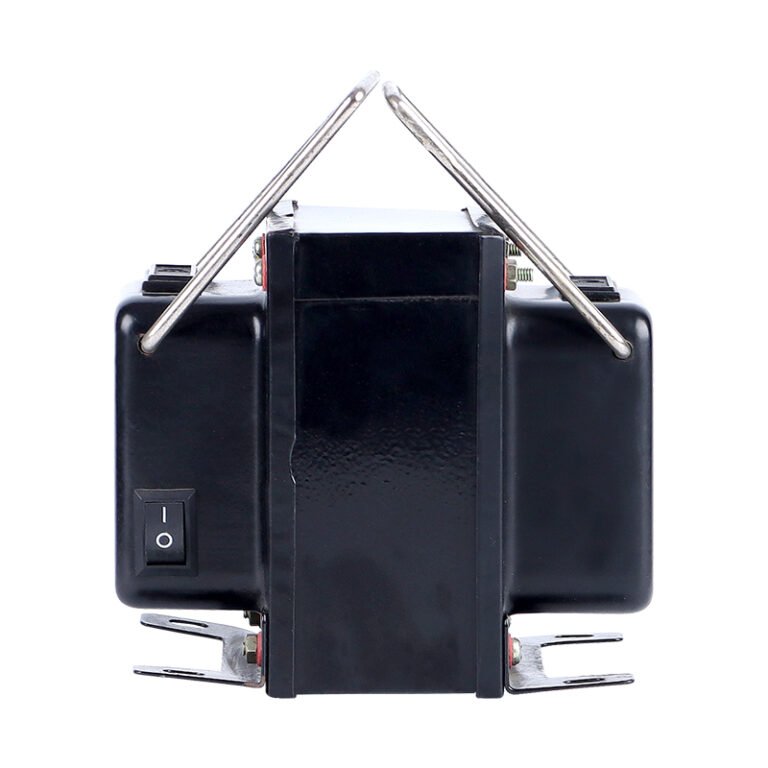
The two cores mount differently, which matters if you are installing the transformer in a cabinet or on a panel. A toroid is mounted with a single central bolt through the hole, which makes it easy to secure and very quiet, since the bolt clamps the core firmly. An EI transformer mounts with bolts through the frame or base plate, and it has a larger footprint for the same rating. In a cabinet, a toroid takes up less space and can be oriented with the hole vertical, while an EI unit needs flat mounting with clearance for its wider profile. For step-down transformers used on a shelf or floor, both sit happily, but the toroid is easier to move because it is lighter. For OEM and panel applications, the mounting difference often decides the choice, because a toroid’s single-bolt mounting is cleaner in a crowded enclosure. Tell us your mounting situation and we will recommend the core that fits.
Which Core Do We Recommend for Step-Down Use?
For most household step-down applications, we recommend the EI core, and here is why. It is cheaper, it is available in the full range of sizes from 100VA to 10KVA, and it is easier to repair in markets with limited service, because a local rewinder can rewind an EI core while a toroid usually has to be replaced. The slightly higher core loss is negligible for appliances that run a few hours a day. For audio, sensitive electronics, or continuous-duty loads, we recommend the toroidal core, which costs more but gives the low noise, low core loss, and light weight that those buyers expect. Our range includes both, so you can match the core to the application rather than forcing one type to fit everything. If you are buying for resale, stocking both covers the whole market: the EI units as the volume sellers and the toroids as the premium option for audio and hi-fi customers.
Are toroidal transformers better than EI?
For efficiency, size, noise and magnetic leakage, yes. For price and availability, no. A toroidal is better for audio and sensitive electronics; an EI transformer is the more economical choice for most household appliances.
Why do EI transformers hum?
Laminated EI cores vibrate at line frequency under load. The hum is mechanical, not electrical. Good clamping and quality lamination reduce it.
Can a toroidal transformer replace an EI one?
Yes, if the VA rating and voltage match. Check the mounting method, since toroids use a centre bolt while EI cores use brackets.
Which is cheaper, toroidal or EI?
EI transformers are typically 30-60% cheaper for the same rating, which is why most step-down converters use EI cores.
Does Wilmall supply toroidal transformers?
We focus on EI-style low voltage transformers in the DT, ST and STU series. For toroidal needs, contact us and we will advise on the best source.
Related reading
Get a factory-direct quote
Tell us the appliance, voltage and wattage — we will recommend the right series, size and price. Email sales@wilmall.com or WhatsApp +86 197 3022 6757. MOQ 10 pcs, 15-25 day lead time.