Transformer Warranty and After-Sales: What You Get
The email that worries a buyer most is not the one about price. It is the one that says the unit has stopped, and it usually arrives at an awkward hour with a photo of a case that will not power up. What happens next decides whether the twelve months of transformer warranty on your invoice was a real commitment or a line of text. I would rather explain how ours works before you need it, so there are no surprises on the day something goes wrong.
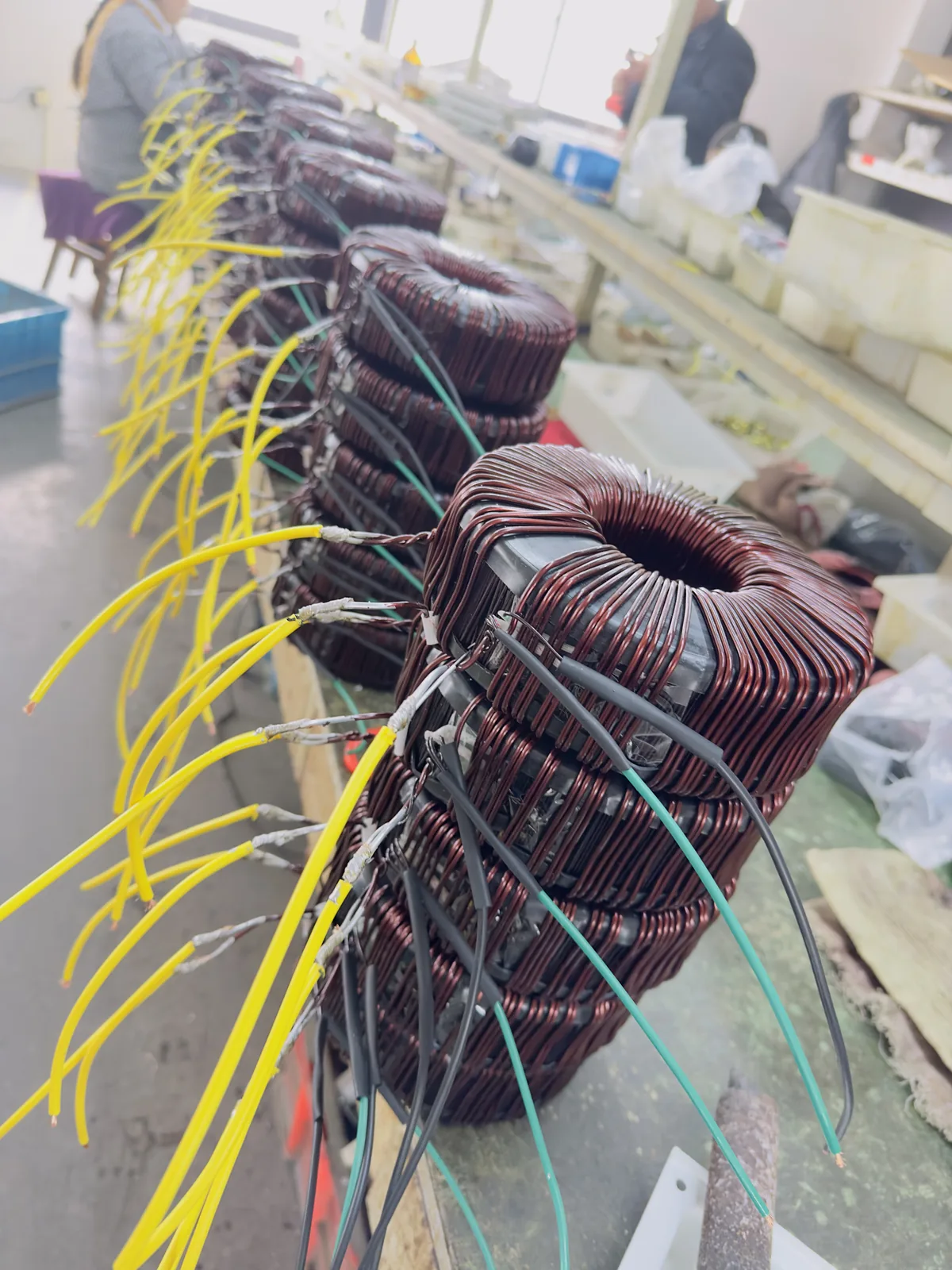
Our units are wound and tested in Yueqing, and I handle the after-sales side myself. That means the person answering your message about a failed unit is the same person who knows how it was built. Here is what we cover, what we do not, and exactly what we ask you to do when a unit misbehaves.
What a 12-Month Transformer Warranty Actually Covers
The short answer is that we cover our own workmanship and our own materials. The copper winding, the laminated iron core, the insulation system between them, the internal wiring and terminations, and any component we fitted inside the case all sit inside the twelve months. If any of those fails while the unit is being used as it was sold to be used, that is our problem, not yours.
The practical test is whether the fault came from how the unit was built or from what happened to it afterwards. A coil that develops an internal short because a layer is chafing, a core that buzzes from loose lamination clamping, an insulation breakdown caused by a resin or varnish defect, a terminal that lets go at the factory crimp rather than at your screwdriver: all of those are manufacturing faults and all of them fall inside the warranty. So does an RCD that stops latching, a fan that dies in the first month, or a meter that reads consistently wrong.
The twelve months start from the invoice date, not from the day the container is unpacked. That matters in this market, because a sea leg plus a customs clearance plus a road leg can quietly eat six weeks. If your goods are held up for a long time at the destination, tell us and we will look at the dates honestly rather than hide behind the calendar.
One thing I want to be clear about, because it comes up often: the warranty is not a service contract and it is not insurance. It covers the unit we built. It does not cover your machine that was plugged into it, your lost production, or the electrician’s time. Any supplier who promises to cover your downstream losses is either not going to be there in a year or is charging you for it somewhere else in the price.
Where the Cover Stops: Overload, Lightning, Water and Wrong Wiring
Most failures I see in the field are not manufacturing faults. They are the four classics, and I would rather name them than let a buyer discover them at the worst moment.
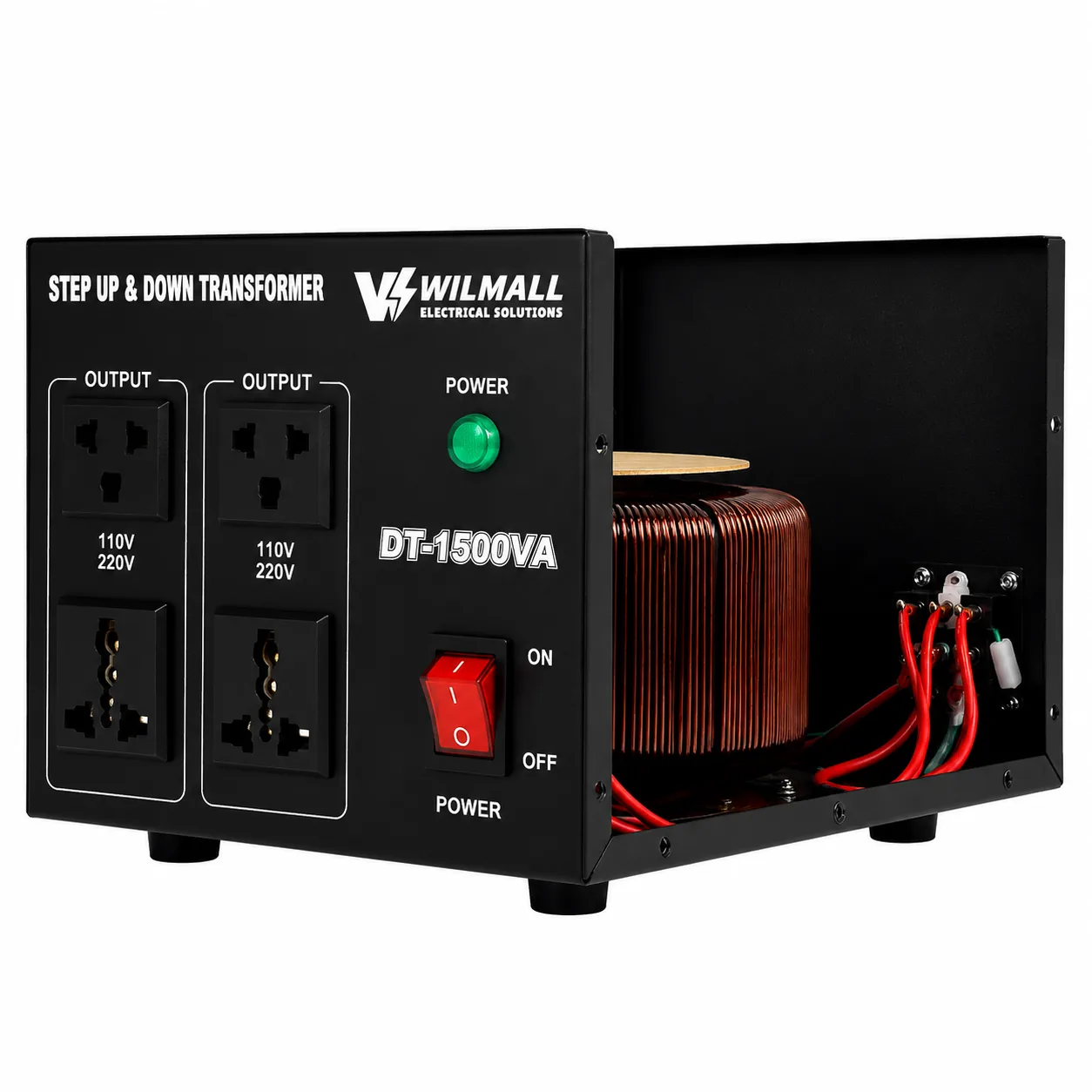
Overload is the first and the most common. A unit rated at 1500VA asked to carry a 3500VA start will run hot, and if it is asked often enough the insulation gives up. The signs are usually visible inside: darkened winding, that unmistakable burnt varnish smell, a case that has been hot enough to discolour from the inside. When a unit comes back like that, we can usually tell from the photographs alone what happened, and it is not a build fault.
Lightning and mains surges are the second. A strike on the network can put a spike through a transformer that no reasonable winding design will survive, and nobody sells you a box that is immune to it. What protects you is a surge arrester upstream, and if your site is in a thunderstorm belt or on an exposed feeder, that is the money well spent.
Water and damp come third. A coastal site, a leaky roof, a case left on a wet floor, a unit hosed down during a washdown: water inside a transformer is a genuine hazard, not just a failure. If a unit has taken water in, stop using it and disconnect it, and do not power it up to see whether it still works.
Wrong wiring is the fourth, and it is the one that is entirely avoidable. Feeding 220V into the 110V side of a step down unit, or connecting a step down as if it were a step up, will fail a unit quickly and sometimes spectacularly. Read the label, match the input to the input terminal, and if there is any doubt in the installation, ask us and we will confirm before you energise anything.
| Part or fault | Inside the 12 months | Not covered |
|---|---|---|
| Copper winding | Internal short, chafed layer, varnish defect | Damage from sustained overload or a short on the output |
| Laminated iron core | Loose clamping, abnormal buzz from the build | Physical damage in transit or on site |
| Insulation system | Breakdown caused by a materials or process fault | Breakdown after water ingress or overheating |
| Terminals and internal wiring | Failed factory crimp or internal joint | Loose connection after the buyer re-terminates |
| RCD and protective parts | Won’t latch, faulty trip mechanism | Tripping caused by faulty downstream equipment |
| Fan, knob, meter, brush | Early failure within normal duty | Wear from continuous heavy industrial use |
How a Claim Actually Runs, Step by Step
Nobody wants a process, but you deserve to know the path before you are standing in a plant room with a dead box. This is the way it goes with us, and it is deliberately front-loaded so the diagnosis happens before anything gets shipped.
Step One: Photos, Nameplate and a Short Video
Send three things. A clear photo of the rating label, so we can pull the batch record and see exactly what was tested before it left. A photo of the unit as it sits, including any visible damage, discolouration or water marks. And a short video, ten or fifteen seconds is plenty, showing what happens when it is powered up. That video is worth more than a page of description, because the sound and the way it fails tells me a lot.
If you have a meter, read the input voltage at the terminal and the output voltage at the socket with the load disconnected, and write both numbers down. That single pair of readings usually tells us whether the problem is the unit or the supply feeding it.
Step Two: Remote Diagnosis, Usually Within a Day
With photos and those readings in hand I can normally give you an answer the same day or the next. Nine times out of ten the conclusion is one of three things: a failed internal component, an installation problem at your end, or a unit that has been run beyond its rating. I will tell you which one, plainly, and I will not dress up a misuse case as a build fault or the reverse.
Step Three: Spare Part, Repair or Replacement
If the fault is a single small part, the fastest route is a spare. A fan, a fuse holder, a meter, a knob, an RCD module or a terminal block can be sent by courier in a small parcel and fitted by your own electrician in twenty minutes. For a winding or core failure, no field repair makes sense, and the unit is either replaced under warranty or, at your option, credited.
When a replacement goes out, we label it with a reference to the original batch so the records stay joined up. If the original unit failed on a project with a commissioning deadline, tell us the date and we will tell you honestly whether we can meet it rather than let you plan around a hope.
Spare Parts: What Ships With the Unit and What to Keep on the Shelf
There is a straightforward way to make a failure boring, and that is to keep the right small parts nearby. Any of these can travel in the same carton as your order if you ask for them, and for a distributor or a maintenance department it is worth doing once rather than paying courier rates for a single fuse later.
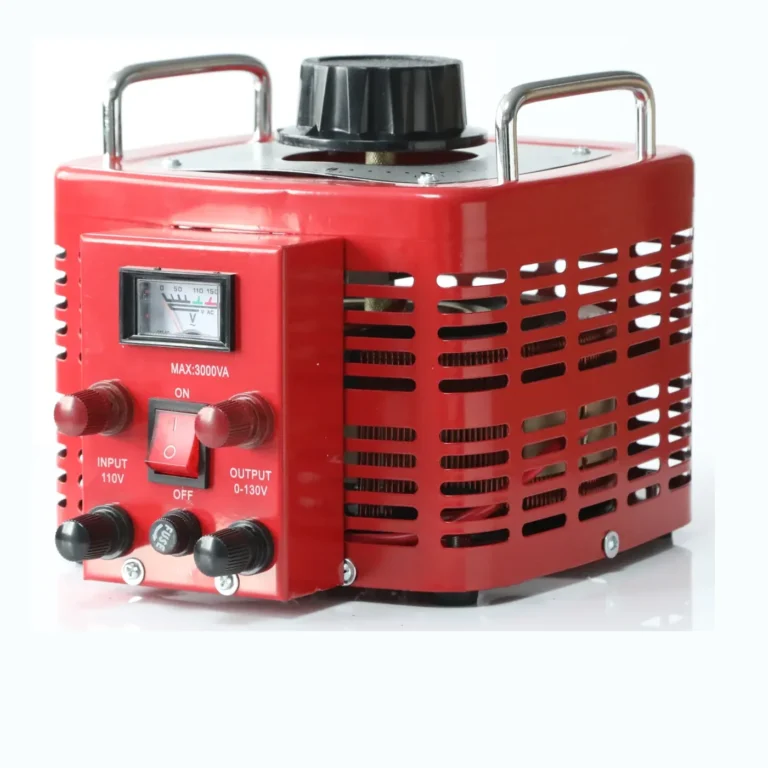
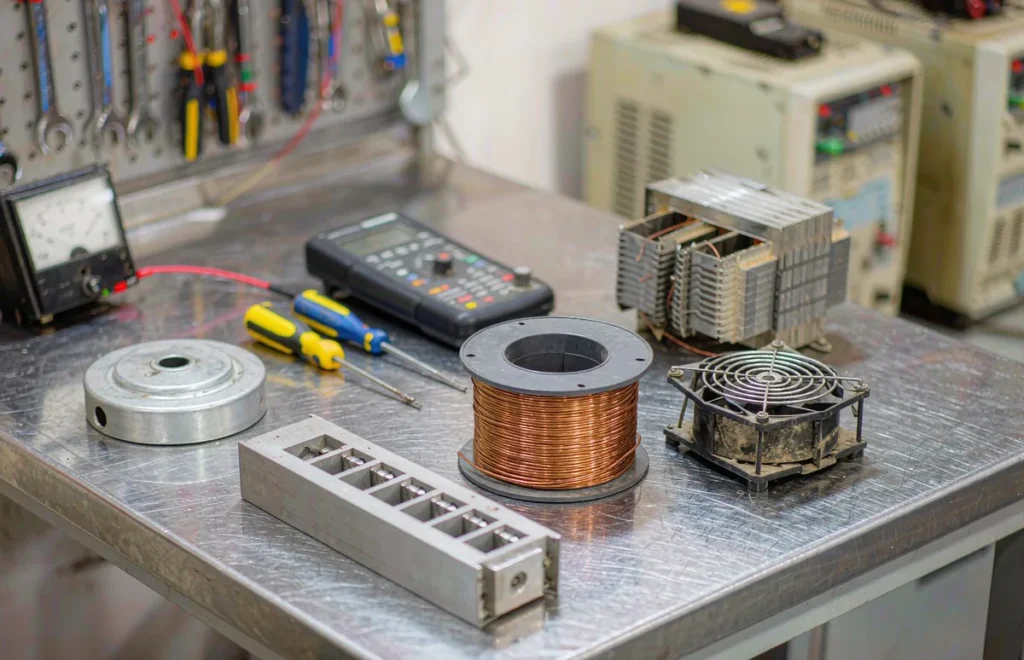
For the Variac and TDGC2J variable units, the carbon brush is the part that wears, because it slides on the winding every time somebody turns the dial. It is inexpensive and it is the one consumable I would always hold in stock if you run these units daily. A few spares on a shelf in the workshop means a five-minute fix instead of a month waiting for a parcel.
For everything else, the list is short. Terminal blocks and terminal screws, because a damaged terminal is the most common field casualty on any transformer. Fuse holders and fuses, where the build includes them. A replacement cooling fan and its guard on vented units. The output socket or outlet assembly, which can crack if a plug is yanked out at an angle for years. The control knob on variable units. And the panel meter on any model that carries one, because a meter that has been dropped or has fogged internally is a nuisance that costs very little to put right.
What I would not stock is a spare winding or core. Those are the parts that define the unit, and if one fails you want a replacement unit, not a bench rebuild in a workshop that has never laminated a core before.
RMA, Return Freight and Who Pays What
Under the warranty we cover the cost of the replacement part or unit. Freight is where buyers get surprised, so let me set it out clearly rather than let you find out from the invoice.
For a small spare part, we courier it at our cost to your address. That is straightforward and it is what we do nine times out of ten, because most faults are small-part faults.
For a whole unit that needs to come back, the usual arrangement is this: you arrange and pay the freight back to us, we repair or replace, and we ship the replacement at our cost. That split is standard in the trade and it is fair, because the return leg depends entirely on where you are and what your forwarder charges, which we cannot control. If a returned unit turns out to have failed because of misuse, we will tell you before we touch it, and then the return freight and the repair cost sit on your side of the line.
Where the amount is small, it is usually cheaper for both of us to send the part rather than the box. A fan costing a few dollars is not worth an air freight round trip on a ten kilogram transformer, and I will say so if that is the sensible route. You get the same unit working again faster and we both avoid a freight bill that helps nobody.
Repair After the Twelve Months Are Up
We do not disappear when the warranty ends. Units come back to us well past the twelve-month mark with a fan that has finally given up, a terminal that has been over-tightened one time too many, a meter that reads oddly, or a variable unit that needs a new brush. We repair those for a charge, and the charge is the parts plus workshop time, quoted before we start rather than invoiced afterwards.
An older unit of ours is usually worth repairing, because the winding and the core are the expensive parts and they are also the parts that rarely fail. A brush or a fan is a small fraction of the cost of a new unit, and a unit that has been running for six years is a known quantity rather than a gamble.
For buyers with a fleet of units across several sites, it is worth writing the model and the purchase date on the inside of the case in marker. It sounds crude. It is also the fastest way to identify what you are dealing with when somebody holds a phone up to a unit that has been in service for years and asks whether it is still in warranty.
Winding, Core, Brush and Knob: What Wears and What Does Not
A little knowledge about which parts move makes the whole transformer warranty question less abstract. A static transformer with no moving parts has almost nothing to wear out. Fans fail eventually because bearings do. Knobs break because people lean on them. Carbon brushes wear because they are designed to sacrifice themselves against a rotating contact. Output sockets crack from years of plugs being pulled sideways.
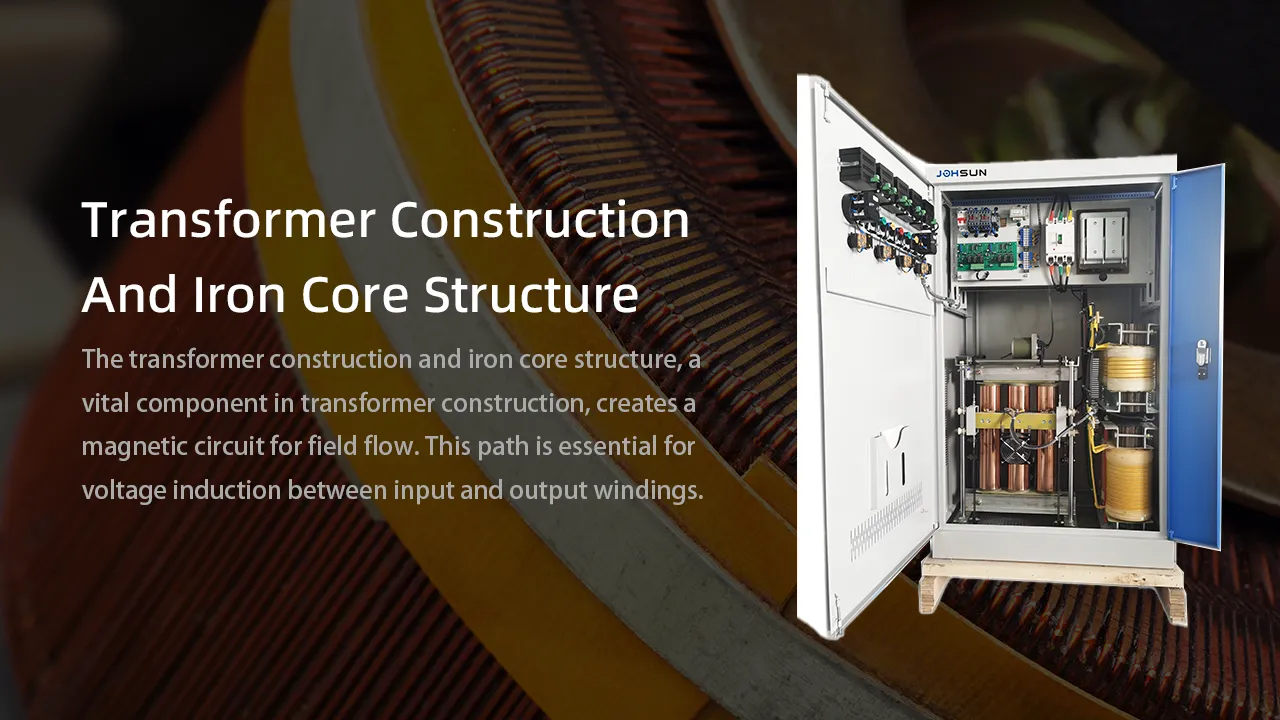
The winding and the core, on the other hand, sit inside the case doing the same job at the same temperature for decades if the unit is correctly sized and kept dry. When one of those fails inside the first year, that is almost always a build issue and we treat it as ours. When a winding fails in year five, it is worth reading the failure honestly, because the usual cause is a load that grew without anyone revisiting the sizing.
That is why I ask about the load before I ask about the fault. If your equipment list has quietly changed since the unit was bought, the fix may be a bigger unit rather than a repair, and telling you that early saves you doing this twice.
Questions Worth Asking Any Factory About Transformer Warranty
Before you place an order anywhere, ask three questions. What exactly is covered, what is excluded, and who pays the return freight. A supplier who answers those three in writing is a supplier who has thought about it. A supplier who answers with a paragraph of reassurance has not.
If you want more background on how a factory operates before you commit, our MOQ, OEM and Lead Time: What to Ask a Transformer Factory piece goes through the questions I would ask in your position. If you are still choosing a model, the step up & down transformers page covers step down, step up and bidirectional builds so you know which one your application calls for. And we keep a library of more transformer buying guides if you want to read around the subject before you send a specification.
If a unit of ours has failed, do not agonise over it. Send the photos and the video and we will tell you within a day what we think happened and what we are going to do about it. That is the whole point of promising a twelve-month warranty in the first place, and I would rather honour one properly than argue about it.
Transformer Warranty Questions Buyers Send Me
These are the messages that come in about faulty units and about cover, with the answers I would give on a call rather than in a policy document.
What does your 12-month transformer warranty cover?
It covers our materials and our workmanship: the copper winding, the laminated core, the insulation system, the internal wiring and terminations, and any component we fitted inside the case, including the RCD. The transformer warranty does not extend to your downstream equipment or to lost production while a unit is out of service.
What is not covered under the warranty?
Overload is the big one. A 1500VA unit asked to carry a 3500VA start will fail, and the burnt varnish usually proves it. Lightning and mains surges, water ingress, and connecting 220V into the 110V side are also outside cover. Nothing survives a direct strike, which is why we recommend a surge arrester upstream.
What do I need to send you to start a claim?
Three things: a clear photo of the rating label so we can pull the batch test record, a photo of the unit as installed showing any damage or discolouration, and a short video of what happens at power-up. If you can read the input and output voltage with the load off, those two numbers speed the diagnosis up considerably.
Who pays the return freight on a warranty claim?
For a small part such as a fan, a fuse holder, a meter or a Variac carbon brush, we courier it at our cost. For a whole unit, you arrange and pay the freight back to us, we repair or replace, and we ship the replacement at our cost. If the fault turns out to be misuse, we tell you before we open it.
Do you repair units after the warranty has expired?
Yes. We repair out-of-warranty units for the cost of parts plus workshop time, quoted before we start. The winding and the core are the expensive parts and usually the last to fail, so a fan, a terminal or a meter is a small fraction of a new unit and often worth fixing rather than replacing.
If a unit of ours has stopped, send us the photos and a ten-second video. Include the rating label so we can find the batch test record, and tell us what the load has been doing. Most cases are diagnosed inside a working day, and where a small spare part will solve it we courier that rather than drag a whole transformer back across an ocean.
Or talk to us directly: WhatsApp +86 197 3022 6757 · Email sales@wilmall.com
MOQ 10 pcs · Lead time 15-25 days · FOB Ningbo or Shanghai · 12-month warranty