Step Down Transformer for Mongolia: 220V to 110V Guide
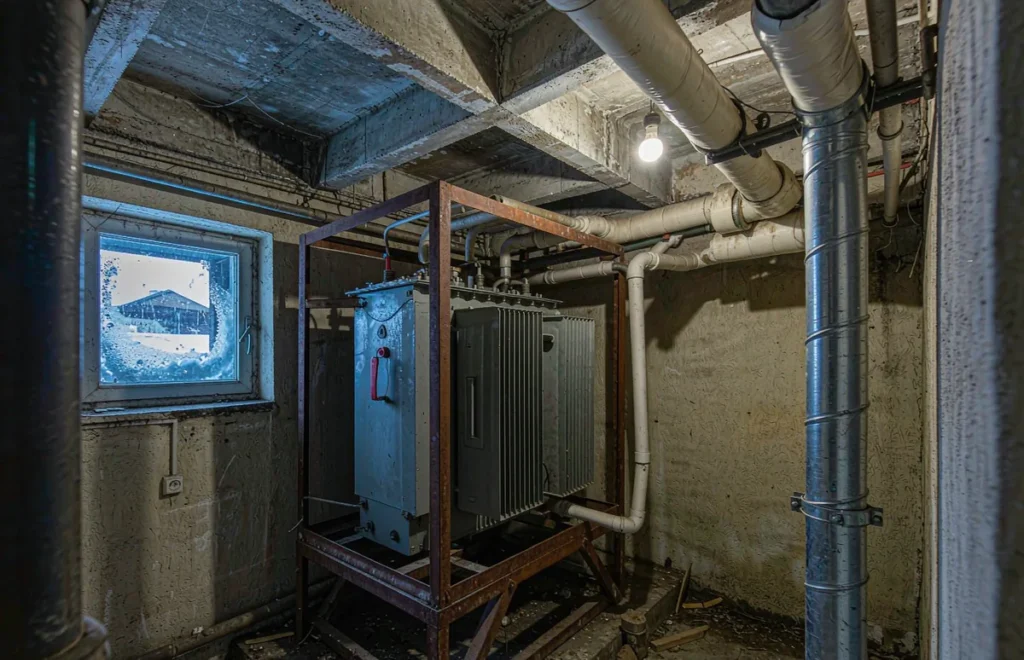
Mongolia is 220V at 50Hz, which sounds like a European supply until you look at where that supply actually ends up. In Ulaanbaatar the distribution network reaches out to ger districts and industrial plots where the voltage at the end of the line sits well below nominal, and in winter the country gets cold enough that the question is not whether your equipment works but whether it starts at all. So a step down transformer for Mongolia has to do two jobs: turn 220V into 110V, and do it reliably at minus thirty degrees when the input is already sagging.
I work at a low voltage transformer factory in Yueqing, China, and we export step down and step up units. Mongolia orders mostly come through mining supply companies, through construction and camp contractors, and through importers in Ulaanbaatar handling American and Canadian equipment. The questions are consistent, so let me answer them here the way I answer them over WhatsApp rather than in brochure language.
Mongolia Power Basics: 220V, 50Hz, Type C and Type E
Nominal supply is 220V at 50Hz. Sockets are Type C, the two-pin European pattern, and Type E, the French pattern with a protruding earth pin. Older buildings in Ulaanbaatar often have Type C only, and you cannot assume an earth is available at the socket even when the pattern suggests one. Check before you plan an installation, because a transformer with a metal enclosure needs a real earth connection.
The 50Hz figure is worth dwelling on if your equipment came from North America. A transformer changes voltage and never frequency. A machine built for 110V at 60Hz will get 110V at 50Hz and behave differently. Switch-mode electronics such as laptops, monitors, routers and modern control boards handle both frequencies without noticing. Induction motors do not. A 60Hz motor on a 50Hz supply runs roughly seventeen percent slower and a little warmer, which for a pump means less flow and for a compressor means longer run times.
Where Mongolia stands apart from most 220V markets is the combination of distance and cold. The supply is not merely variable, it is variable at the end of long rural feeders, and the equipment has to sit in an unheated plant room through a winter that can reach minus forty. Both of those facts change the transformer specification you should be buying.
Winter Cold: Why -40 Degrees Changes the Specification
Let me start with the thing that catches importers out. Most transformers are rated for an ambient temperature range, and the standard range on a general purpose unit does not extend to a Mongolian January. When a transformer is installed in an unheated room, a container-style site hut or a mine workshop that is only heated while people are in it, the unit soaks down to the local temperature and has to start under those conditions.
Cold affects a transformer in a few specific ways. Insulation materials become stiffer and less flexible, and a material that is perfectly fine at twenty degrees can crack if it is mechanically stressed at minus thirty. Lubricants and sealing compounds behave differently. And the difference between the temperature of a de-energised unit and its operating temperature is large, so the first hours after start-up involve a big thermal swing, which is the hardest thing you can ask of any insulation system.
What we do about it is straightforward and you should ask for it explicitly. Tell your supplier the lowest ambient the unit will see and the installation location, and ask which insulation class and which varnish system the windings use. Ask whether the unit is suitable for the ambient you have stated. If the supplier cannot answer that question in specific terms, that is information in itself.
Dry Type or Oil Filled?
Both types exist and the choice depends on your site, not on a general rule. Dry type units are simpler, need no oil, cannot leak, and are easier to move and to inspect. For an indoor installation in a heated building, at the ratings we are discussing here, dry type is the normal answer and it is what we build.
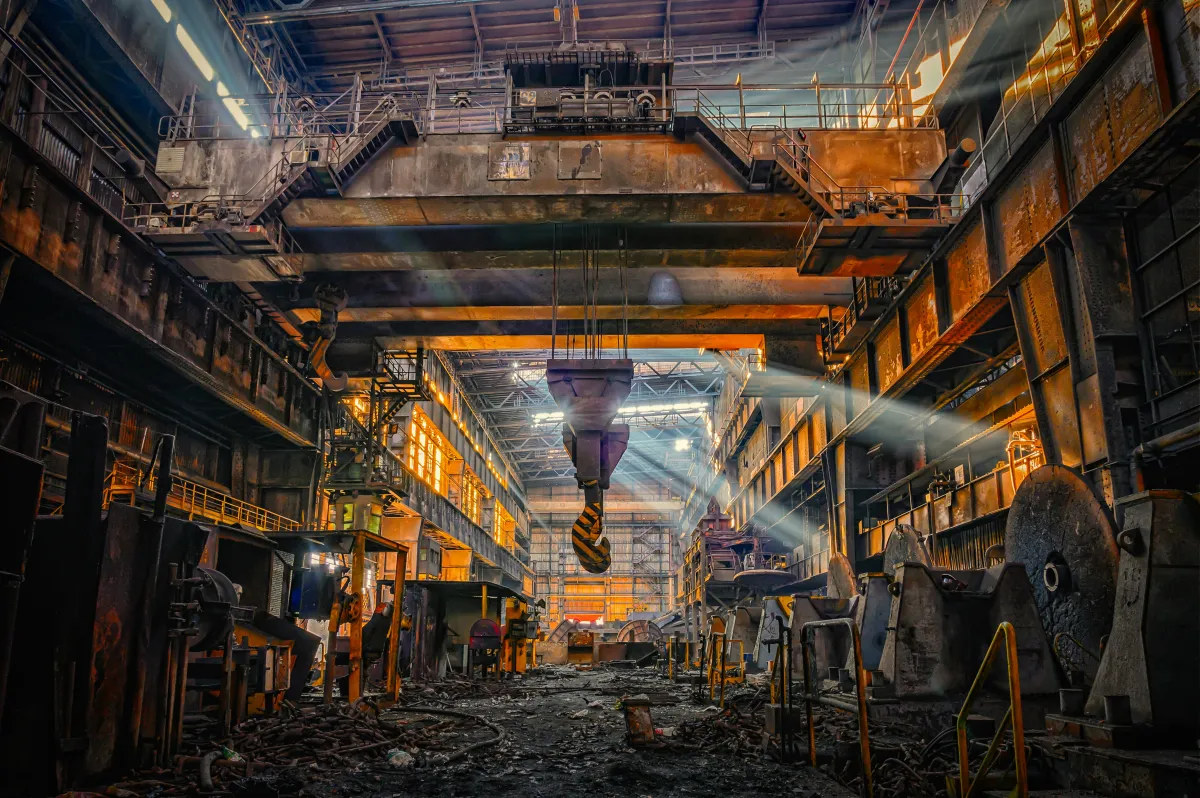
Oil filled units come into play at larger ratings and in harsher outdoor environments, where the oil provides both cooling and a degree of protection from the surroundings. If your site is a mine substation, an outdoor pad at a remote camp, or a location where the unit is exposed to blowing snow and dust, that is a conversation to have with your engineering team before ordering. Tell us the ambient, the location and the load, and we will tell you honestly whether our dry type range suits the job or whether you should be looking at a different product class.
What I would not do is put a standard dry type unit outdoors in a Mongolian winter without a proper enclosure, or in a room where moisture condenses on it during the spring thaw. Both are avoidable mistakes with a little planning.
End-of-Line Voltage Drop and What It Costs You
Mongolia’s distribution network is long and, in the districts around Ulaanbaatar and in the aimags, it reaches customers a considerable distance from the substation. Long feeders mean voltage drop, and voltage drop means the supply at your socket can sit well below the nominal 220V, particularly in the evening peak when everyone’s heating and lighting is on.
Here is the arithmetic that matters. A transformer is a fixed ratio device. If it is built for a 2:1 ratio and the input is 195V instead of 220V, the output is roughly 97.5V instead of 110V. Small electronics usually tolerate that. Motors do not enjoy it. An induction motor running below its design voltage draws more current to produce the same shaft power, so current goes up while voltage goes down. The motor runs hotter, and the transformer feeding it runs hotter too, because the secondary current has risen.
The practical conclusion for Mongolia is the same as for any weak-grid market, only more so. Size up rather than sizing to the number. If your load sheet comes to 1600W, buy the 2000VA rather than a 1600VA unit. If a pump or a compressor is involved, do the start-current multiplication properly. Headroom is not waste here, it is the difference between a unit that survives five winters and one that does not survive its first.
Sizing: Nameplates, Simultaneity, Start Current
Start with the rating plates and not with what somebody told you the appliance draws. A 110V freezer might be 200W running. A chest freezer 250W. A microwave 1000W to 1500W. A washing machine 500W to 1000W. A space heater 1500W. A submersible pump 750W to 2200W depending on size and head. A mine dewatering pump is a separate conversation and belongs with the project engineers.
Then decide what runs at once. In a camp kitchen the timing is predictable and everything gets switched on together at meal times, which is worse than a domestic pattern. In an apartment the freezer and refrigerator run continuously while the microwave and kettle take turns. In a workshop, several tools may be in use at the same time because that is how the shift goes.
Then apply the start factor. For any motor or compressor, allow 2.5 to 3 times the running watts for the moment of starting. A 1500W pump can pull something around 3750W to 4500W for an instant. A transformer sized exactly at the running figure will buzz, trip or overheat on every one of those starts, and in cold weather the effect is worse because the lubricant in the machine is thicker and the rotor turns harder.
Reference Table for Mongolian Applications
These are the enquiries that come up most often from Ulaanbaatar and from site camps. Use the table as a starting point and then send us the real figures.
| Application | Typical load | Suggested unit | Why this one |
|---|---|---|---|
| Apartment, imported refrigerator and electronics | 250 – 900 W | ST-1500 or ST-2000 | Compressor start is the deciding figure |
| Apartment, kitchen appliances and entertainment | 900 – 1800 W | ST-2000 with RCD | Mixed appliances, one heavy item at a time |
| Camp kitchen with imported equipment | 2000 – 4000 W | Two STU-3000 on separate circuits | Everything switches on together at meal times |
| Site office or workshop with imported tools | 1500 – 3500 W | STU-3000 bidirectional | Motor starts through the shift, long duty cycle |
| Water pump or dewatering duty | 750 – 2200 W running | STU-5000, one unit per pump | Hard start plus low input voltage at the end of a feeder |
| Mining or industrial control panel | Project specific | TC series control transformer | Built for control circuits rather than appliance loads |
| Bench testing imported equipment | 500 – 2000 W variable | Variac 1KVA to 3KVA | Adjustable output for commissioning checks |
One note on the table. Past roughly 5000VA, splitting a site across two units beats pushing one box harder, and in Mongolia that advice carries extra weight because of the ambient temperature and the distance from any service support. Two units also mean that if one needs attention, the rest of the site keeps running while you wait for a replacement to travel from China.
Cold Start Practice on Site
A few habits make a real difference in a Mongolian winter, and they cost nothing.
Do not slam the load on the instant the supply returns. A transformer and the machines behind it are cold, and the combination of inrush and cold lubricant is the hardest moment in the year. Bring the heavy items on one at a time and let the unit run for a few minutes before you add anything with a motor.
Keep the unit dry. In spring, warm moist air meeting a cold metal case is how condensation forms inside equipment. A unit that has been sitting at minus thirty in an unheated room and then gets a warm day with the door open will sweat. Sealed enclosures with proper gaskets and a stable, unheated but dry location handle this better than a room that is heated intermittently.
Keep ventilation clear in both directions. Snow and ice get packed against vents more often than people expect, and a transformer with blocked vents in a heated room is a transformer running hot. Check the vents as part of the routine when you check the installation.
Earth the enclosure and use an RCD on the 110V side. Cold rooms, wet floors and melted snow tracked indoors make this a genuinely useful protection rather than a formality. The ST-2000 has RCD protection built into the enclosure.
Shipping to Mongolia: Tianjin and the Overland Leg
Mongolia has no seaport, so nearly all container traffic from China moves by road or rail across the border. Tianjin is the main gateway port, and cargo from Ningbo, Shanghai and other Chinese ports is typically moved up to Tianjin first, then carried overland through Erenhot or Zamyn-Uud into Mongolia and on to Ulaanbaatar. From Ulaanbaatar, onward delivery to aimag centres and mine sites is a further road leg that can add significant time in winter.
What that means for you as a buyer is that transit time is longer and less predictable than for a coastal destination, and winter weather on the overland leg can add days. Plan your stock around that. If you are ordering for a project with a fixed commissioning date, tell us the date and we will work back from it so the production side is not the constraint.
We ship FOB Ningbo or Shanghai, and you or your freight forwarder control the main leg and the border crossing. Tell us at quotation stage which forwarder and which consignee will appear on the documents, because the bill of lading, packing list, commercial invoice and certificate of origin all have to line up with the entry your broker will lodge. Correcting paperwork is far easier while the goods are on our production floor.
Packaging matters more on this route than on a short sea leg, because the container is handled more times and travels further by road. Tell us if your consignment is going onward to a mine site rather than stopping in Ulaanbaatar, and we will pack accordingly.
The Units We Build and How We Supply Mongolia
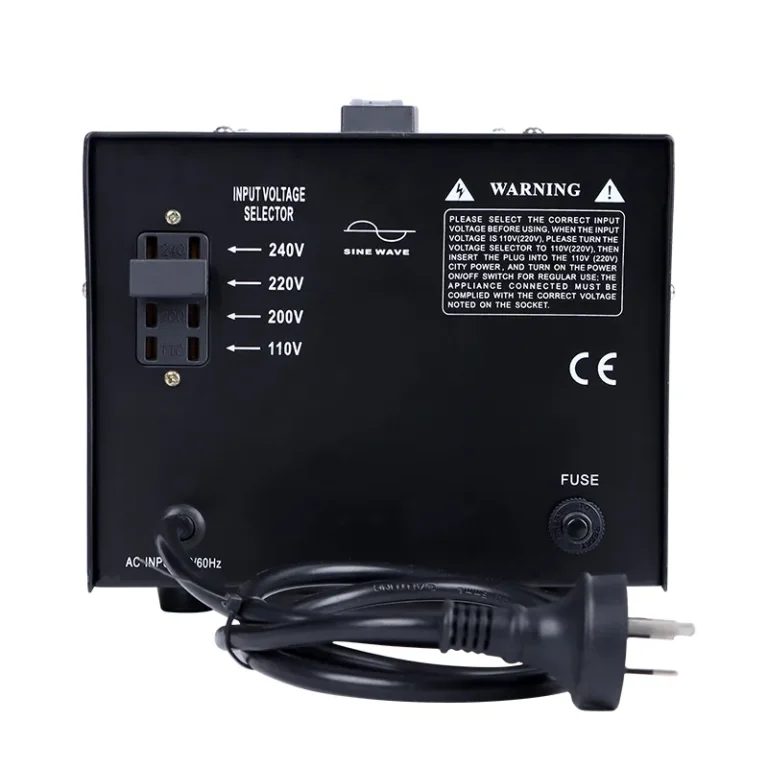
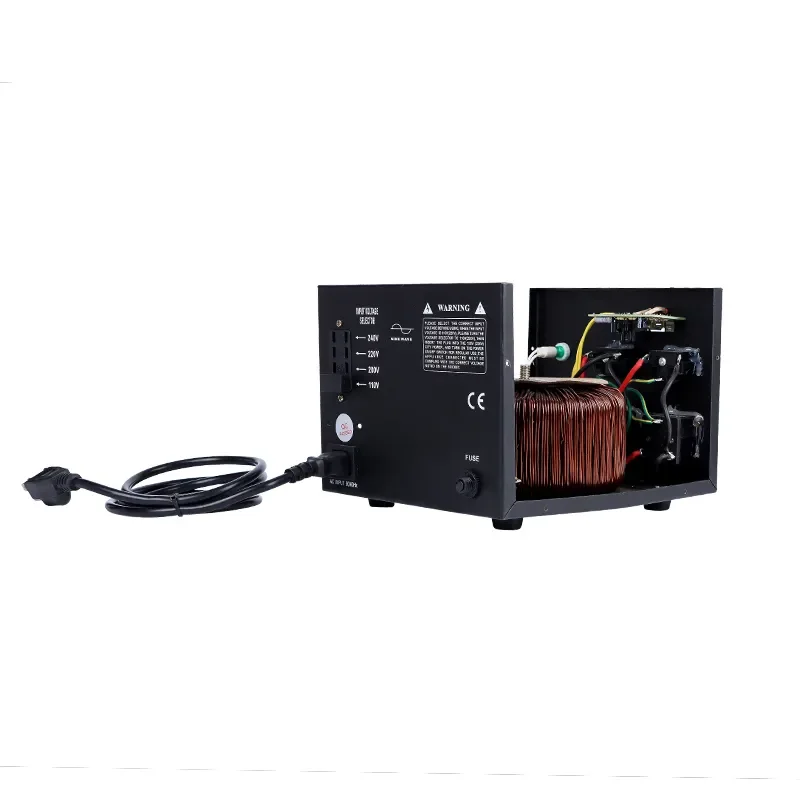
We are a factory rather than a trading company, so I can be specific about what comes off our line. The ST-2000 is a 2000VA step down transformer taking 220V in and giving 110V out, with RCD protection built into the enclosure. For a household group of appliances, or a single imported compressor load, that is the unit I quote most often. The ST-1500 covers smaller single-appliance jobs, mostly refrigeration.
When the load grows we move to the STU series. STU-3000 and STU-5000 are bidirectional, stepping up as well as down, and they carry the heavier side of site work: camp kitchens, workshops, pumps and the zoned arrangements I described. Bidirectional is genuinely useful in Mongolia because a market importing from North America, Europe, Russia and China at the same time ends up needing to go both directions.
The DT-1000VA is our bidirectional automatic unit for site offices, reception desks and equipment trolleys where a modest load needs to work either way without anyone thinking about it. The TC series control transformer is the one to look at when the job is a control circuit inside a panel rather than an appliance load. And the Variac range at 500VA, 1KVA, 2KVA and 3KVA is what commissioning engineers order, because it lets a technician bring the voltage up gradually and watch an imported machine behave at 100V, 110V and 120V before it goes into service.
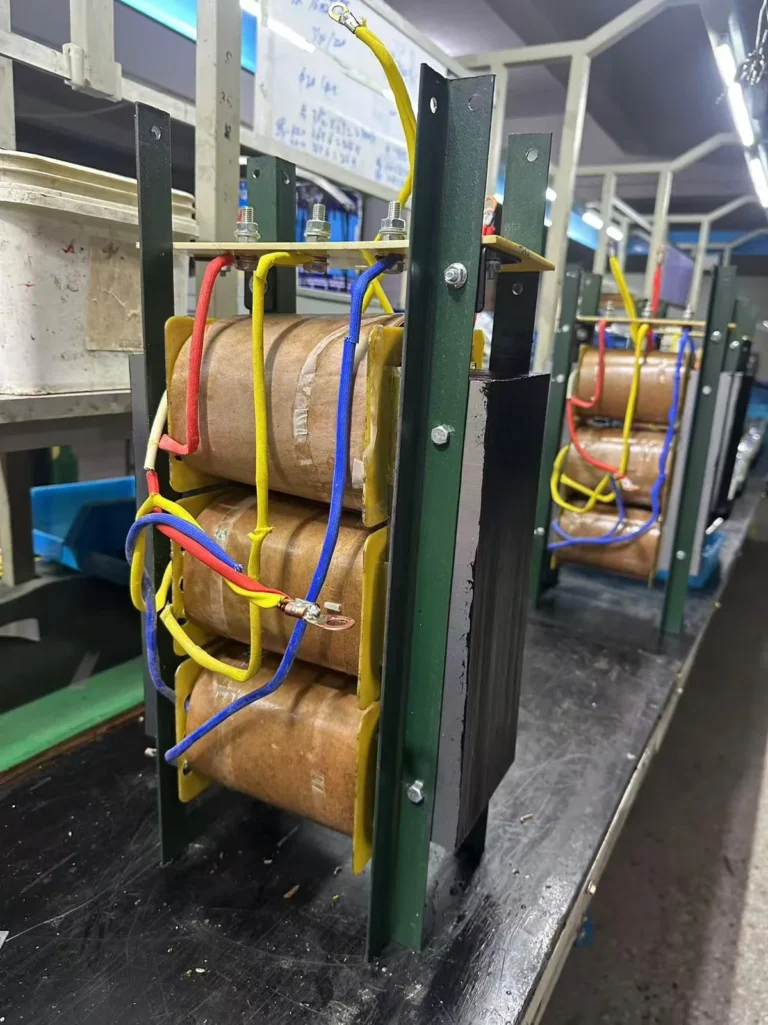
The numbers come next, since buyers ask for them first. Minimum order is 10 pieces. Give us 15 to 25 days to build, and the exact date narrows once we know the quantity and whether custom labelling is involved. Units leave on FOB Ningbo or Shanghai terms, each one covered by a 12-month warranty, wound in copper and 100 percent tested in our Yueqing works before shipment. You get a batch test record showing input voltage, output voltage under load and no-load current, which is the document that matters if there is ever a warranty conversation.
For Mongolia, the requests I see most are the outlet type and the label. We can fit the socket your appliances actually use, whether that is a Type C or Type E pattern or the North American plug that came on the machine. Mining supply companies and contractors often want their own name on the faceplate and their own manual in the box, and we are set up for exactly that. If your site is at -40, tell us at the quotation stage so we can discuss insulation and packaging for the conditions.
Tell Us This and We Can Size It
There is no need to arrive with a finished specification. Whatever you can put together is a starting point. The equipment list with the wattage from each nameplate, a photo of a nameplate if that is quicker, how many machines need a 110V feed, which of them have motors or compressors, the lowest ambient temperature the unit will see, and whether it will be indoors or outdoors. With that we can size it, quote the quantity and give you a delivery window, usually the same working day.
A couple of things worth reading while you put the list together. Our guide to a Voltage Converter for Kazakhstan covers a neighbouring market with the same 220V, 50Hz supply and comparable winter conditions and end-of-line voltage drop, so most of the sizing logic carries straight over. If you have not settled on a step down unit, a step up unit or a box that does both, read our page on step up & down transformers before you decide. There is also a set of voltage guides by country on the site covering the rest of Central Asia and beyond.
If something does not add up, send the list with a photo of your plugs. Sizing a step down transformer for Mongolia is routine work for us, and we would rather spend ten minutes on WhatsApp than have you find out in January that the unit you bought does not like the cold.
Frequently Asked Questions About Step Down Transformers in Mongolia
Below are the questions that come in most often from Ulaanbaatar and from the site camps, answered as briefly as I can make them.
What voltage and frequency does Mongolia use?
Mongolia is nominal 220V at 50Hz. Sockets are mostly Type C, the two-pin European pattern, and Type E, the French pattern with a protruding earth pin. Older buildings in Ulaanbaatar often have no usable earth at the socket, so check that before planning an installation with a metal-enclosed transformer.
Will a standard step down transformer work at minus 40 degrees?
A general purpose unit rated for typical indoor ambients is not the right choice for an unheated room at minus forty. Insulation materials stiffen in the cold, and the thermal swing from cold start-up to operating temperature is hard on any insulation system. Tell us the lowest ambient and the installation location, and ask your supplier which insulation class and varnish system is used.
Should I choose a dry type or an oil filled transformer for Mongolia?
For an indoor installation at the ratings we discuss here, dry type is the normal answer and it is what we build. Oil filled units come into play at larger ratings and in harsher outdoor environments where the oil provides cooling and some protection from the surroundings. For a mine substation or an exposed outdoor pad, discuss it with your engineers and with us before ordering.
Why does end-of-line voltage drop matter for transformer sizing?
A transformer is a fixed ratio device, so if the input sags to 195V the 110V output falls to roughly 97.5V. A motor running below its design voltage draws more current for the same shaft power, so both the motor and the transformer run hotter. That is why I advise sizing up rather than sizing to the load sheet number.
How does wilmall ship transformers to Mongolia?
Mongolia has no seaport, so cargo normally moves to Tianjin first, then travels overland through Erenhot or Zamyn-Uud to Ulaanbaatar, with a further road leg for aimag centres and mine sites. We ship FOB Ningbo or Shanghai. Minimum order is 10 pieces and production runs 15 to 25 days, so plan for the extra transit time.
There is no charge for sending us your equipment list, and it usually prevents a sizing mistake. Tell us what 110V machines you run in Mongolia, whether any of them have motors, and how cold the room gets in winter. You will have a recommended unit, a quantity and a price from us, normally on the same working day.
Or talk to us directly: WhatsApp +86 197 3022 6757 · Email sales@wilmall.com
MOQ 10 pcs · Lead time 15-25 days · FOB Ningbo or Shanghai · 12-month warranty