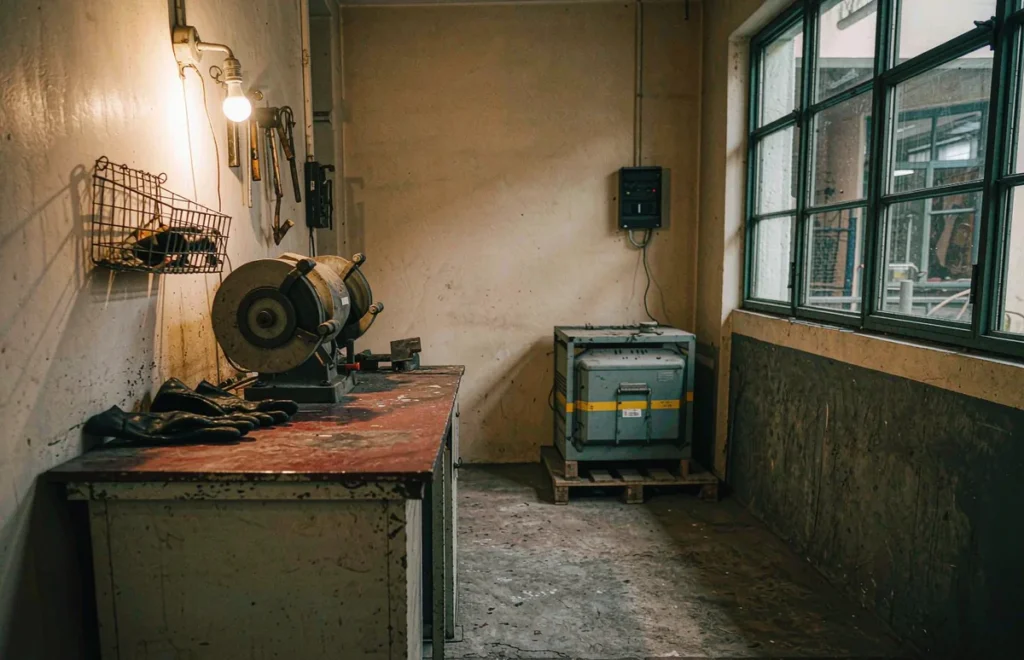
Step Down Transformer for Zimbabwe: 220V to 110V Guide
Zimbabwe runs on 220V at 50Hz, and on paper that is a straightforward number to work with. In practice, anyone who has spent a working week in Harare or Bulawayo knows the supply is not a steady 220V. Load shedding takes the power away for hours at a time, and when it comes back the voltage at the far end of a feeder can sit well below nominal, especially in industrial areas and in suburbs at the end of a long line. So the real job of a step down transformer for Zimbabwe is not just to turn 220V into 110V. It is to keep doing that when the input is 195V and the compressor still has to start.
I work at a transformer factory in Yueqing, China, and we build step down and step up units for export. Zimbabwe orders usually reach us through importers in Harare, through agricultural and mining suppliers, and through workshops running American and Canadian machinery. The questions are consistent, so let me answer them here the way I would answer them over WhatsApp, without the brochure voice.
Zimbabwe Power Basics: 220V, 50Hz, Type D and Type G
Nominal supply is 220V at 50Hz, which puts Zimbabwe in line with South Africa, Zambia, Botswana and most of the southern African region. Sockets are predominantly Type D, the old British three-pin round pattern, and Type G, the modern fused British pattern. Both turn up in the same building often enough that you should look before you order anything that comes with a plug fitted.
The 50Hz figure matters as much as the voltage. A great deal of North American equipment is built for 60Hz. A transformer changes voltage and never frequency, so a machine designed for 110V at 60Hz will get 110V at 50Hz and behave a little differently. Electronic devices with switch-mode supplies do not care at all. Motor-driven equipment does. An induction motor built for 60Hz runs roughly seventeen percent slower on 50Hz and slightly warmer, which for a pump means less flow and for a compressor means a longer run time to do the same job.
Then there is the load shedding reality. ZESA’s supply is interrupted on a published or semi-published schedule in most areas, and the length of those interruptions has varied a lot from year to year. That single fact changes how you should think about a transformer purchase, because it means your 110V equipment is either fed from the grid, from a generator, or from an inverter and battery bank, depending on the hour.
What Load Shedding Does to a Transformer Installation
Here is the thing most buyers do not think about until it bites them. Load shedding does not just remove power. It produces repeated switching events. Every time the supply returns, every motor and compressor in the building that was left switched on tries to start at the same moment. That inrush is worse than a normal start because several machines are competing for the same supply at the same instant, and any transformer on that supply sees the full effect.
There is a second effect that gets less attention. When a feeder is re-energised after an outage, the voltage often overshoots before it settles. It may sit high for a second or two, then sag as the whole neighbourhood’s refrigeration and pumps come back online together. If your transformer has a 110V secondary and the incoming supply momentarily sits at 245V, the output goes to about 122V. That is inside the tolerance of most motors and well outside the comfort zone of a sensitive control board.
Two practical responses. First, do not leave everything switched on across an outage if you can avoid it. Stagger the restart, especially for anything with a compressor, and bring the heavy items back one at a time. Second, if you are running equipment with electronics on the 110V side, look at a voltage stabiliser or an AVR on the 220V side, and treat it as part of the installation budget rather than an optional extra.
Low Input Voltage: Why It Costs You Capacity
This is the part of southern African power supply that surprises people, and it is worth understanding properly because it changes the size of the transformer you should buy.
A transformer is a fixed ratio device. If it is built with a 2:1 ratio for 220V to 110V and the input drops to 195V, the output drops to roughly 97.5V. Your appliance sees less voltage than it was designed for. Small electronics usually cope. Motors do not enjoy it. An induction motor running at reduced voltage draws more current to produce the same shaft power, so the current goes up while the voltage goes down. The motor runs hotter, and the transformer feeding it also runs hotter because the current on the secondary has risen.
Put plainly: when the input sags, the same transformer has to work harder for the same output, and its useful capacity in watts effectively falls. A unit that is comfortable at 220V in becomes marginal at 195V in. That is why I advise buyers in Zimbabwe to size up rather than size to the number. If your load sheet comes to 1600W, do not buy a 1600VA unit. Buy the 2000VA, or better, split the load so nothing sits close to its rating.
The same logic applies in reverse to the refrigeration in a shop or a farm store. A 110V chest freezer fighting a sagging supply draws more current, runs longer, and runs hotter. Give it headroom and give it its own transformer, so that a problem elsewhere on the site does not take the cold chain down with it.
Sizing: Nameplate Watts, Simultaneity, and Start Current
Start with the nameplates. Not the model names, not the memory of what the seller told you. The actual figures printed on the rating plate, because imported appliances vary far more than people expect.
A 110V chest freezer might be 200W running. A bar fridge 120W. A microwave 1000W to 1500W. A borehole pump can be 750W to 2200W depending on size and head. A workshop bench grinder 350W to 750W. An angle grinder 900W to 1400W. A welder is a different animal entirely and needs its own conversation. A milking machine or a feed auger on a farm might be 550W to 1500W with a hard start. Farm loads need their own method, and a poultry shed in particular does not behave like a pump house, so I keep a separate guide to a step down transformer for poultry farms.
Then decide what runs at once, and be honest about it. On a farm, the irrigation pump and the workshop tools may well be on at the same time because that is how the working day goes. In a house, the freezer and refrigerator never switch off, and the microwave, kettle and vacuum run one at a time.
Finally, multiply every motor and compressor by the start factor. Use 2.5 to 3 times running watts for the starting instant. A pump that draws 1500W running can pull something in the region of 3750W to 4500W for a fraction of a second, and a transformer rated exactly at 1500VA will buzz, trip or overheat on every one of those starts. Deep well pumps are the worst offenders because they start against a head of water.
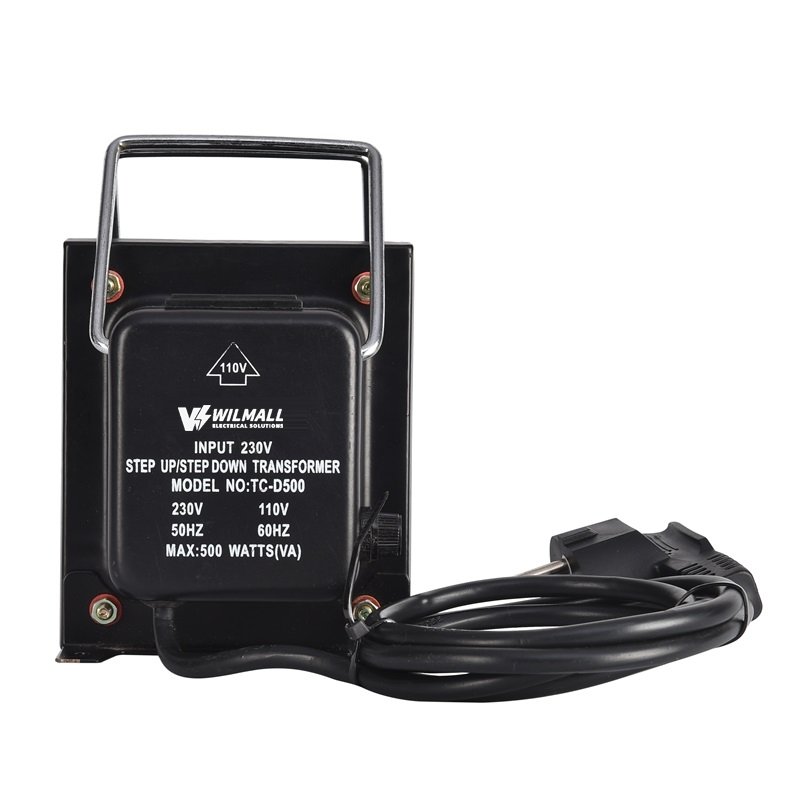
Reference Table for Zimbabwe Applications
These are the enquiries that come in most often from Harare, Bulawayo and the farming districts. Use the table to get close, then send us the real nameplate figures.
| Application | Typical load | Suggested unit | Why this one |
|---|---|---|---|
| Household, one imported refrigerator or freezer | 120 – 400 W | ST-1500 or ST-2000 | Compressor start decides the size, not running watts |
| Household, kitchen appliances plus entertainment | 800 – 1600 W | ST-2000 with RCD | Mixed loads with one heavy appliance at a time |
| Shop or butchery running imported refrigeration | 1200 – 2500 W | STU-3000 on its own circuit | Cold chain must survive outages and restarts |
| Workshop with imported power tools | 1500 – 3500 W | STU-3000 bidirectional | Motor starts through the working day |
| Farm, borehole pump and irrigation | 750 – 2200 W running | STU-5000, one unit per pump | Start surge of 2.5 to 3 times, plus low-voltage sag |
| Farm, milking and feed equipment | 1000 – 3000 W | STU-3000 or STU-5000 | Several motors starting together at shift change |
| Bench testing imported equipment | 500 – 2000 W variable | Variac 1KVA to 3KVA | Adjustable output to check machines against nameplate |
The table assumes a supply that is nominally 220V. In Zimbabwe it is not unusual for that to be optimistic. Two units on separate circuits beat one large unit almost every time in this market, and the same reasoning applies to a shop as to a farm. Fault containment is worth more than the small saving from buying one bigger box.
Backup Power, Inverters and Generator Changeover
Because load shedding is a normal part of the day, many Zimbabwean installations already have a generator, an inverter and battery bank, or both. How your transformer fits into that arrangement matters.
If you are on a generator, the same advice applies as anywhere else. Genset output is close to a sine wave but its regulation is looser than the utility’s, and its frequency drifts with load. An iron-core transformer handles that comfortably. What you should not do is run a 110V motor load off a cheap modified sine wave inverter, because that is a different product class and it will destroy the motor over time. If you have an inverter, check that it is a pure sine wave unit before you plan to run refrigeration from it.
If you have a changeover switch, make sure the transformer is on a circuit that is live from both sources. This is a small wiring detail that people discover only when the power goes off and the 110V freezer stops while everything else in the building keeps running. Ask your electrician to give the transformer its own feed through the changeover panel, or to put it on a circuit that is covered by the backup supply.
One more point about repeated switching. Every changeover is a small surge event on both the 220V and the 110V side. Fitting surge protection on the input is inexpensive and it protects the transformer’s insulation over years of daily switching. In a market where the supply cycles several times a day, that is not a theoretical concern.
Installation, Heat and Safety
Zimbabwe gets hot, especially in the lowveld and in the months before the rains. Transformer capacity is limited by how hot its insulation gets, and ambient temperature sets the floor that everything else sits on. A unit that runs comfortably in a 25 degree workshop will run noticeably hotter in a 40 degree plant room, and if it was already near its rating the insulation pays the difference.
So give it airflow. At least 100mm of clear space on every vented face, no stacking of boxes against the case, and never inside a sealed cabinet. Shade is free. A transformer mounted under a roof overhang lasts longer than one in direct afternoon sun, and in a Zimbabwean summer that difference is real.
Earth the enclosure properly, and if the building’s earth is old or doubtful, get it checked before you energise the unit. Use an RCD on the 110V side, particularly in kitchens, dairies and any wet area. The ST-2000 has RCD protection built into the enclosure, and adding an upstream RCD to a unit that does not have one is cheap insurance.
Keep the 110V wiring run short and use an adequate conductor size. On the 110V side a given cable length produces proportionally more voltage drop than the same length at 220V, so a long thin extension lead on the output will undo the good work of a well-sized transformer. If the appliance has to be far from the unit, run heavier cable.
Importing Into Zimbabwe: Durban, Beira and the Paperwork
Zimbabwe is landlocked, so your transformer will arrive by sea at a neighbouring port and then travel by road or rail. The two routes that cover most cargo are Durban in South Africa, which handles the largest share of Zimbabwe’s container traffic, and Beira in Mozambique, which is shorter for Harare and the eastern districts. Walvis Bay in Namibia serves some consignments as well. Which route you use depends on your forwarder, the sailing schedule and how quickly you need the goods.
We ship FOB Ningbo or Shanghai, which means you or your clearing agent control the main leg and can pick whichever routing suits your schedule. Tell us at quotation stage which port of discharge and which consignee should appear on the documents, because the bill of lading, packing list, commercial invoice and certificate of origin all need to line up with the entry your agent will lodge. Getting that right while the goods are still on our floor is far cheaper than amending a bill of lading after the vessel has sailed.
Transit to Zimbabwe is longer than to a coastal market, so plan your stock accordingly. If you are ordering for a project with a fixed commissioning date, build the shipping time into the schedule rather than assuming the container will clear as fast as a port delivery. Tell us your deadline and we will work back from it on the production side.
The Units We Build and How We Supply Zimbabwe
We are a factory rather than a trading company, so I can tell you exactly what comes off our line. The ST-2000 is a 2000VA step down transformer taking 220V in and giving 110V out, with RCD protection built into the enclosure. For a household group of appliances, or a single imported compressor load, that is the unit I quote most often into southern Africa. The ST-1500 covers smaller single-appliance jobs, mostly refrigeration.
Bigger jobs land on the STU series. STU-3000 and STU-5000 are bidirectional, stepping up as well as down, and they carry the heavier work: farm pumps, workshops, butchery refrigeration and the zoned arrangements I described. Bidirectional matters in Zimbabwe because a market that imports from North America, Europe and South Africa at the same time ends up needing to go both directions.
The DT-1000VA is our bidirectional automatic unit for offices, reception desks and equipment trolleys where a modest load needs to work either way without anyone thinking about it. The Variac range at 500VA, 1KVA, 2KVA and 3KVA is the one maintenance teams order, because it lets a technician bring the voltage up slowly and watch an imported machine behave at 100V, 110V and 120V before it goes into service.
The commercial terms are short, so here they are. Minimum order is 10 pieces. Count on 15 to 25 days in production, with quantity and custom labelling deciding the precise date. Shipping is FOB Ningbo or Shanghai, the warranty runs 12 months on every unit, and the windings are copper with a 100 percent test before dispatch from Yueqing. You get a batch test record showing input voltage, output voltage under load and no-load current, which is the document that matters if there is ever a warranty conversation.
For Zimbabwe, the customisation requests I see most are the outlet type and the label. We can fit the socket your appliances actually use, whether that is a Type D or a Type G pattern or the North American plug that came on the machine. Importers and agricultural suppliers often want their own name on the faceplate and their own manual in the box, and we are set up for exactly that.
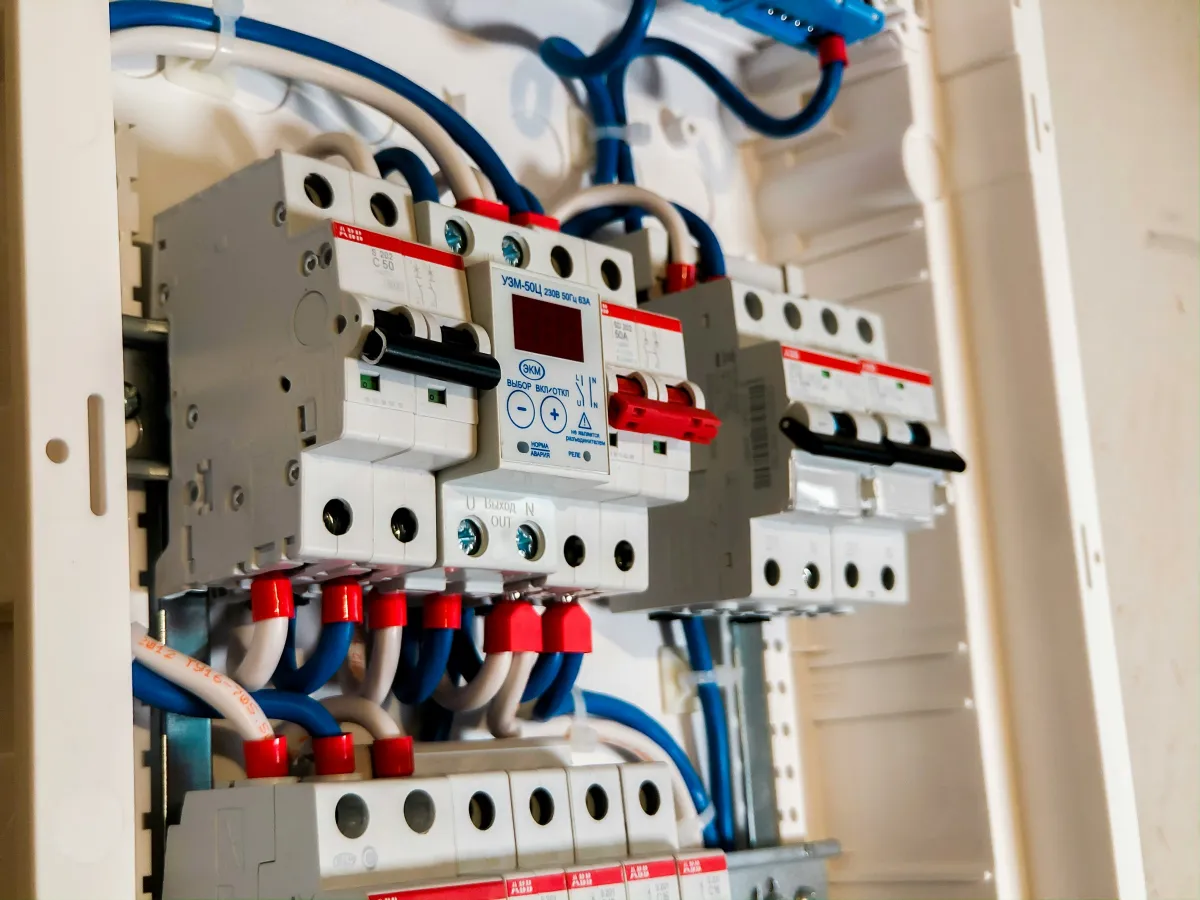
What to Put in Front of Us for an Accurate Size
A finished specification is not needed to get going. Documents are not a prerequisite, so send what exists. The equipment list with the wattage from each nameplate, a photo of a nameplate if that is quicker, how many machines need a 110V feed, which of them have motors or compressors, whether your site also runs a generator or inverter, and where the unit will be mounted. With that we can size it, quote the quantity and give you a delivery window, usually the same working day.
A couple of things worth reading while you put the list together. Our guide to a Voltage Converter for South Africa covers the neighbouring market with the same 220V, 50Hz supply and the same Type D and Type G sockets, so most of the sizing logic carries straight over. As for whether you need to step down, step up or do both, the step up & down transformers page on our site lays out how each arrangement works. There is also a set of voltage guides by country covering the rest of southern Africa and beyond.
If a rating on the list is unclear, add a photo of the plugs and we will work it out. Sizing a step down transformer for Zimbabwe is routine work for us, and we would rather spend ten minutes on WhatsApp than have you find out during a load shedding evening that the unit you bought cannot start the borehole pump.
Frequently Asked Questions About Step Down Transformers in Zimbabwe
Here are the questions that come in from Harare, Bulawayo and the farming districts, with my straight answers underneath.
What voltage and frequency does Zimbabwe use?
Zimbabwe is nominal 220V at 50Hz, in line with South Africa and most of the southern African region. Sockets are mostly Type D, the older British three-pin round pattern, and Type G, the fused British pattern. Supply is interrupted regularly by load shedding, so the voltage your transformer actually sees varies a great deal through the day.
Why should I size up the transformer in Zimbabwe?
Because the input voltage often sits below 220V. A transformer is a fixed ratio device, so a sag to 195V gives you roughly 97.5V out, and a motor at reduced voltage draws more current to do the same work. That extra current heats both the motor and the transformer, so the unit’s useful capacity in watts falls. Buy the next size up and split the load.
Can I run a 110V appliance on a generator in Zimbabwe?
Yes. A diesel generator produces a waveform close to a sine wave, and an iron-core transformer with copper windings handles it comfortably because there is no electronics in the power path. Just note that a genset’s voltage regulation is looser than the utility’s, so sensitive electronics on the 110V side benefit from a stabiliser. Do not run motors off a modified sine wave inverter.
How do I size a transformer for a 110V borehole pump?
Use 2.5 to 3 times the running watts to allow for the start surge, because a pump starts against a head of water and that is a hard start. A pump drawing 1500W running can pull roughly 3750W to 4500W for an instant. One STU-5000 per pump, on its own circuit, is the arrangement I would recommend.
How does wilmall ship transformers to Zimbabwe?
We ship FOB Ningbo or Shanghai and you or your clearing agent handle the main leg. Cargo usually discharges at Durban or Beira, then travels by road or rail to Harare or Bulawayo. The document set is a commercial invoice, packing list, bill of lading and certificate of origin. Minimum order is 10 pieces and production runs 15 to 25 days.
A list of what you run costs nothing to send and it usually stops a sizing mistake. Tell us what 110V machines you run in Zimbabwe, whether any of them have motors or compressors, and whether your site has backup power. That is enough for us to send a recommended unit, a quantity and a price, usually the same working day.
Or talk to us directly: WhatsApp +86 197 3022 6757 · Email sales@wilmall.com
MOQ 10 pcs · Lead time 15-25 days · FOB Ningbo or Shanghai · 12-month warranty