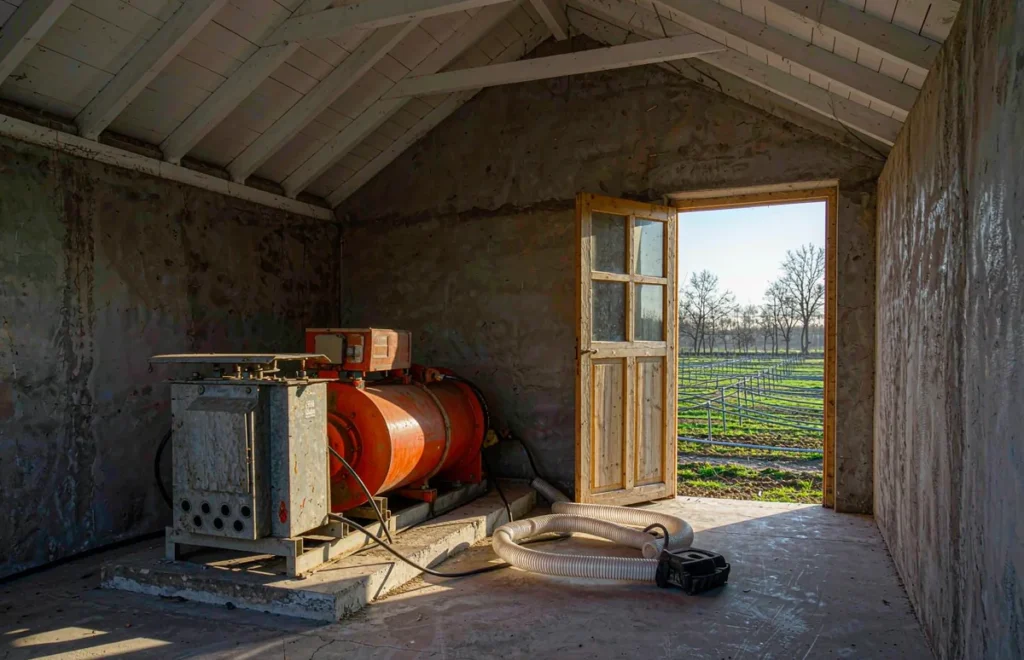
Step Down Transformer for Farms and Irrigation: 220V to 110V
Farm enquiries reach me in two flavours. One is a pump house where somebody has just installed a 110V submersible pump on a 220V supply and cannot work out why the control box keeps tripping. The other is a farm manager who is planning properly and wants to know what size transformer to buy before the irrigation season starts. The second conversation is always cheaper, so let me try to move you into it.
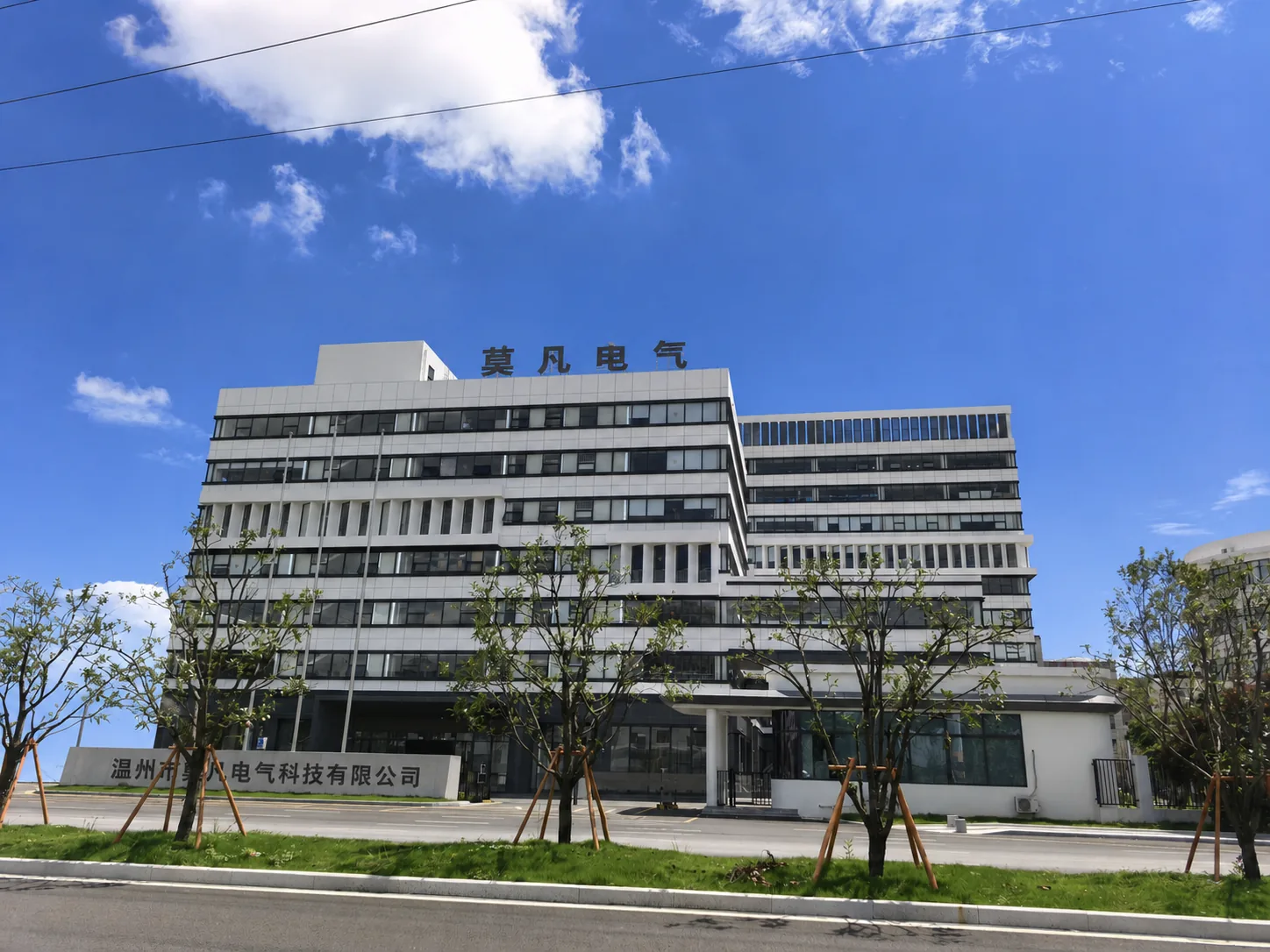
I work at a transformer factory in Yueqing, China, and agricultural orders come through most months. Poultry sheds, dairy units, greenhouse operations, orchards and mixed crop farms. What they have in common is that the equipment arrived from North America, the mains is 220V, and almost everything with a motor in it starts under load in a place that gets wet. That combination sets the whole sizing conversation.
Why Farm Loads Are Harder on a Transformer Than House Loads
The short answer is motors, everywhere, starting under load. A domestic transformer mostly feeds electronics that draw a tidy current. A farm feeds pumps that have to push a column of water from the start, feeders with augers full of grain, milking vacuum pumps and sprayer diaphragm pumps. Every one of those pulls roughly 2.5 to 3 times its running current for a fraction of a second every time it starts, and on an irrigation system that can happen dozens of times a day.
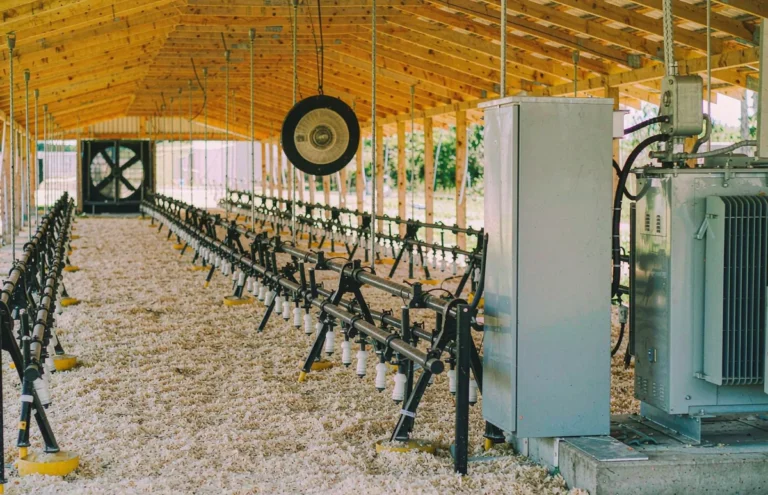
Then there is the environment. A pump house is humid, a shed has ammonia in the air, and a field cabinet sits in the sun with condensation forming inside it overnight. Moisture is what kills insulation, and hot insulation plus moisture is what ends a transformer early. That is why we build the units that go outdoors differently, and why we ask where the box will be mounted before we quote the specification.
And then the distance question. On a farm the transformer is often a long way from the panel, which means a long cable run on the 220V side or the 110V side, and long runs drop voltage. If your pump is at the end of a 120 metre cable, the volts arriving at the motor are not the volts leaving the transformer, and a motor fed at low voltage draws more current to do the same work, which makes the transformer work harder and run hotter. Cable size is part of the sizing conversation whether people expect it to be or not.
One point I want to be straight about, because it surprises buyers on every farm project. A transformer changes voltage. It does not change frequency. Most of the world outside North America supplies 50Hz, and a pump or feeder motor built for 60Hz will run about seventeen percent slower on 50Hz. For an irrigation pump that means slightly less flow. For a feed auger it usually does not matter. Either way it is worth knowing before you promise a client a specific litres per minute figure.
Which Farm Equipment Usually Needs a Step Down Transformer
When a farm sends me an equipment list, I sort it into motor loads, resistive loads and items that already run on 220V. The motor group is what determines the purchase.
- Submersible borehole pumps, 500W to 3000W, running submerged and starting against a full head of water, which is the heaviest start on any farm.
- Surface booster and transfer pumps, 300W to 1500W, usually with a pressure switch that cycles them on and off all day.
- Pivot and drip irrigation controllers and solenoid valves, 50W to 300W, small loads but many of them switching together.
- Poultry feed augers and chain feeders, 300W to 1500W, starting with a full flight of feed on them.
- Poultry house fans and tunnel ventilation, 400W to 2000W, often several running continuously through a hot afternoon.
- Milking vacuum pumps and milk transfer, 750W to 2500W, running for hours in a wet wash-down environment.
- Milk cooling tanks, 500W to 2000W, compressor driven with long run times and a wash cycle.
- Sprayer and misting pumps, 200W to 1000W, intermittent duty with frequent starts.
- Greenhouse circulation fans, shade motors and dosing pumps, 100W to 800W, many small motor loads on a shared circuit.
- Workshop and maintenance equipment, welders, compressors and bench grinders, where the compressor is the load that decides the size.
What does not need us, and I say this on nearly every call: LED grow lights that carry a 100-240V rating, most sensor and telemetry hardware, laptop based controller systems, and an increasing share of small electronics that already accept universal input. Those are happy on your 220V supply. On a farm load sheet, counting them can push you into a box that is one size too big for no benefit at all.
How to Size a Step Down Transformer for a Farm or Irrigation System
Here is the method I use, and it works for a single pump house as well as a whole farm. Start with the motor list rather than the wattage total. For each motor, take the running watts and multiply by 2.5 to 3 to get the start figure. Then work out which motors can realistically start at the same moment, because that is the number your transformer will actually see on its worst second of the day.
Add 25 to 30 percent headroom on top of that. If a single pump is by far the largest motor on the site, size to that pump plus the standing loads and let the smaller motors ride along, because they are unlikely to start at the exact instant the big one does. If you have two large pumps that can start together, which happens on any farm with a duty and standby arrangement, size for both starting at once and accept the higher price. It is still cheaper than a unit that trips every afternoon.
A Worked Example: A Small Irrigation Pump House
Say the pump house holds a 1.5kW submersible borehole pump, a 750W booster pump on the drip line, and a controller drawing 150W. The submersible starts against a full head, so count it at 3 times running: 4500VA. The booster at 2.5 times: 1875VA. The controller is steady at 150VA. If those two pumps can start together, the worst case is 4500 + 1875 + 150 = 6525VA, so a 7000VA unit is the honest answer. If you interlock them so only one starts at a time, the worst case is 4500 + 750 + 150 = 5400VA and a 6000VA unit does the job. A water treatment plant runs into exactly this arithmetic but with more small loads, and I work through that version in our guide to a step down transformer for water treatment systems.
Now look at a poultry shed, which behaves differently. Eight tunnel fans at 550W each is 4400W, but the fans ramp up rather than starting under a heavy mechanical load, and they rarely all start in the same second: 4400W plus 25 percent gives 5500VA, so a 6000VA unit covers the shed. Same farm, same mains voltage, two very different conversations about what the transformer is actually being asked to do. I go through the shed case separately, from brooders and incubators through to the ammonia problem, in our guide to a step down transformer for poultry farms.
| Farm area | Typical load | Suggested unit rating | Why this size |
|---|---|---|---|
| Borehole pump, single, 1.5kW | 1500 W running, 4500 VA on start | STU-5000 bidirectional | Submersible pump starts against a full head of water |
| Booster and drip line pump | 750 W running, 1900 VA on start | STU-3000 bidirectional | Pressure switch cycles the pump many times a day |
| Poultry feed line and augers | 600 – 1500 W | ST-2000 2000VA with RCD | Auger starts loaded with feed, several times an hour |
| Poultry tunnel ventilation, 8 fans | 3500 – 4500 W | STU-5000 bidirectional | Long continuous duty on hot afternoons |
| Milking parlour vacuum pump | 750 – 2500 W | STU-3000 bidirectional | Wet environment plus hours of continuous running |
| Milk cooling tank | 500 – 2000 W | ST-2000 2000VA with RCD | Compressor duty with a wash cycle load on top |
| Sprayer and misting pump | 200 – 1000 W | ST-1500 1500VA | Intermittent duty with frequent motor starts |
| Farm workshop compressor | 800 – 2200 W | STU-3000 bidirectional | Compressor start is the deciding number |
Outdoor Mounting, IP Protection and Moisture
Where the unit lives matters as much as its rating, and this is where farm installations go wrong most often. A transformer in a clean, dry plant room behaves completely differently from the same unit bolted to a shed wall with condensation running down the inside of the enclosure overnight. If your unit is going outdoors or into an unheated building, tell us at the quotation stage, because we build those units with a different finish, additional sealing and, on the larger ratings, a different enclosure arrangement.
Three rules I give every farm buyer. Mount it above the floor line so a wash-down or a burst hose cannot reach it. Leave air space on all sides, because a transformer that cannot shed heat will not deliver its rating for long. And keep the cable glands pointing down, with a drip loop, so water runs away from the enclosure instead of sitting on the gland. None of that costs much at installation time and all of it is expensive to correct later.
Running a Farm Transformer Alongside Solar
More farms ask about this every year, so here is the practical answer. If your inverter already produces 220V, put the transformer on the inverter output in the usual way and treat the inverter like any other 220V source. Check two things before you do. First, whether the inverter output is a true sine wave, because a modified sine wave inverter will make motors run hot and noisy on the other side of the transformer. Second, the surge capacity of the inverter, because a pump motor starting on a 3kW inverter will ask for three times its running power for a moment and some inverters shut down rather than supply it.
If your solar array is a separate DC system, do not try to feed a conventional transformer from it directly. Transformers need alternating current. You need an inverter first, and the transformer sits downstream of that. If you are not sure how your setup is wired, send a photo of the inverter label and the panel arrangement and we will tell you where the transformer belongs.
The Units We Build for Farm and Irrigation Work
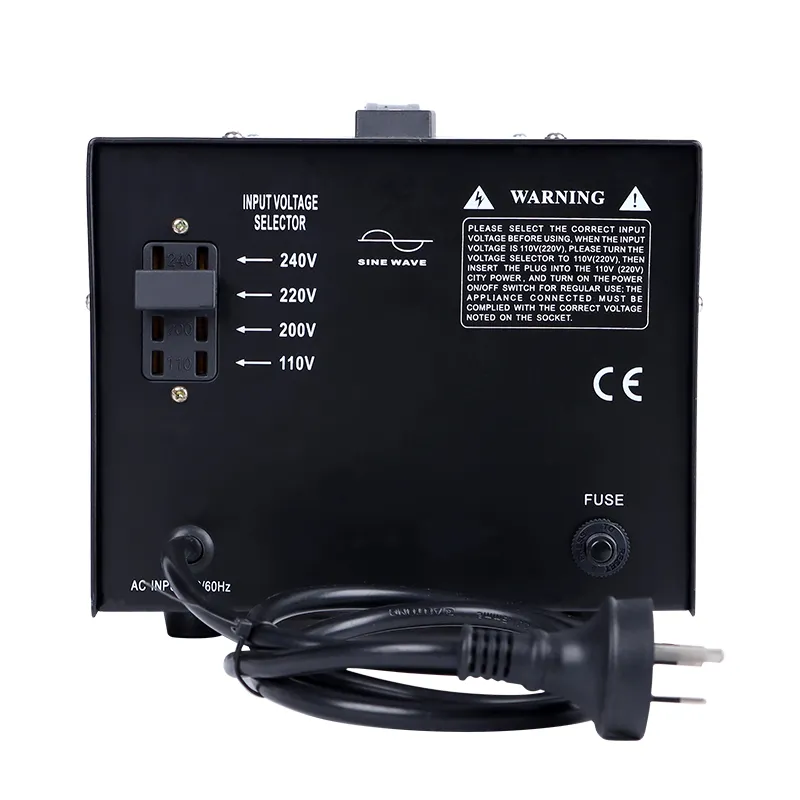
We are a factory, not a trading company, so I can tell you exactly what comes off our line. The ST-2000 is a 2000VA step down transformer that takes 220V in and gives 110V out with RCD protection built into the enclosure. For feed lines, a sprayer pump or a farm workshop bench, that is the unit on most of our agricultural quotations.
Once you are past the small units, the STU series is the next step up. STU-3000 and STU-5000 are bidirectional, meaning they step up as well as down, and they carry the heavy side of farm work: borehole pumps, milking vacuum pumps, tunnel ventilation and cooler tanks. Bidirectional earns its place on a farm more than almost anywhere else, because a farm that imports a 110V pump this year will buy a 220V machine next year, and swapping the box on the wall is a nuisance nobody budgets for.
The DT-1000VA is our bidirectional automatic unit and it suits controller cabinets, dosing pumps and small monitoring loads where a modest circuit has to work in either direction without anyone thinking about it. There is also a Variac range, built in 500VA, 1KVA, 2KVA and 3KVA sizes. Adjustable output sounds like a workshop tool rather than a farm tool until you need to check how a pump behaves at 105V, or bring a repaired motor up slowly the first time. Once a maintenance team owns one, it stays on the shelf permanently.
Order Quantity, Production Time and Batch Records
I will keep the commercial detail short, because farm buyers ask for it first. Our minimum order is 10 pieces, whether you are wiring one pump house or equipping several sites in the same season. Allow 15 to 25 days for production, with quantity and custom labelling moving you within that band. We ship FOB Ningbo or Shanghai and every unit carries a 12-month warranty. Each carton holds a test record from the batch your unit came from, showing input voltage, output voltage under load and no-load current, because we wind and 100 percent test every unit in our own factory here in Yueqing.
Customisation is where farm orders get practical. We can set the output to 110V or 120V depending on your nameplates, fit the socket or terminal arrangement your installers prefer, print your brand on the faceplate, and pack units individually so they can go straight to each site. If your season has a hard start date, tell us when you order, because shipping is the part of the timeline we cannot compress once the container has sailed.
We wind with copper, not aluminium. On a farm that is not a small thing, because a pump house in summer is hot and a transformer that runs hot ages faster. Aluminium windings run hotter at the same rating, and hot insulation is what ends a transformer early. Under continuous irrigation duty that difference shows up inside a few seasons.
Send Us This and We Can Size Your Site
You can come to us without a finished specification. Pass on what you have so far. The motor list with the running watts or horsepower from each nameplate, a photo of one nameplate if that is faster than typing, your mains voltage and frequency, how far the transformer will be from the pump, whether the unit goes indoors or outdoors, and your target date. From that we can size the unit, quote the quantity and give you a delivery window, normally the same working day.
If your main concern is a single pump rather than a whole site, our guide to a Step Down Transformer for Water Pump: Sizing & Wiring goes deeper into start current, cable runs and pressure switch behaviour. For the general difference between a step down unit, a step up unit and something that does both, the step up & down transformers page sets it out in plain language. And there are more application guides on the site covering everything from poultry sheds to workshops.
If a motor rating is unclear, send the list and a photo of the pump nameplate. Sizing a step down transformer for a farm is routine work for us, and we would much rather spend ten minutes on WhatsApp than have you order a unit that trips every time the borehole pump starts.
Farm and Irrigation Transformer Questions I Get Asked Most Weeks
The questions below are the ones farm buyers raise most often, and here is my honest reading of each.
What size step down transformer do I need for a farm irrigation pump?
Start with the motor rather than the wattage total. A pump draws roughly 2.5 to 3 times its running current on start, and a submersible pump starting against a full head is the heaviest case. A 1.5kW borehole pump needs a STU-5000 bidirectional unit to cover the start comfortably, plus whatever runs beside it.
Can one transformer run several pumps on a farm?
It can, if you work out which pumps can start at the same moment. If two large pumps can start together, size for both starting at once. If you interlock them so only one starts at a time, a smaller unit does the job. The price difference between the two options is smaller than most buyers expect.
Does a farm transformer need extra protection outdoors?
Yes, and it is worth raising at the quotation stage. Moisture is what ends insulation life, and a pump house or shed is damp most of the year. Mount the unit above floor level, leave air space on all sides for heat to escape, and keep the cable glands pointing down with a drip loop so water runs away from the enclosure.
Can I run my 110V farm equipment from a solar inverter?
If the inverter output is 220V, the step down transformer goes on the inverter output like any other 220V source. Check that the inverter produces a true sine wave, because a modified sine wave makes motors run hot and noisy, and check the surge rating, since a pump starting will ask for three times its running power for a moment.
Will a 110V farm motor built for 60Hz run on 50Hz mains?
The transformer changes voltage only, never frequency, so the motor gets a clean 110V at 50Hz and runs about seventeen percent slower. For an irrigation pump that means slightly less flow, which you can usually correct by adjusting the duty cycle. Electronic controllers and sensors are unaffected either way.
The motor list costs nothing to send, and it is what keeps a sizing mistake off the quotation. Tell us which 110V pumps and machines you run, how far the transformer sits from the pump, whether it is indoors or outdoors, and which country you are in. You will get a recommended unit, a quantity and a price in return, normally within the same working day.
Or talk to us directly: WhatsApp +86 197 3022 6757 · Email sales@wilmall.com
MOQ 10 pcs · Lead time 15-25 days · FOB Ningbo or Shanghai · 12-month warranty