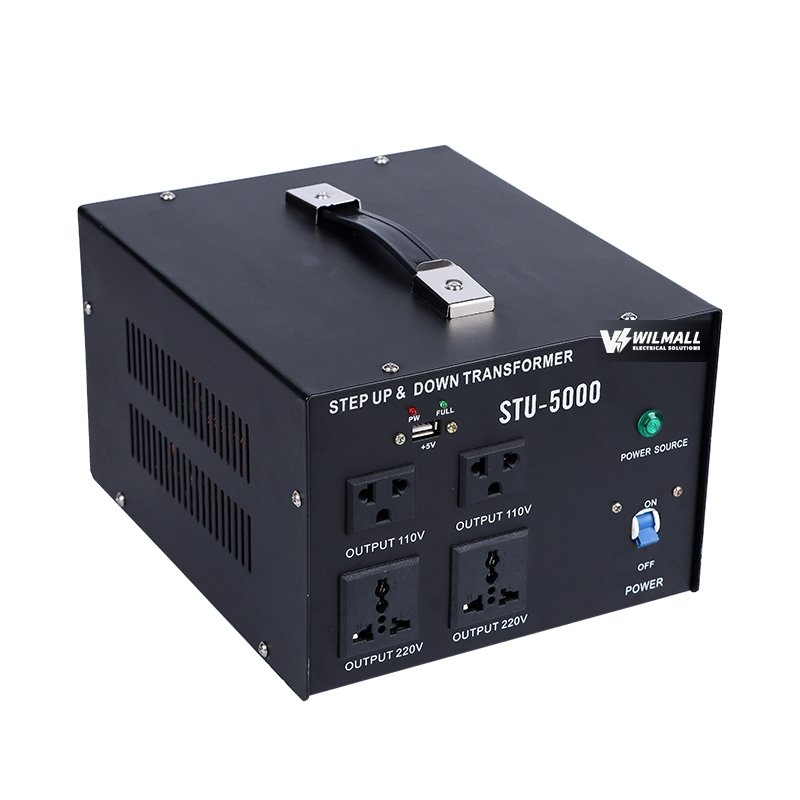
Voltage Converter for Indonesia | 220V to 110V | Wilmall
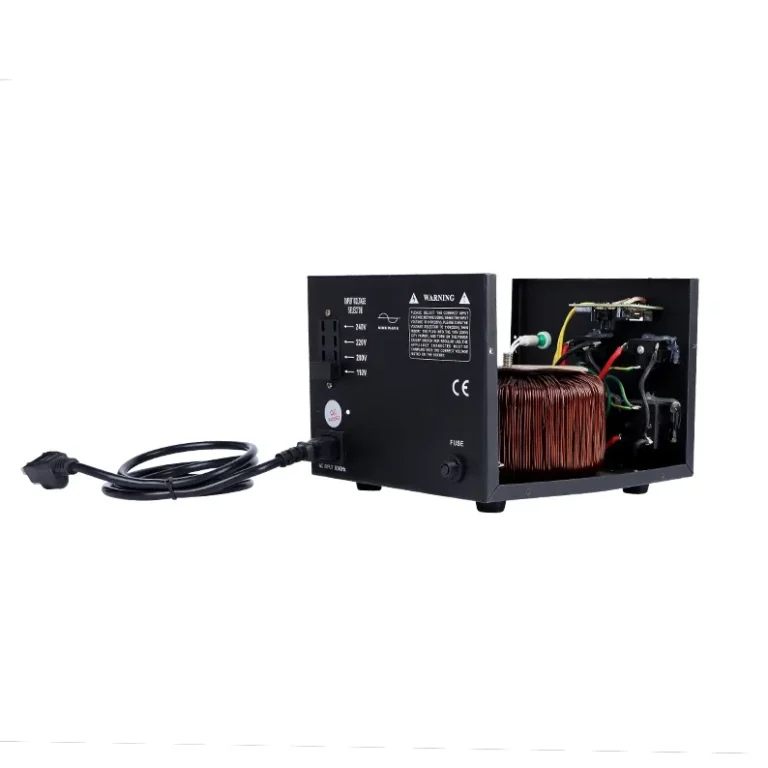
Indonesia runs on 220V / 50Hz. A steady flow of US and Japanese appliances enters the market at 110V, so step-down converters are a staple product for Indonesian importers. Wilmall supplies them factory direct.
Indonesian voltage reality
Indonesia’s nominal voltage is 220V / 50Hz. Imported US appliances rated 110V / 60Hz and Japanese units rated 100V need conversion before use. Outside Java, supply quality varies — some areas see low voltage during peak hours — so a transformer with capacity margin is the safer choice than a tight-rated electronic converter.
What size converter for Indonesia
| Appliance | Typical wattage | Recommended model |
|---|---|---|
| Blender, mixer | 300-700W | ST-1000 |
| TV, receiver, fan | 150-400W | ST-1000 |
| Rice cooker, iron | 800-1200W | ST-1500 |
| Refrigerator | 300-800W (surge ×3) | ST-2000 |
| Washing machine | 1000-2000W | STU-3000 |
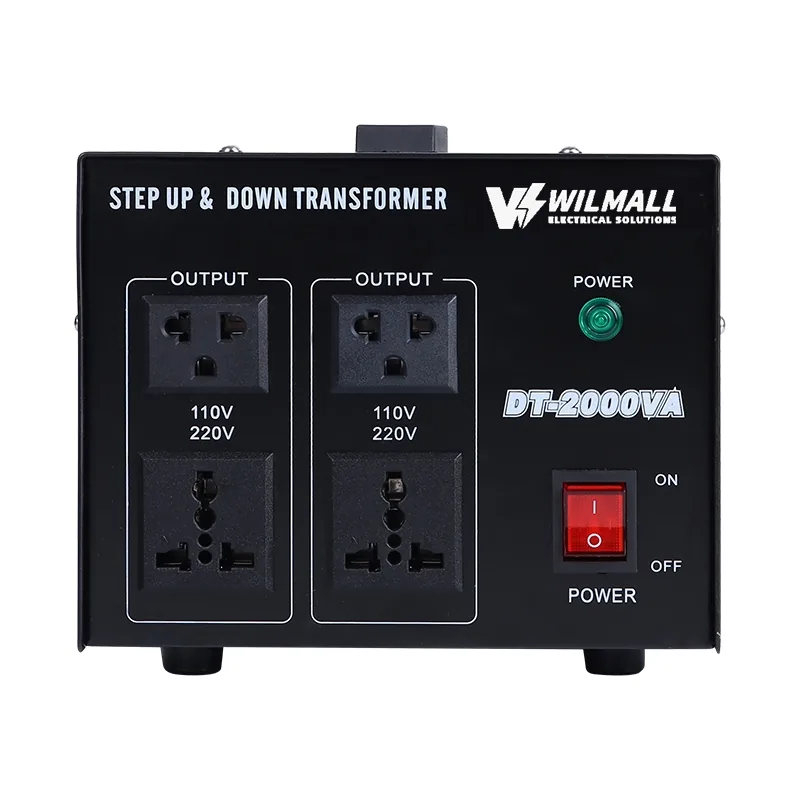
RCD protection for Indonesian conditions
Indonesian supply can fluctuate, especially outside Java, and humidity is high year-round. The RCD protection built into the ST-2000 trips on leakage current, which matters in damp environments where insulation can degrade. We recommend RCD-equipped units for the Indonesian market for both safety and peace of mind.
The Japanese 100V question
Many Indonesian customers bring appliances from Japan — rice cookers, air purifiers, cameras and small kitchen devices rated 100V. A standard 110V transformer output sits within the operating tolerance of most 100V devices. For motorised 100V 50Hz-only devices, request a lower-tap secondary (100-110V) and we will wind it to match.
Note that Japanese appliances are often designed for 50Hz or 60Hz operation (Japan has both regional grids). Because Indonesia runs 50Hz, devices rated 50/60Hz are a perfect match, while 60Hz-only motorised units will run slightly slower — usually acceptable for kitchen appliances but worth checking for anything with a timing function.
Selling to Indonesian distributors
Indonesian importers typically stock a range that mirrors household needs: ST-1000 for small appliances, ST-2000 for refrigerators and rice cookers, and STU-3000 for washing machines and larger loads. Private labelling is popular in this market — the same transformer sold under a local brand carries better margin than generic stock. MOQ is 10 pcs per model, so building a full local brand range is easy to start.
Beyond Jakarta, demand comes from Surabaya, Medan, Makassar and the many electronics retail chains that serve the islands. A distributor with a documented, tested product line has a clear advantage over traders selling unbranded imports, because Indonesian consumers increasingly check for certificates and brand presence before buying electrical goods.
Choosing between transformer types
For Indonesia, the choice is usually between a straight step-down (ST), a two-way step up / step down (STU), and a dual-direction automatic (DT). Households that only ever use 110V appliances need the ST; households with equipment from both voltage worlds benefit from the STU or DT. For the distributor, stocking ST and STU covers the majority of customers with two SKUs, keeping the range simple and the stock turnover fast.
The Wilmall factory advantage
Wilmall is a Yueqing transformer factory with in-house winding, assembly and testing. For Indonesia, that means we can fit Indonesian-spec sockets, provide Bahasa labelling, wind a 100-110V multi-tap secondary for Japanese appliances, and package for the tropical climate — all from one order. CE / RoHS documents and batch test reports are standard with every shipment.
Our Indonesian partners value the combination of a low MOQ (10 pcs per model) and full private-label support, which lets a local brand test the market with a small first order and scale as demand grows. We can also adjust the box design for the Indonesian retail channel — smaller colour boxes for counter sales and plain cartons for bulk distribution.
Common buying mistakes to avoid
- Undersizing for surge. Refrigerators and motors draw several times their running current at start-up; size with a safety margin.
- Buying an electronic converter for motor loads. Many electronic units cannot start motors — a transformer is the dependable choice.
- Ignoring the 100V tolerance question. Most Japanese devices are fine at 110V, but 100V 50Hz-only motorised units may need a lower tap.
- Forgetting documentation. Complete CE / RoHS documents and test reports make customs clearance predictable.
Beyond these, the most common distributor mistake is stocking only one size. Indonesian households own everything from small rice cookers to large washing machines, so a range covering 1000VA, 2000VA and 3000VA converts far more enquiries into sales than a single SKU.
Finally, remember that Indonesian cities have their own electricity quirks: some older buildings in Jakarta still run mixed circuits, and voltage in remote areas can sag in the evenings. Recommending the larger model when a customer is unsure is almost always the right call — the small price difference buys a lot of safety margin, and a satisfied customer who never sees a failed product is your best repeat business.
Importing into Indonesia
We ship FOB Ningbo or Shanghai with commercial invoice, packing list, CE / RoHS certificates and batch test reports. Indonesian importers should confirm current SNI requirements with their customs broker before ordering; transformer imports are a routine category when documentation is complete.
Frequently asked questions
The Japanese 100V Question in Indonesia
Indonesia’s appliance mix includes a significant number of Japanese and Korean units, and that creates a subtlety many buyers miss. Japan runs on 100V at 50Hz in the east and 60Hz in the west, so a Japanese appliance is designed for 100V, not the 110V that US appliances expect. Running a 100V Japanese appliance on a transformer output of 110V puts it about 10 percent over its design voltage, which can shorten its life. Our standard step-down units output 110V, and we can wind a 100V output on request for Japanese-spec equipment. If your Indonesian customers mix US and Japanese appliances, stocking both output types, or units with multiple output taps, covers the widest range. Tell us the countries your appliances came from, and we will confirm whether you need the 110V standard output or a custom 100V winding.
RCD Protection for Indonesian Conditions
Indonesia’s tropical climate, with high humidity and frequent rain, creates real earth-leakage risks, especially in older buildings and homes with non-standard wiring. A transformer with built-in RCD protection cuts power the moment it detects leakage, protecting people from electric shock and appliances from damage. Our STU series includes RCD protection as standard, and it is the series we recommend for Indonesian household use. For buyers who run appliances through a transformer in a humid bathroom, kitchen, or outdoor area, the RCD is not optional, it is the difference between a safe installation and a dangerous one. Keep the transformer in a dry, ventilated spot, off the floor, and away from water sources. If your market has older wiring or high humidity, the STU series is the responsible choice, and it is a selling point you can explain to customers.
Importing into Indonesia: What You Need to Know
Importing transformers into Indonesia involves a few specific requirements that are worth planning for. Beyond the commercial invoice, packing list, and bill of lading, Indonesian customs may require an SNI certificate for certain electrical products, and your importer of record will know the current rules for transformer imports. We provide the standard export documents and the batch test certificate, and we can advise on what we know from shipping to Indonesia. Sea freight from Ningbo or Shanghai to Jakarta typically takes 20 to 30 days, so plan about 35 to 55 days from order to delivery. For distributors, working with a local importer who holds the right permits is the practical path. If your buyer or your importer asks for a specific document, tell us early, because some certificates take time to arrange and it is easier to plan them into the order.
What Size Converter for Indonesia: A Practical Guide
The sizing math for Indonesia is the same as anywhere else, with a tropical twist. A TV and decoder need about 1000VA, adding a sound system pushes you to 1500VA, and a US-spec fridge or freezer needs 2000VA to 3000VA because of the compressor surge. The tropical heat means the transformer runs warmer, so we recommend sizing one step up from the wattage math for continuous loads. For most Indonesian households, a 2000VA unit covers the living room, and 3000VA covers the kitchen with a fridge. For shops and small businesses running multiple appliances, 3000VA to 5000VA is common. Add 30% headroom to the running wattage, pick the next size up, and you will not go far wrong. If you send us your appliance list and your city, we will confirm the right size, factoring in the local climate and grid conditions.
Sizing for Indonesian Households and Shops
Putting the numbers together for Indonesia: a typical household running a TV, a sound system, and a fan needs about 1000VA, and adding a rice cooker or a water pump pushes you to 2000VA. A US-spec fridge or freezer needs 2000VA to 3000VA because of the compressor surge, and the tropical heat means we recommend one size up for continuous loads. For a small warung or shop running a display fridge and a freezer, 3000VA to 5000VA is the practical range. The grid in Indonesia is nominally 220V at 50Hz, and voltage can sag in some areas, so the transformer should be sized with margin and, where power is unstable, paired with a stabilizer. Our ST and STU series cover the household range, and we supply up to 10KVA for shops and businesses. Send us your appliance list and your location and we will confirm the right size for your actual conditions.
What voltage does Indonesia use?
Indonesia uses 220V / 50Hz. US appliances rated 110V and Japanese units at 100V need a step-down converter before use.
What size converter do I need for a refrigerator in Indonesia?
A refrigerator draws 300-800W with a surge of about three times at start-up, so a 2000VA ST-2000 converter is recommended.
Can I use a 100V Japanese appliance with a 110V transformer?
Yes, most 100V devices operate within the tolerance of a 110V output. For motorised 50Hz-only units, a lower-tap secondary can be wound to match.
What paperwork do I need to import transformers into Indonesia?
A commercial invoice, packing list, CE / RoHS certificates and batch test reports. Confirm SNI requirements with your customs broker.
What is the MOQ for Indonesian orders?
MOQ is 10 pcs per model, shipped FOB Ningbo or Shanghai with full export documentation.
Related reading
- Voltage Converter for Indonesia | 220V to 110V
- Voltage in Southeast Asia: Buyer’s Guide
- Transformer FAQ
Get a factory-direct quote
Email sales@wilmall.com or WhatsApp +86 197 3022 6757 with your appliance list and target market.