
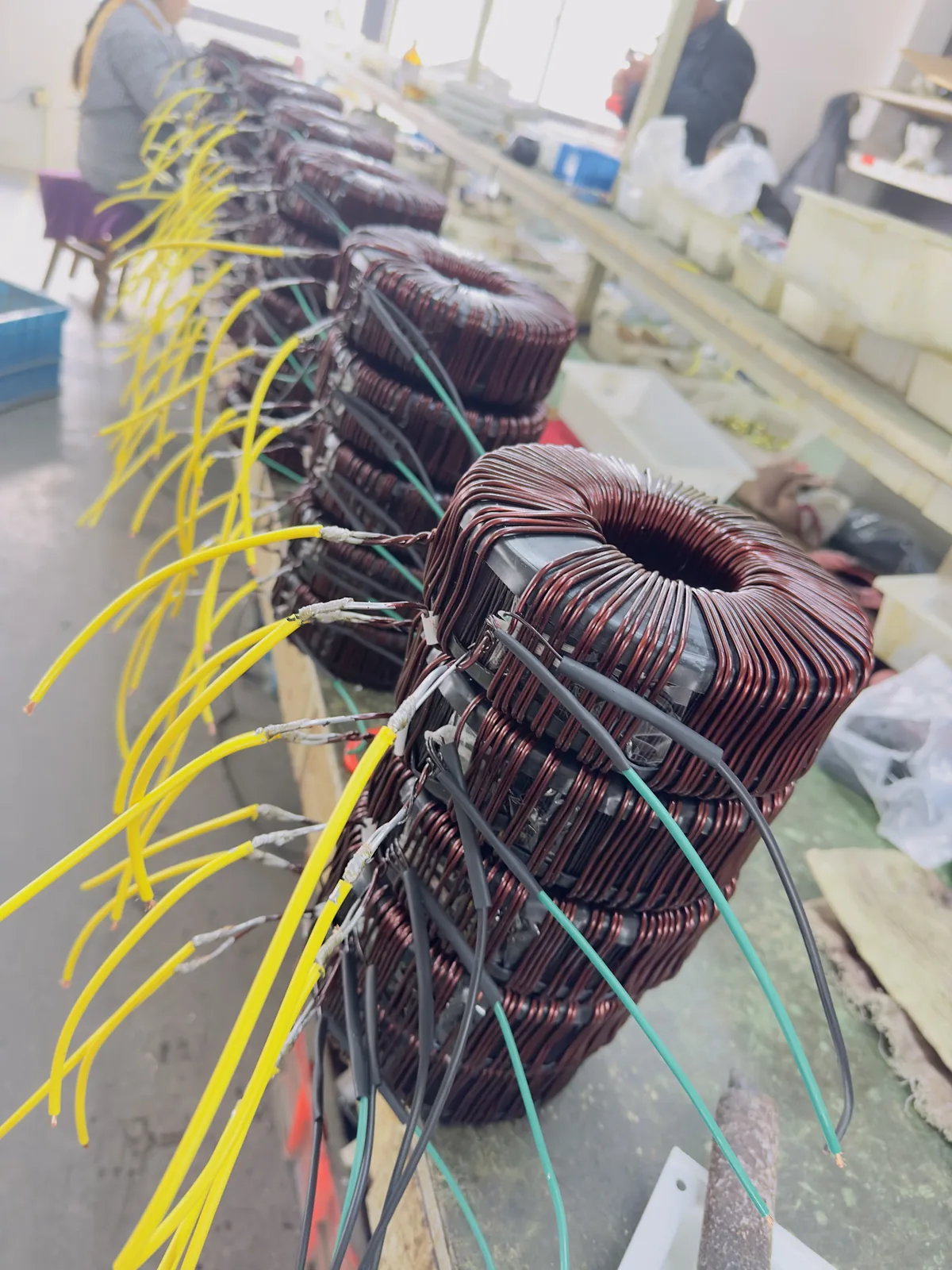
Photovoltaic Energy Storage Transformer for Solar Systems
A photovoltaic energy storage transformer sits between the solar array or the battery bank and the inverter or the grid, and it does two things that…
- Factory-direct pricing, no middleman markup
- Custom voltage, capacity and branding (OEM)
- MOQ from 10 pcs, production 15–25 days
- 12-month warranty with reliable support
A photovoltaic energy storage transformer sits between the solar array or the battery bank and the inverter or the grid, and it does two things that a plain transformer does not have to worry about. First it provides galvanic isolation, so DC faults on the array side cannot propagate into the AC installation and so the inverter can be earthed on its own terms. Second it matches voltage, stepping the array or battery voltage up or down to what the inverter and the local grid standard actually require – and across our export markets that standard varies a great deal. We design and wind these in Yueqing for solar and storage duty specifically, which means the insulation system, the core and the cooling are chosen for continuous operation at high ambient temperature and high humidity, the two conditions that kill ordinary transformers fastest in the Gulf, in West Africa and in Southeast Asia.
Key Specifications
| Specification | Value |
|---|---|
| Product Type | Photovoltaic and battery energy storage isolation transformer |
| Capacity Range | 1kVA to 500kVA (custom on request) |
| Input Voltage | Custom to array or battery configuration |
| Output Voltage | Custom to inverter and grid requirement |
| Frequency | 50Hz / 60Hz |
| Isolation | Galvanic isolation between input and output windings |
| Winding Material | Oxygen-free copper, vacuum varnish impregnated |
| Core | High-permeability cold-rolled grain-oriented silicon steel |
| Insulation Class | Class F or H, designed for high ambient temperature |
| Cooling | Natural air cooled (AN), forced air (AF) on larger ratings |
| Protection | Thermal monitoring, optional electrostatic screen |
| Enclosure | Indoor or outdoor rated, tropicalised finish |
| Warranty | 12 months, replacement-first |
What You Get
- Transformer wound to your array or battery voltage and your inverter or grid voltage
- True galvanic isolation between the DC-coupled side and the AC installation
- Insulation system rated for high ambient temperature and high humidity
- Low-loss core so you are not paying for the transformer twice in lost yield
- Thermal monitoring provision on larger ratings
- Terminal box layout to suit your inverter and cable entry
- 12-month replacement-first warranty
Why Choose This Model
Solar and storage duty is harder on a transformer than most people assume, and the failures almost always come from the environment rather than from the electrical rating. A rooftop or container installation in Saudi Arabia or the UAE sits at high ambient temperature for months; a coastal site in West Africa or Southeast Asia combines heat with salt-laden humidity. Ordinary transformers are rated for a 40 degrees C ambient in a ventilated room, and derate sharply outside that. Our PV units use a high-permeability cold-rolled core with low no-load loss, an insulation system built for Class F or H, and a tropicalised finish on the enclosure and terminations, so the rating on the nameplate is a rating you can actually use. The second reason to specify a purpose-built unit is efficiency. A solar plant sells every kilowatt-hour it produces, and a transformer that wastes one percent more than it needs to is a permanent tax on the whole installation – every day for twenty years. Low no-load loss matters especially, because a PV transformer sits energised and lightly loaded for a large part of the day. Third, the isolation: galvanic separation between the array side and the AC side is what lets you earth the system the way your local code requires, and it stops DC fault current from finding its way into the AC installation where the protective devices are not designed to interrupt it.
How to Size It
Size on the inverter rating, not on the panel rating. The transformer has to carry whatever the inverter can deliver continuously, so start from the inverter kVA and then check two things: the maximum array DC input at the coldest expected temperature, since panel voltage rises as temperature falls and can push the design beyond its limits on a cold morning, and the ambient derating at your site, since a unit rated at 40 degrees C will need to be oversized for a 50 degrees C enclosure. Tell us the inverter make and rating, the array configuration, the grid voltage and standard, and the site ambient range, and we will specify the unit and quote it.
How It Works
A solar installation needs a transformer for two distinct reasons, and it helps to separate them. The first is isolation. A photovoltaic array is a DC source that is never truly off during daylight, and fault currents behave differently from AC fault currents – they do not pass through zero, so the protective devices on the AC side are not designed to interrupt them. Galvanic isolation between the array or battery side and the AC installation stops DC fault current from reaching equipment and protective devices that cannot handle it, and it gives the installer a clean point at which to establish the earthing arrangement the local code requires. The second is voltage matching. Array and battery voltages vary with configuration, state of charge and temperature, and the inverter and the grid each want something specific. A transformer wound for the job bridges that gap. On the electrical side, our units use a high-permeability cold-rolled core with low no-load loss, because a PV transformer sits energised and lightly loaded for much of the day and no-load loss is therefore a larger share of the total than it would be on a transformer that runs at full load.
Typical Applications
- Grid-tied solar photovoltaic plants
- Battery energy storage systems (BESS)
- Off-grid and hybrid solar installations
- Commercial and industrial rooftop solar
- Solar water pumping and agricultural installations
- Microgrids and diesel-solar hybrid systems
- Inverter retrofits where grid voltage differs from array design
Testing Before Shipment
Every unit is tested before shipment. We verify the turns ratio, measure no-load loss and no-load current, check insulation resistance between windings and from windings to core and frame, and carry out dielectric strength testing appropriate to the rating. On water or forced-air cooled units we run the cooling circuit and confirm flow and thermal behaviour under load. Results ship with the order as a test report. For solar projects, documentation is often the thing that holds up a commissioning sign-off, so if you need specific type-test data, certification for a particular market, or test reports formatted to your project documentation standard, tell us at quotation stage rather than after the order is placed. We would rather confirm what we can supply up front than discover a gap when the container is due to ship.
Ordering, Samples and Shipping
These are engineered to order rather than pulled from a shelf, with a 10 pcs minimum and a 15-25 day lead time. To quote we need the inverter make and rating, the array or battery configuration and voltage range, the grid voltage and frequency, the enclosure requirement (indoor or outdoor), and the site ambient temperature range. The ambient matters more on solar than on almost any other application, because it drives both the insulation class and the derating. If you have the inverter datasheet and a single-line diagram, send them – that is usually enough for us to specify the unit and come back with a firm quote the same day. Samples are paid by T/T before production. Standard shipping is FOB Ningbo or Shanghai.
Photovoltaic energy storage transformers, wound and 100% tested in Yueqing, China. MOQ 10 pcs, lead time 15-25 days, FOB Ningbo or Shanghai.
More from This Range
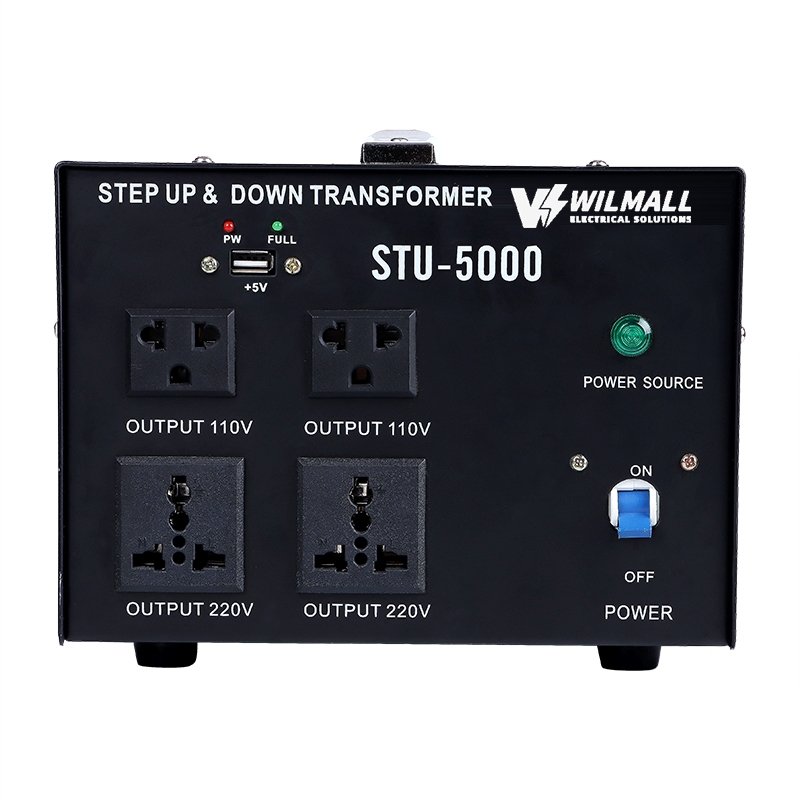 STU-5000 Step Up & Down Transformer5000W dual-direction
FAQ
What does a photovoltaic energy storage transformer do?
It provides galvanic isolation and voltage matching between a solar array or battery bank and the inverter or the grid. The isolation stops DC faults on the array side reaching the AC installation, and lets the system be earthed to the local code.
Why not just use a standard isolation transformer?
A standard transformer is rated for a 40 degrees C ambient in a ventilated room and derates sharply outside that. Solar installations routinely run hotter and more humid, and the insulation system, core and finish need to be specified for that duty or the unit fails early.
How do I size it?
Size on the inverter kVA rating rather than the panel rating, then check the maximum array voltage at the coldest expected temperature and apply derating for your site ambient. Send us the inverter rating, array configuration and site conditions and we will specify it.
Can you match a specific inverter or grid standard?
Yes. Windings are made to order, so we build to your inverter input requirement and your local grid voltage and frequency, 50Hz or 60Hz.
What are the MOQ, lead time and warranty?
MOQ is 10 pcs, lead time is 15-25 days, and every unit carries a 12-month replacement-first warranty. Shipping is FOB Ningbo or Shanghai.