
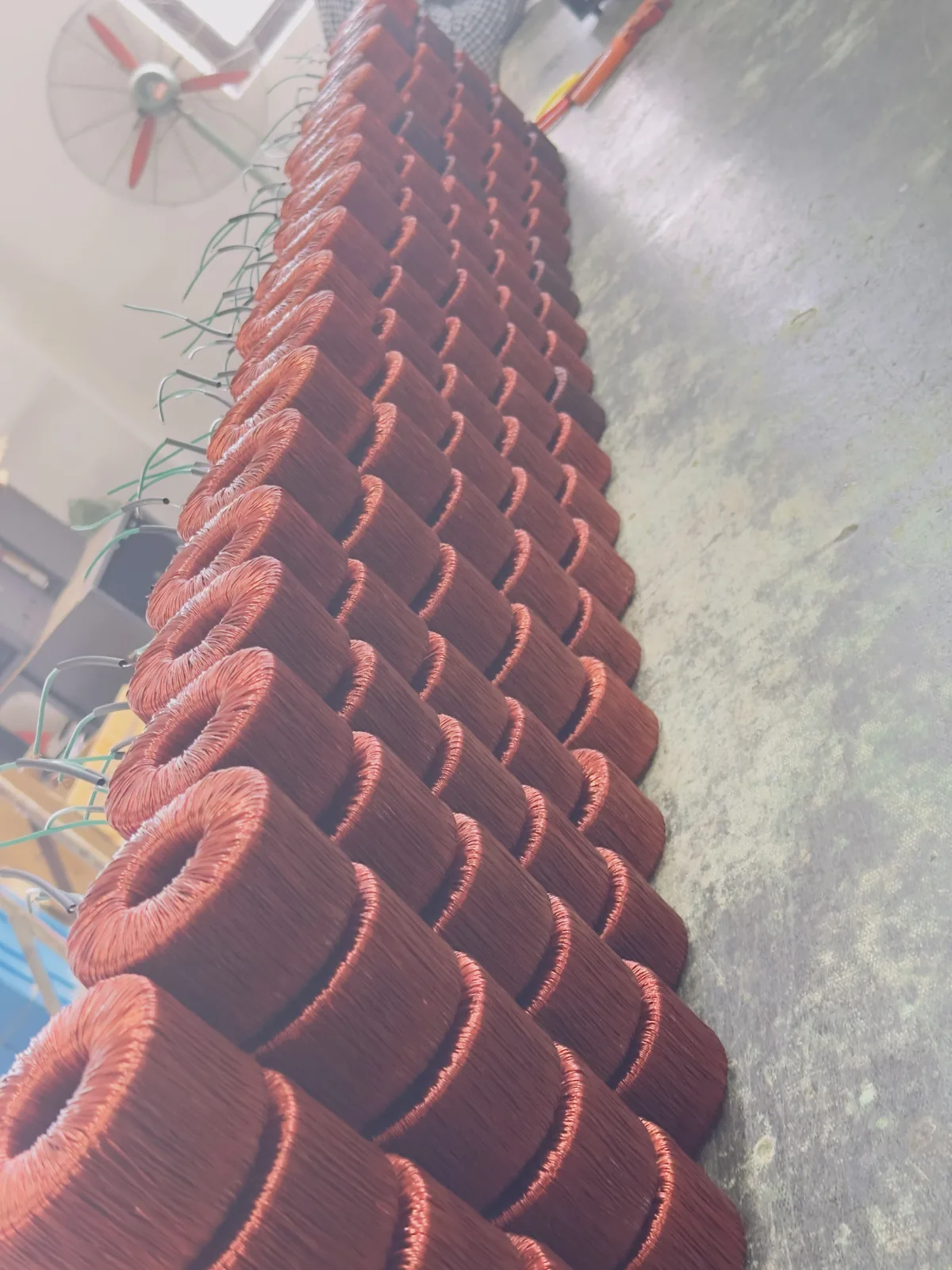
Three Phase Isolation Transformer 380V 1:1 5kVA-200kVA
A three phase isolation transformer is what you fit when a machine and the supply feeding it do not agree – about voltage, about earthing, or…
- Factory-direct pricing, no middleman markup
- Custom voltage, capacity and branding (OEM)
- MOQ from 10 pcs, production 15–25 days
- 12-month warranty with reliable support
A three phase isolation transformer is what you fit when a machine and the supply feeding it do not agree – about voltage, about earthing, or about how clean the power needs to be. The secondary is galvanically isolated from the primary, so the machine downstream gets its own floating supply with its own earth reference, and noise, ground loops and DC offset on the incoming neutral stop at the transformer instead of travelling into the load. We build these from 5kVA to 200kVA in Yueqing, with an electrostatic shield between windings as standard, and we wind them to whatever input and output combination the job needs. The most common reasons customers order one: imported machinery built for a different voltage system, variable frequency drives and rectifiers that need a clean supply, and installations where an existing ground loop is causing faults nobody can track down.
Key Specifications
| Specification | Value |
|---|---|
| Capacity Range | 5kVA to 200kVA |
| Input Voltage | 380V / 400V / 415V / 440V / 480V three phase (custom available) |
| Output Voltage | 380V / 400V / 415V / 220V / 200V three phase (custom available) |
| Configuration | Three phase, delta or star, 1:1 or step up/down |
| Frequency | 50Hz / 60Hz |
| Isolation | Galvanic isolation between primary and secondary |
| Shielding | Electrostatic screen between windings as standard |
| Core | Cold-rolled grain-oriented silicon steel, low no-load loss |
| Winding | Copper (aluminium on request for cost-sensitive ratings) |
| Insulation Class | Class F, Class H available |
| Cooling | Natural air cooled (AN), forced air (AF) on request |
| Vector Group | Dyn11 standard, others available on request |
| Warranty | 12 months, replacement-first |
What You Get
- Three phase isolation transformer wound to your input, output and vector group
- Electrostatic screen between primary and secondary fitted as standard
- Galvanically isolated secondary with its own earth reference
- Low-loss grain-oriented core, copper windings, vacuum impregnated
- Terminal box sized for your cable glands, layout to your drawing
- Full test report: ratio, insulation resistance, no-load current, dielectric strength
- 12-month replacement-first warranty
Why Choose This Model
Three specific problems get solved by fitting an isolation transformer, and it helps to know which one you have. The first is voltage mismatch: a machine built for a 415V 50Hz supply will not run correctly on a 380V 60Hz network, or vice versa, and rewinding the machine is far more expensive than fitting a transformer. The second is noise and ground loops: when two pieces of equipment are earthed at different points, current circulates through the earth path and shows up as interference on analogue signals, as nuisance tripping on residual current devices, or as serial ports and communications that fail at random. Isolating the secondary breaks that loop. The third is waveform and DC offset: modern drives, rectifiers and switch-mode supplies both inject and are disturbed by harmonics and DC on the neutral, and a transformer with an electrostatic screen stops common-mode noise crossing from primary to secondary. That screen is standard on our units rather than an extra, because it is the component that actually delivers the noise performance people are buying. We build these with low-loss core steel and vacuum-impregnated copper windings so the unit runs cool in a closed electrical room, and we test every one before it ships.
How to Size It
Take the total three phase kVA of the load, apply a margin for inrush, and check the harmonics. Drives and rectifiers draw non-sinusoidal current, and that extra heating is real: if more than about 30 percent of the load is six-pulse drives or similar, either oversize the transformer by a step or specify a K-rated design. Check the ambient in the room as well – a closed electrical room in a hot climate is easily 45 degrees C or above, and that derates the unit. Tell us the load list, the proportion of non-linear load, the supply and required output voltages, and the site ambient, and we will size it and quote.
How It Works
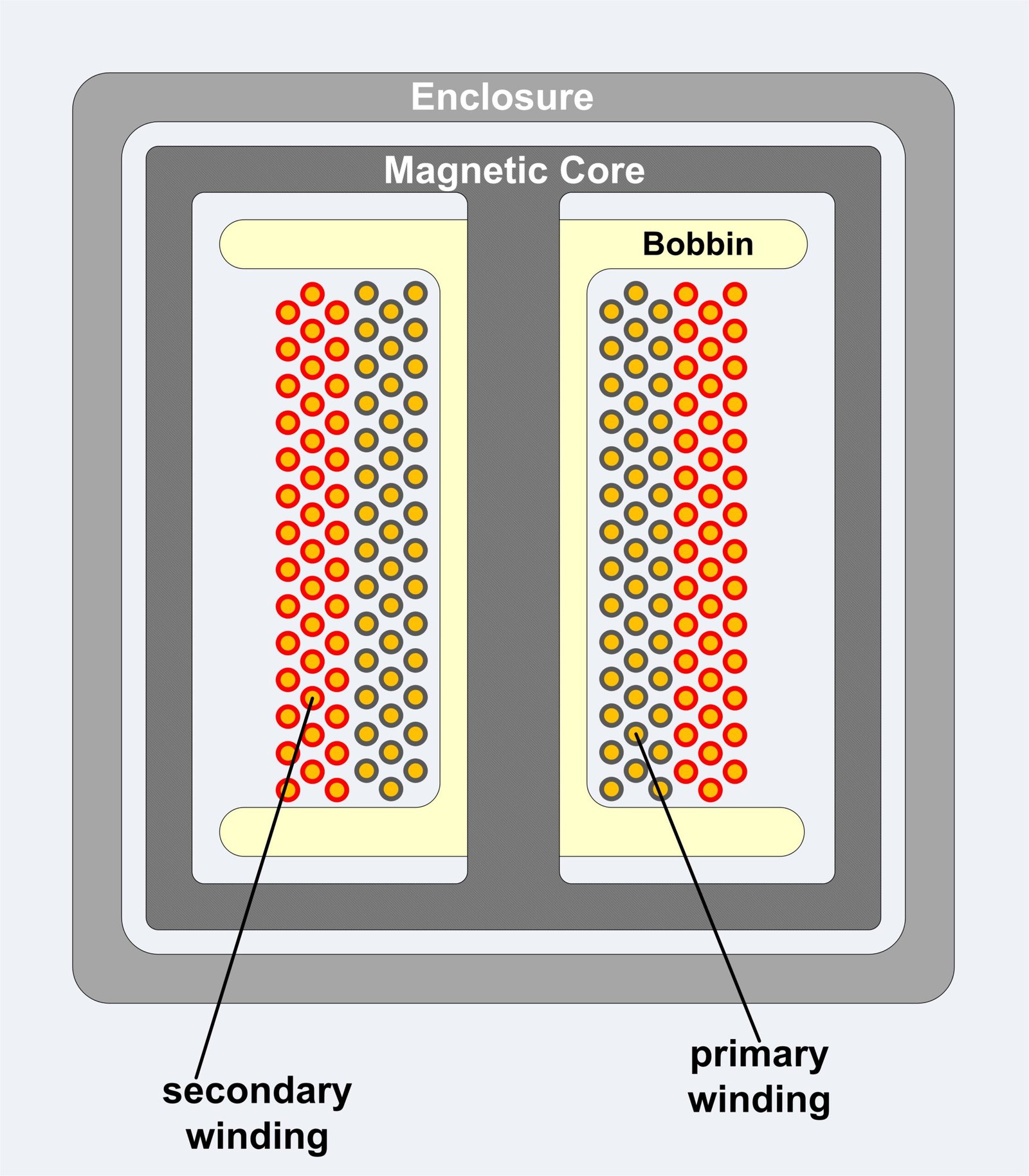
An isolation transformer passes power through a magnetic coupling rather than a conductor, so the secondary circuit has no electrical connection to the supply. That single fact produces three useful effects. It creates a separately derived supply with its own earth reference, which lets you earth a machine the way the machine was designed to be earthed rather than the way your local supply happens to be arranged. It breaks ground loops: when equipment is earthed at two points, small differences in earth potential drive current around the loop, and that current shows up as interference on analogue signals and as nuisance tripping. And it blocks common-mode noise, because the earthed electrostatic screen between the windings intercepts capacitively coupled interference and shunts it to earth instead of letting it cross to the secondary. The screen is the part people forget to specify and then wonder why the noise is still there, which is why we fit it as standard rather than listing it as an option. The vector group matters too: Dyn11 is our standard, and getting it right is essential if the transformer will ever run in parallel with another source.
Typical Applications
- Imported machinery built for a different voltage or frequency standard
- Variable frequency drives, servo drives and rectifier fronts ends
- CNC machines and machining centres
- Industrial automation cells and PLC-controlled plant
- Medical imaging and laboratory equipment
- Data and telecommunications equipment rooms
- Marine and offshore installations with floating supplies
Testing Before Shipment
Every three phase unit is tested before shipment. We verify the turns ratio and vector group, measure no-load loss and no-load current, check insulation resistance between windings and from windings to core and frame, and carry out dielectric strength testing at the level appropriate to the rating. We confirm the electrostatic screen is continuous and correctly earthed. On larger ratings we run a temperature rise test under load. A full test report ships with each order, and we can include dielectric testing to a specific standard or type-test data if your project documentation requires it. Where a customer has a witnessing requirement – their own inspector, or a third party, present at the factory for the test – we can usually accommodate it, but it needs to be agreed at quotation stage so it can be built into the schedule.
Ordering, Samples and Shipping
Ratings from 5kVA to 200kVA are built to order with a 10 pcs minimum on a 15-25 day lead time. To quote we need the supply voltage, the required output voltage, the capacity in kVA, the vector group if it matters to you, the load description including the proportion of non-linear load such as drives and rectifiers, and the site ambient temperature. The non-linear proportion and the ambient are the two inputs that most often change the answer, so it is worth being precise about them. If the transformer is replacing an existing unit, a photograph of the nameplate and the terminal arrangement is usually enough for us to quote a drop-in replacement. Samples are paid by T/T before production. Standard shipping is FOB Ningbo or Shanghai.
Three phase isolation transformers, wound and 100% tested in Yueqing, China. MOQ 10 pcs, lead time 15-25 days, FOB Ningbo or Shanghai.
More from This Range
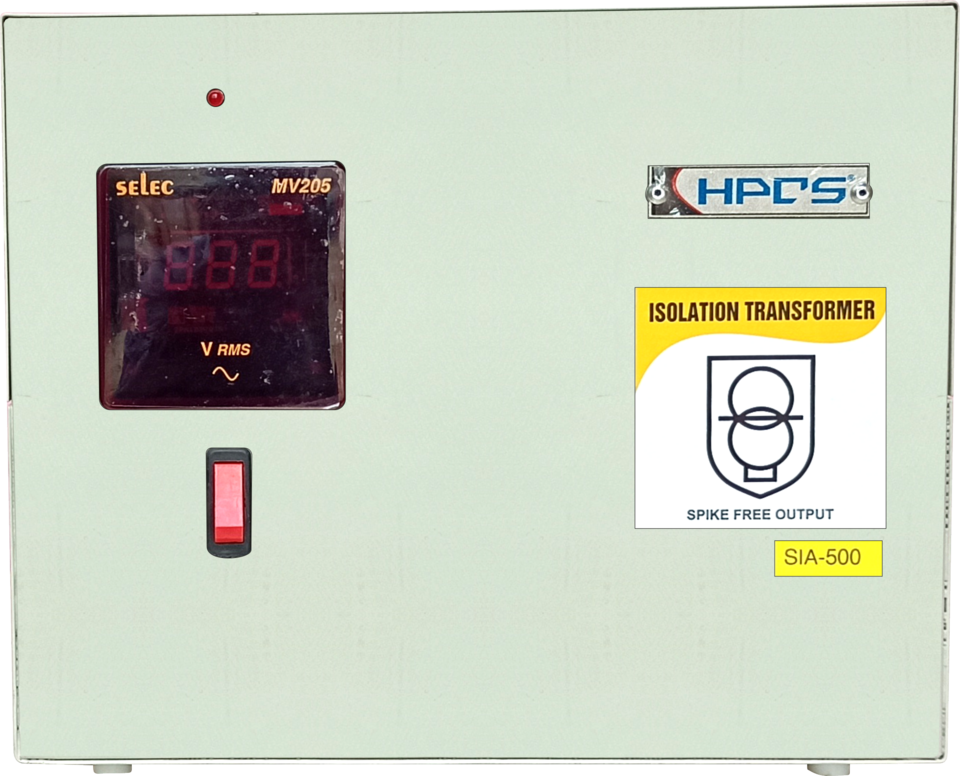 ISO-500 Isolation TransformerSingle phase 500VA 1:1
FAQ
What does a three phase isolation transformer do?
It transfers power across a galvanically isolated magnetic coupling, so the secondary has no electrical connection to the primary. That lets you create a new separately derived supply with its own earth reference, and it stops ground loops, noise and DC offset on the incoming supply from reaching the load.
Why is the electrostatic screen important?
The screen is a conductive layer between the primary and secondary windings, earthed to the frame. It shunts common-mode noise and transients to earth instead of letting them couple capacitively across the windings. We fit it as standard rather than charging extra for it, because it is the part that delivers the noise performance.
Can it match imported equipment to a local supply?
Yes, this is one of the most common uses. We wind to your required input and output voltages and vector group, so a machine built for one standard can run on another without rewinding the motor.
Do variable frequency drives need an isolation transformer?
Often yes. Drives inject harmonics and can be disturbed by DC offset on the neutral. An isolated secondary with a screen gives the drive a clean supply and protects upstream equipment from what the drive puts back on the line. Tell us the drive rating and we will size for it.
What are the MOQ, lead time and warranty?
MOQ is 10 pcs, lead time is 15-25 days, and every unit carries a 12-month replacement-first warranty. Shipping is FOB Ningbo or Shanghai.