Dry Type Step Down Transformer: What It Is and When to Choose One
If you have ever bought a transformer and the seller asked “dry type or oil filled?”, you know that moment of guessing. Most people answer dry type because it sounds safer, and they are usually right – for indoor use, dry type is the standard choice. This guide explains what a dry type transformer actually is, how it compares with oil-filled units, and when each one makes sense, so the next time someone asks, you can answer with confidence instead of a guess.
What dry type means
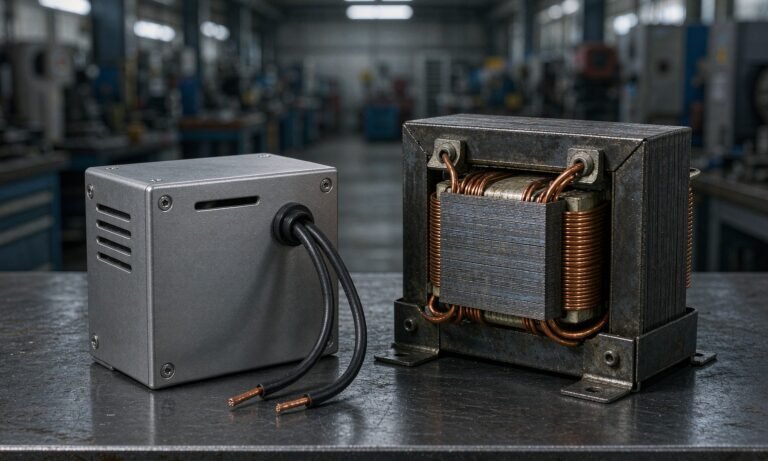
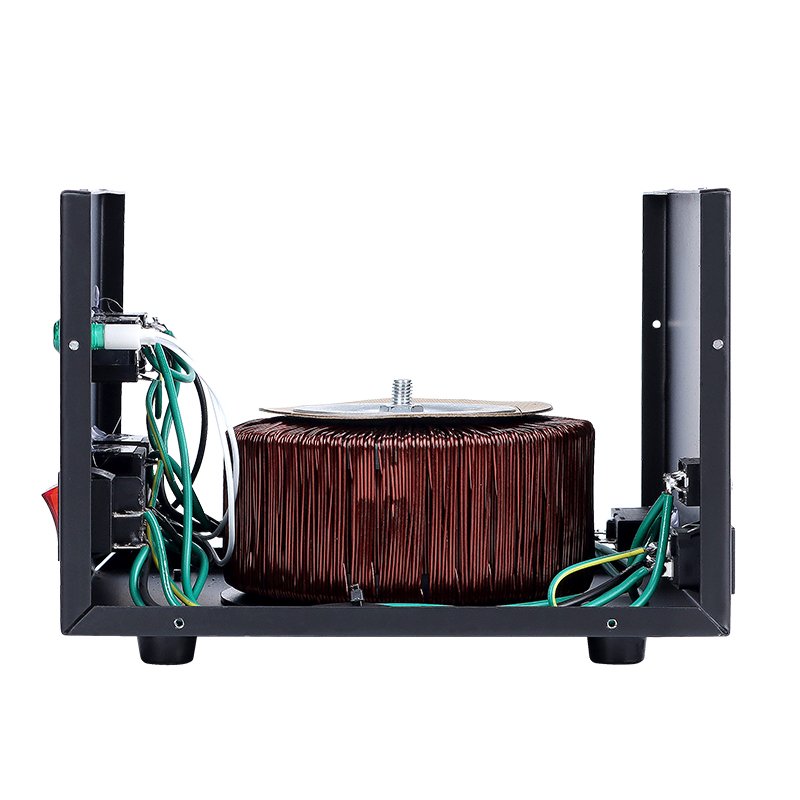
A dry type transformer cools itself with air instead of liquid. The windings – normally copper in our units – are insulated with varnish, enamel or resin, and the heat they produce is carried away by natural airflow or a fan. There is no oil tank, no liquid level to check, no risk of oil leaks, and no flammability question. That is the whole idea: a transformer that is safe to sit inside a building, next to people, without a containment room around it.
The name sounds technical, but the concept is simple. Your phone charger has a dry transformer inside it. A doorbell transformer is dry type. The difference is scale – a dry type step down transformer does the same job at 500VA or 10KVA, just with proper ventilation and heavier copper.
Dry type versus oil-filled
| Factor | Dry type | Oil-filled |
|---|---|---|
| Cooling | Air (natural or fan) | Oil circulation |
| Best location | Indoors | Outdoors / substations |
| Fire risk | Very low | Needs fire protection |
| Maintenance | Minimal | Oil checks, leaks |
| Weight | Lighter | Heavier |
| Typical use | Buildings, panels, workshops | Utility, industrial yards |
The honest summary: for anything inside a building – a control panel, a workshop, an apartment, a shop – dry type is the right call. Oil-filled units earn their keep outdoors or at utility scale, where the cooling and the weather protection matter more than the maintenance. If your transformer lives indoors, you want dry type, and that is what we build.
How dry type transformers cool themselves
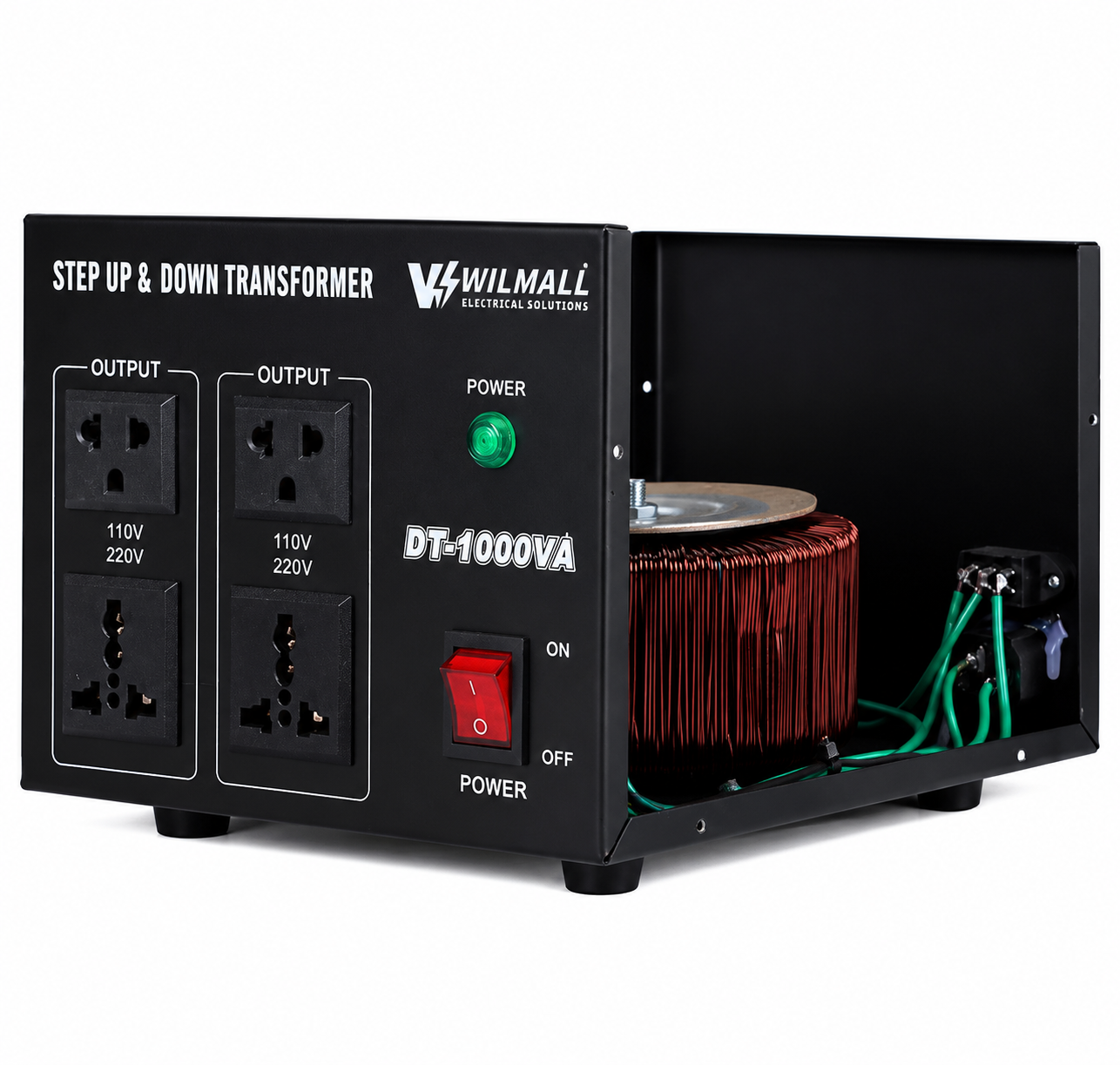
A dry type transformer has two cooling paths. Natural ventilation – the unit draws cool air from below and pushes warm air out through vents on top. That is how most small and medium units work, and it is why you should never box one in with no airflow. Larger units add a fan, forced-air cooling, which lets a smaller frame handle more load. Our step down transformers use natural convection up to the larger sizes, with fan-cooled options for the top of the range.
Here is the practical rule: leave clearance around the unit – the manual gives the numbers, but a palm-width of space on every side and clear vents on top is a good minimum. A dry type transformer is designed to shed heat; if you trap it, the insulation ages faster and the unit runs its life in fast-forward.
Why dry type suits most buyers
Most of our customers – importers, workshops, contractors, homeowners – need a transformer that sits indoors near the equipment it feeds. Dry type fits that perfectly: it is safe, quiet, clean and maintenance-free. No oil to check, no leak tray, no fire-rated enclosure. You mount it, wire it, and forget it for years.
The one question that matters for dry type is ventilation. A unit in an open workshop runs cool. The same unit squeezed into a sealed cabinet runs hot. If your installation is enclosed, size up or add ventilation – the transformer will thank you with a long life, and so will your warranty claim rate.
Choosing the right dry type unit
- Size on the load, not the guess. Add the appliance watts, add 30% margin, double it for motors.
- Match the voltage combination. 220V to 110V, 240V to 120V, 110V to 220V – we wind them all.
- Pick the insulation class. B class for normal rooms, F or H for hot environments.
- Leave the vents clear. Airflow is the cooling system; do not block it.
- Buy copper. Copper runs cooler than aluminium and lasts longer under daily duty.
The voltage combination matters as much as the VA. A dry type step down transformer is wound for a specific input and output – 220V in, 110V out, for example – and while some units have multi-tap options, the safe move is to order the exact combination you need. Tell us your mains and your appliance voltage, and we wind to match, from MOQ 10 pcs.
Where dry type transformers are used
Walk through a modern building and you are surrounded by dry type transformers without knowing it. The lighting panels, the lift motor room, the HVAC controls, the security system – most of them are fed through dry type units, because a building cannot have oil-filled transformers in its corridors. The same is true in factories: the control panels on the line, the machine tools, the test benches, they all run on dry type step down transformers.
For our customers, the pattern is clear. Importers and resellers stock dry type step down units because that is what their buyers need – households, shops, workshops and small factories all run on air-cooled transformers. Contractors specify dry type because it is simpler to install and insure. There are very few indoor applications where an oil-filled unit makes sense, and almost all of them are at utility scale.
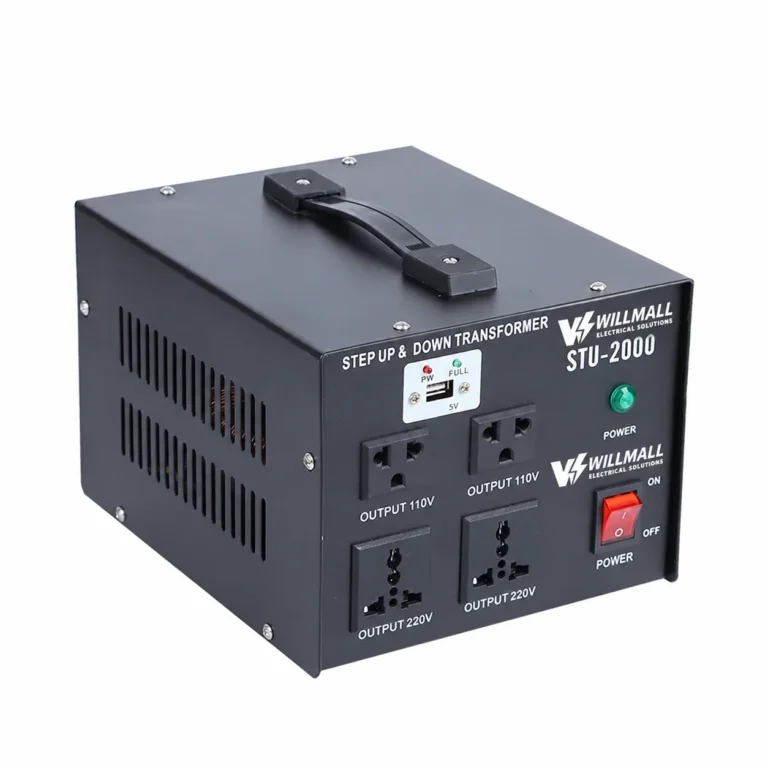
That is why the entire Wilmall range – the ST, STU, DT and TC series – is dry type. Copper windings, varnish-impregnated and baked, air-cooled, built for indoor use in homes, panels and workshops across Asia, the Middle East and Africa.
The varnish and resin story
The quiet hero of a dry type transformer is the varnish. After winding, the whole coil is dipped in insulating varnish and baked, and that does three jobs at once. It locks the copper turns together so vibration cannot rub them against each other. It seals the winding against humidity, which is the slow killer of insulation. And it helps the heat spread evenly across the coil instead of pooling in one spot.
You can see the difference when you open a well-made unit: the winding is a solid, glossy block, not loose layers of wire. That is the varnish. It is also why a dry type transformer can sit for years and come back to life the moment it is wired – the insulation stayed dry and intact. When buyers ask us what makes our units last, the honest answer starts with the varnish bath.
Buying dry type for resale
If you are an importer or a reseller, the dry type question decides your stock range. Household and workshop buyers need air-cooled step down units in the 500VA to 5000VA range, and that is a clean, predictable range to carry. We private-label dry type transformers for resellers from MOQ 10 pcs, with your branding, your packaging, and the sockets your market uses.
The selling point for your customers is simple: it is safe indoors, it does not leak, it does not need oil changes, and it will sit behind the fridge or in the workshop corner for a decade. That is a story that closes sales, and the transformer behind it just needs to be honest copper and honest varnish.
One more thing worth knowing: the term ” dry type ” covers a few construction styles, from simple varnish – dipped windings to resin – cast units where the coil is fully encapsulated in epoxy. Resin – cast units are tougher and handle dust and moisture better, which is why they show up in harsher industrial spots. For the vast majority of home, shop and workshop applications, the classic varnish – impregnated dry type unit is the right balance of price and performance – and it is what we build as standard. If your installation is unusually dusty or humid, tell us, and we will point you at the encapsulated option instead of guessing.
Frequently asked questions
What is a dry type transformer?
A dry type transformer cools with air instead of oil. The copper windings are insulated with varnish and resin, and heat is removed by natural airflow or a fan. It is the standard choice for indoor use.
Dry type or oil-filled: which do I need?
For anything indoors – panels, workshops, homes, shops – dry type is the right call: safe, quiet and maintenance-free. Oil-filled units suit outdoor utility installations where their cooling and weather protection matter.
Why do dry type transformers need ventilation?
Air is the cooling medium. If you box the transformer in with no airflow, the heat builds, the insulation ages faster, and the unit dies young. Leave clearance around it and keep the vents clear.
What insulation class should I choose?
B class (130 degrees C) suits normal indoor environments. Choose F (155) or H (180) for hot cabinets, outdoor enclosures or high-altitude sites. We build all three.
Can I order dry type transformers with my brand?
Yes, OEM branding from MOQ 10 pcs per model, with custom voltage combinations, terminals and insulation class on request.
Related reading
- Step Up vs Step Down Transformer: What Is the Difference?
- Step Down Transformer Manufacturer
- Step Up and Step Down Transformer Range
Get a factory-direct quote
Email sales@wilmall.com or WhatsApp +86 197 3022 6757 with your voltage and load details. We confirm the unit within 24 hours. MOQ 10 pcs.