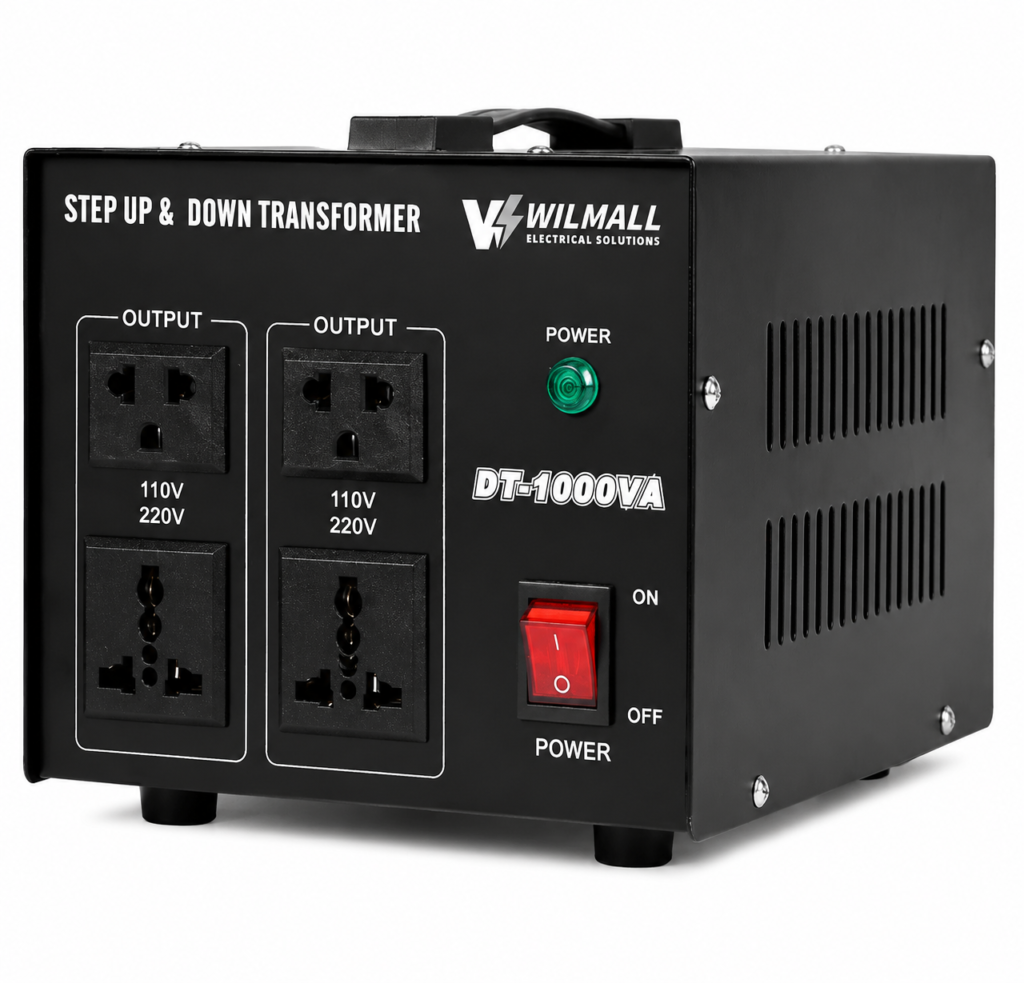
Step Up Transformer for Japan: 100V to 220V Appliances
Japan is the one country where the voltage question runs the other way for most imports. Japanese mains is 100V, while most of the world builds appliances for 220-240V. If you are moving to Japan with a European or Asian appliance, or importing Japanese equipment to a 220V country, you need a transformer that steps the voltage up or down between the two standards. This guide covers the 100V situation, what changes and what does not, and how to size the transformer for Japanese duty.
The Japan voltage situation
Japan runs 100V, 50Hz in the east (Tokyo) and 60Hz in the west (Osaka). The 50/60Hz split is a real quirk – some Japanese appliances are marked for one frequency only. For a transformer, the good news is that our units are rated for both, so the transformer works in either half of the country. The appliance itself is the thing to check.
For someone importing a 220-240V appliance into Japan – a European espresso machine, an Asian rice cooker, an American kitchen gadget that happens to be 220V – the transformer steps 100V up to 220V. For someone importing Japanese 100V equipment into a 220V country, it steps down. The same transformer family does both; it is just a question of which side is the input.
What needs a step up transformer in Japan
| Appliance | Input voltage | Transformer needed |
|---|---|---|
| European / Asian appliances in Japan | 220-240V | Yes – step up 100V to 220V |
| Japanese equipment overseas | 100V | Yes – step down 220V to 100V |
| US appliances in Japan | 120V | Partial – small step, check tolerance |
| Laptops / phones | 100-240V | No – dual voltage, plug adapter only |
| Japanese rice cookers abroad | 100V | Yes – step down to 100V |
The 120V case is worth a comment. Japan at 100V is close enough to 120V that many US appliances tolerate the difference, but motors and compressors notice. If the label says 120V only, a small step up transformer to 100-110V is the safe play rather than risking it. Our advice is always: match the appliance rating, do not trust tolerance.
Sizing the transformer
The sizing rules are the same everywhere. Add 30% margin for resistive loads like heaters and kettles, and double it for motor loads like rice cookers with heating elements that pulse, or small appliances with motors. A 1,500W European kettle in Japan wants a 2000VA step up unit. A Japanese rice cooker overseas, drawing about 600W, runs on a 1000VA unit.
Frequency matters more than people expect in Japan. If your appliance is marked 50Hz only and you run it in western Japan at 60Hz, or the reverse, some motors and clocks will misbehave. Check the appliance label before you buy the transformer – the transformer cannot fix a frequency mismatch, and we would rather tell you that up front.
Buying for the Japan market
There is a steady import trade of Japanese home appliances – rice cookers, air purifiers, toilet seats, small kitchen gear – into Southeast Asia and beyond, where mains is 220V. Those buyers all need a step down transformer to 100V. If you are in that trade, we build and private-label step down transformers matched to the Japanese appliance range, from MOQ 10 pcs, with the sockets your market needs.
Common mistakes
- Assuming US 120V and Japan 100V are the same. Close, but motors and compressors notice.
- Ignoring the 50/60Hz split. Frequency-sensitive appliances need the right half of Japan.
- Under-sizing motor loads. Double the watts for anything with a motor.
- Forgetting dual-voltage electronics. Most chargers and laptops need only an adapter.
- Buying a travel converter for daily use. Daily duty needs a real transformer.
Why buy from a factory directly
Wilmall supplies step up and step down transformers for the Japan market and Japanese appliances abroad. Copper winding, both 50 and 60Hz rating, batch test records, MOQ 10 pcs, 15-25 day lead time, FOB Ningbo or Shanghai. Send us your appliance list and we confirm the sizes within 24 hours.
Voltage tolerance and why it matters
Japanese equipment is built for 100V, and it is worth understanding how tight that tolerance is. Many Japanese appliances – especially motors, compressors and anything with a heating element that is temperature-controlled – are designed close to 100V, and running them at 120V or 220V shortens their life even if they survive the first plug-in. The transformer is not optional for these; it is what lets the appliance run at its design voltage.
For US appliances in Japan, the story is the reverse. American gear expects 120V, and Japanese mains at 100V is close but not identical. Many US appliances tolerate it – the motors run a little slower and cooler – but anything with a compressor or a precision motor benefits from a small step up transformer to bring the supply closer to 120V. When the appliance is expensive, match the voltage.
Kitchen appliances from Japan
Japanese kitchen appliances have a global reputation – rice cookers, water heaters, air purifiers, bread makers – and they sell well in Southeast Asia and the Middle East, where mains is 220V. Every one of those appliances ships expecting 100V, and every buyer needs a step down transformer. The common sizes are 500VA to 2000VA, depending on whether the appliance is a simple heater or has a motor.
Rice cookers are the classic case: a Japanese rice cooker draws about 600W and runs for an hour at a time. A 1000VA step down transformer covers it with margin, and resellers bundle the two constantly. Air purifiers and water heaters pull a bit more; size on the nameplate and the rule is the same as everywhere.
Buying for resellers
If you trade in Japanese appliances – either importing them or selling into Japan – the transformer is part of the product, not an accessory. We supply private-labelled step up and step down transformers for the Japan trade, from MOQ 10 pcs, with the sockets your market needs and your branding on the box.
The range that covers the market is 500VA to 3000VA for household appliances, with larger units for air conditioners and workshop gear. Tell us the appliance lines you carry and we will confirm the transformer range, so every unit you ship has the right voltage conversion with it.
The short version for buyers
Japan runs 100V with a 50/60Hz split. Step up for 220V appliances going in, step down for Japanese gear going out, and size on the nameplate with margin. We confirm the unit from your appliance list in one message.
Checking the appliance label
Before any Japan-related transformer decision, read the appliance label: the input voltage tells you which side of the conversion you are on, and the watts or amps gives us the size. Japanese appliances are honest about their 100V rating, and European ones about their 220-240V. Send us a photo of the label and we will confirm the transformer, the size and the socket configuration in one message.
And the final Japan note: keep a record of the appliance labels when you buy the transformer. When you order the next batch, the labels tell us everything we need to match sizes and sockets without measuring anything again. It is a small habit that makes repeat orders a five – minute job.
Frequently asked questions
Why is Japan 100V and not 110V or 220V?
Japan standardised on 100V in the early days of electrification, and it has stayed that way. It also runs 50Hz in the east and 60Hz in the west, a split that dates back to equipment imported from different regions in the 1880s.
Do I need a step up transformer for European appliances in Japan?
Yes. European appliances are built for 220-240V and Japanese mains is 100V. A step up transformer raises 100V to 220V for the appliance.
What transformer do I need for a Japanese rice cooker overseas?
A Japanese rice cooker draws about 600W at 100V. A 1000VA step down transformer converts your 220V mains to 100V with margin to spare.
Does the 50/60Hz split in Japan affect my appliance?
Some frequency-sensitive appliances – certain motors, clocks, turntables – are marked for one frequency. The transformer is rated for both, but the appliance label is the thing to check.
Can I order transformers for the Japan market with my brand?
Yes, private labelling from MOQ 10 pcs per model, matched to Japanese appliance ranges, with the sockets your market needs.
Related reading
- Step Up Transformer: What It Does and When You Need One
- 120V to 240V Step Up Transformer Guide
- Step Up and Step Down Transformer Range
Get a factory-direct quote
Email sales@wilmall.com or WhatsApp +86 197 3022 6757 with your appliance list and destination. We confirm the sizes within 24 hours. MOQ 10 pcs.