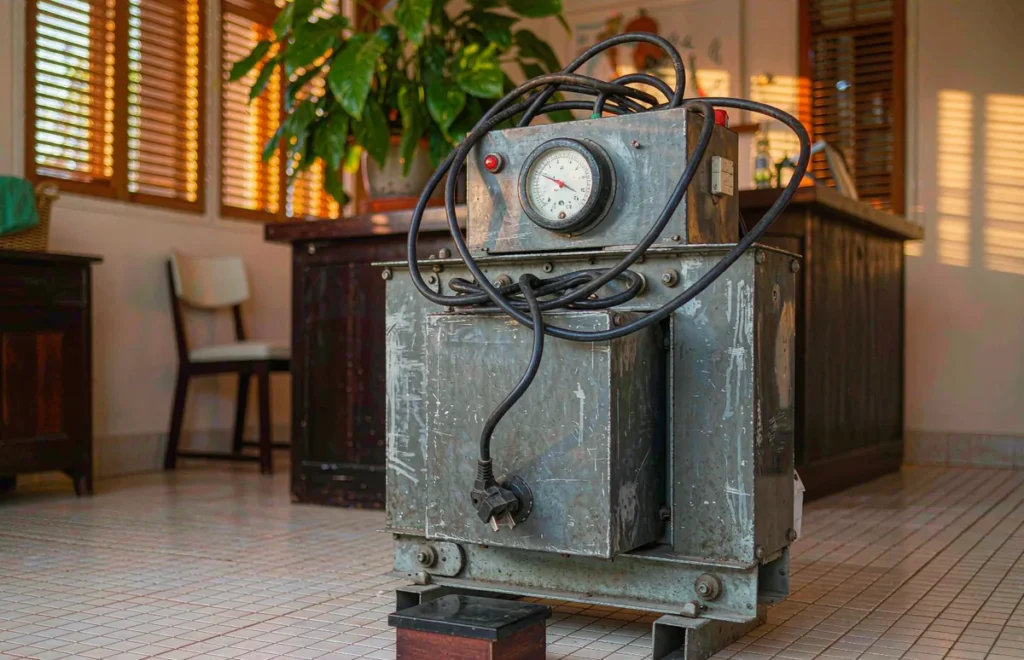
Step Down Transformer for Cambodia: 230V to 110V Guide
Cambodia runs at 230V and 50Hz, and the sockets you will meet in most buildings are Type A, Type C or Type G, depending on when the place was wired and who did the work. That mix tells you something useful straight away: imported equipment arrives here faster than the wiring standardises around it. So a step down transformer for Cambodia is not really a travel accessory. For a hotel with American air conditioners, a garment factory with imported motors and control panels, or a restaurant with a 110V ice machine, it is the piece of kit that decides whether the equipment works at all.
We build transformers in Yueqing, China, and every unit is wound with copper and tested 100 percent in our own workshop before it gets packed. Cambodia is a regular destination for us, shipping out of Ningbo or Shanghai and landing at Sihanoukville or Phnom Penh. Over the years the questions have settled into a pattern, so let me answer them the way I would if you messaged me on WhatsApp late in the evening.
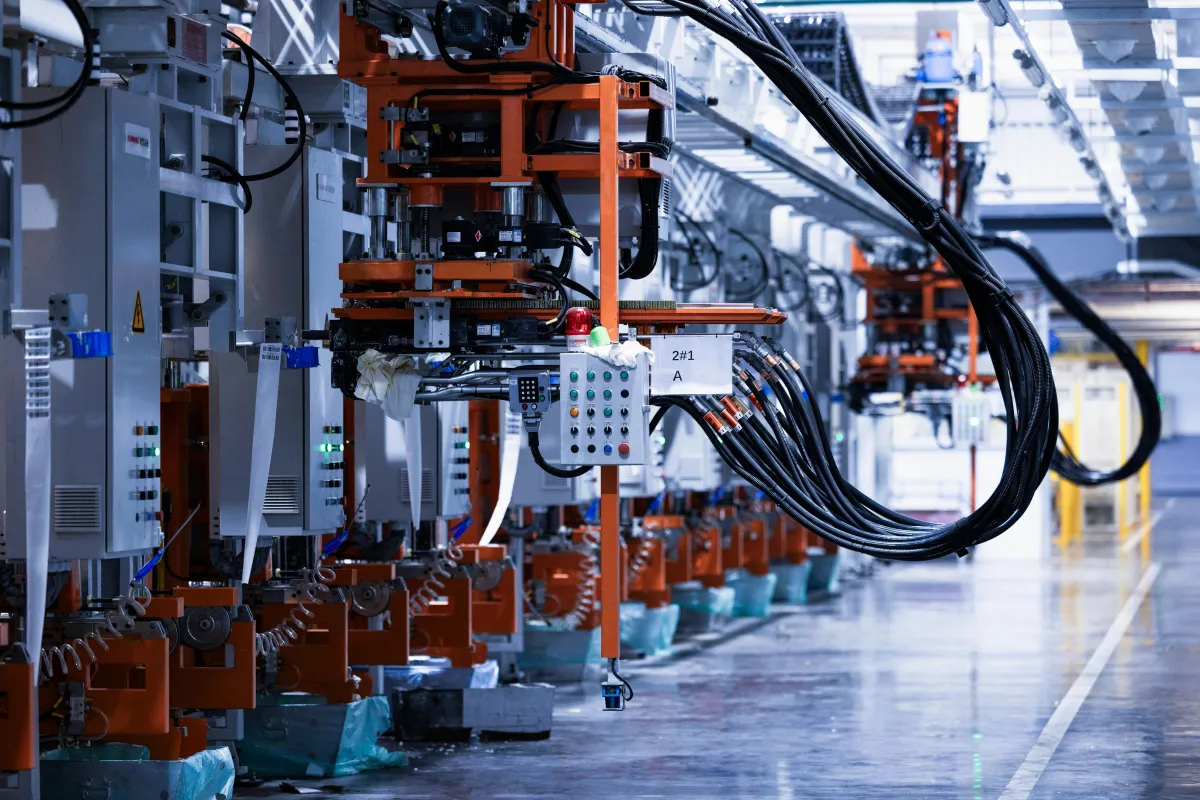
What the Cambodian Supply Really Looks Like
On paper it is 230V at 50Hz. At your socket, the number moves. Phnom Penh and Siem Reap are steadier than they were a decade ago, but demand here grows faster than the network does, and you can feel that in the evening when the city cools down and everything switches on at once. In provincial towns, or on the far end of a long feeder line, voltage sitting below 200V for hours is not a rare event. It is Tuesday.
Two other things happen on this kind of grid. The first is sag under load. The second is spikes, because switching, capacitor banks and lightning all put short, high transients onto the line, and a transformer that has no margin has nowhere to absorb them. Buildings with a shared supply make it worse, since every motor start in the building shows up as a dip on your circuit.
Sockets fall into three families. Type A is the flat two-pin, Type C is the thin round two-pin Europlug, and Type G is the British three-pin with the fused rectangular pins. Older French-style Type E sockets still turn up in buildings from the 1990s. None of them will accept a 110V American plug, and that is the small problem the transformer solves.
Why Headroom Matters More Here Than Almost Anywhere
The short answer is that a transformer does not create voltage, it converts it by a fixed ratio. If the primary sees 230V, the secondary gives you 110V. If the primary sags to 195V, the secondary drops to about 93V, and that is the number your appliance actually sees. Motors slow down and heat up, compressors struggle to start, and electronics with a power supply that is already at its lower limit start resetting.
Headroom fixes most of this. If you size the unit so it runs at roughly 70 to 75 percent of its rating at your normal load, the voltage drop inside the winding is a smaller share of the total, the core stays cooler, and the output holds much closer to 110V when the input has a bad evening. That is why we tell buyers in Cambodia to add 25 to 30 percent on top of their calculated load, and to go one size up again if the site is outside Phnom Penh or the load includes a compressor or a pump.
There is a second layer for the worst sites. If your area genuinely sits under 200V for long stretches, no transformer alone will give you a clean 110V, because it can only scale what it is given. The practical arrangement in that case is a voltage stabiliser or an AVR ahead of the transformer, feeding it a steady 220 to 230V, and then the step down unit doing its normal job. In my experience this two-piece setup is far more reliable than pushing an oversized transformer to compensate for a collapsing supply. It also gives you something to point at when the fault is the utility’s, not the equipment’s.
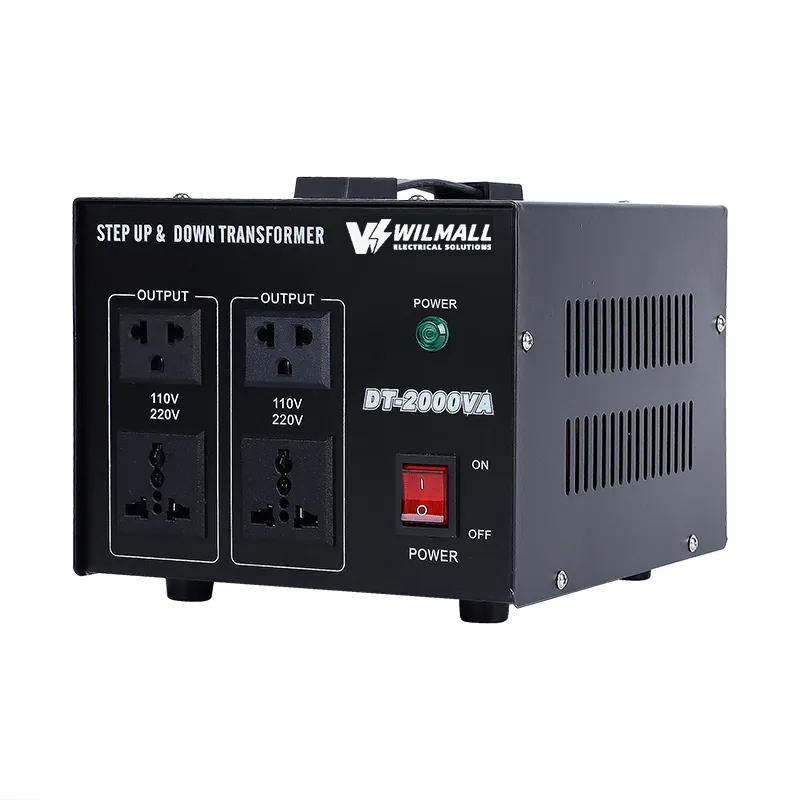
The 110V Equipment Arriving in Cambodia
Cambodia buys a lot of second-hand and new North American equipment, and it arrives through a few well-worn channels. Here is what we see on the orders that come through us.
- Garment and footwear factories. Imported servo motors on sewing lines, cutting machines, steam irons for pressing stations, label printers and quality-control gear. Single machines are small, but a line of thirty of them on one sub-panel is not.
- Hotels and guesthouses. Window and split air conditioners rated 110V, mini-fridges, hair dryers, kettles, and the laundry equipment in the back room.
- Restaurants and cafes. Commercial mixers, blenders, ice machines, meat slicers, coffee grinders and under-counter fridges, most of them American-pattern appliances.
- Shops and malls. Display freezers, POS hardware, lighting controllers, and the small tool kit the maintenance team keeps.
- Clinics and pharmacies. Sterilisers, centrifuges, examination lights, suction units and monitoring equipment.
- Construction and workshops. Power tools, welders, bench grinders, compressors and site lighting.
- Households. Kitchen appliances, grooming kit, and CPAP machines that run all night and are very obvious when the voltage dips.
Before you order anything, do the label check. A large share of modern electronics, including laptops, phone chargers, most LED drivers, many monitors and a growing number of medical devices, are rated 100-240V, 50/60Hz. Those run straight off the Cambodian socket with a plug adapter and no transformer at all. Sorting your equipment list into “dual voltage” and “110V only” before you talk to anyone will cut your order size and your customs bill at the same time.
Sizing by Site Type: Numbers You Can Copy
Most buyers ask this first, so here is the working method. List everything that can run at the same moment, add the watts, add 25 to 30 percent, and then round up to the next unit in the range. Do not average your peak away. The peak is what the transformer has to survive.
| Typical Cambodian site | 110V load that can overlap | Realistic peak | Headroom applied | Unit we usually suggest |
|---|---|---|---|---|
| Shop or small office | Freezer, POS, small tools | Around 1200 W | 25 percent | ST-2000 with RCD |
| Guesthouse, three to six rooms | AC units and hair dryers, not all at once | 2500 – 3500 W | 30 percent | STU-5000 |
| Restaurant kitchen | Mixer, ice machine, slicer, fridge | 3000 – 4500 W | 30 percent | STU-5000 |
| Garment factory sub-line | Servo motors, press, QC equipment | 3500 – 6000 W | 30 percent plus motor surge | Two or more STU-5000 units, split by panel |
| Workshop or site office | Compressor, welder, grinder | 4000 – 6000 W | 30 percent plus surge | STU-5000 per station group |
| Lab or calibration bench | Adjustable test supply | Up to 3000 VA | Build in for continuous use | Variac 3KVA |
Fifty Cycles, Not Sixty
Cambodia gives you 50Hz. North American equipment is usually built for 60Hz. A transformer changes voltage, and that is all it changes. Frequency comes through untouched.
For anything electronic, this is a non-issue. Laptops, chargers, CPAP machines, monitors and most modern medical devices either convert to DC internally or carry a wide frequency rating, so 50Hz is fine. Where it shows up is in induction motors. A motor wound for 60Hz running on 50Hz turns about 17 percent slower, its cooling fan turns slower with it, and if the machine is working hard it runs warmer. Fridges, pumps, blenders, some power tools and older air-conditioner compressors fall into this group. They usually still work. They work differently, and if the machine is critical to your business, send us the model plate and we will tell you honestly whether it is a problem or not.
The Units We Build
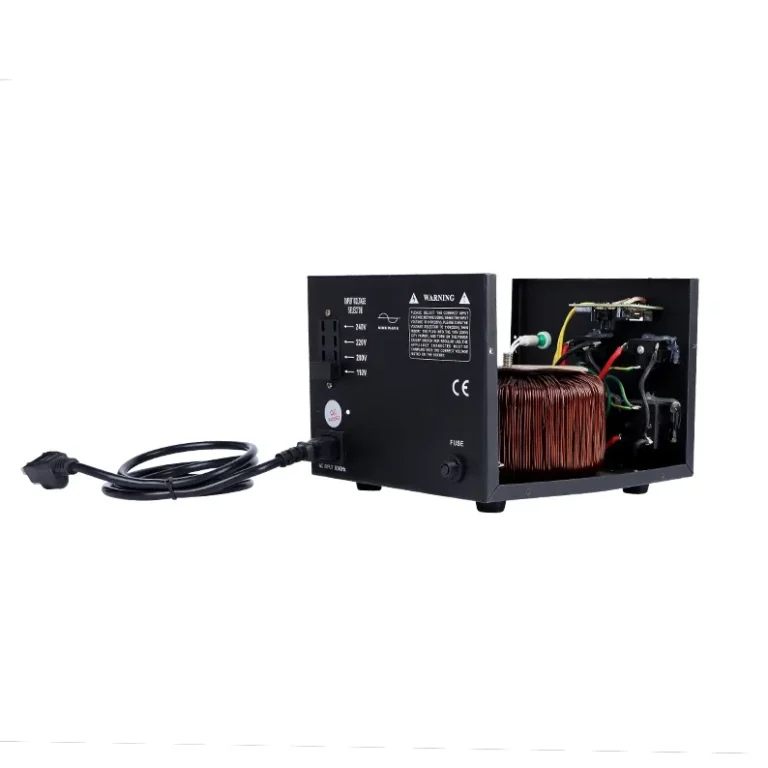
We are a factory rather than a trading company, so I can tell you exactly what comes off our line. The ST-2000 is a 2000VA step down transformer, 230V in and 110V out, with RCD protection built in. For a shop running a freezer and a few small appliances, or a single hotel floor, it is the unit I quote most often. The RCD earns its place in Cambodia specifically, because imported 110V appliances sitting in tiled kitchens and wet bathrooms are a genuine hazard, and a local trip is far better than a smoking plug.
Past a couple of appliances, the STU series takes over. STU-3000 and STU-5000 are bidirectional, meaning they step up as well as down, and they carry the heavier work: kitchen loads, factory sub-lines, compressors, welders and clinic equipment groups. Bidirectional matters more in Cambodia than buyers expect, because premises here often end up running both 110V imports and 230V local equipment on the same site, and a single box that handles both directions saves a second purchase later.
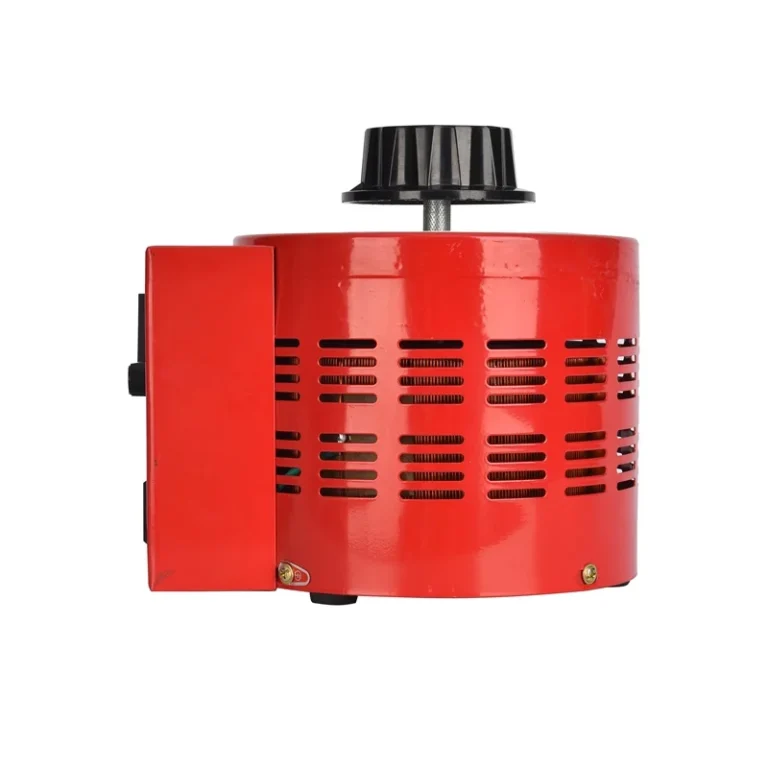
The DT-1000VA is our smaller bidirectional automatic unit, and it suits home offices, single workbenches and remote stations where a modest load needs to work in either direction without anyone thinking about it. The Variac range at 500VA, 1KVA, 2KVA and 3KVA gives you adjustable output voltage on a dial, which technicians here use to check how an imported appliance behaves at 105V or 115V, and to commission equipment on a supply that refuses to sit still.
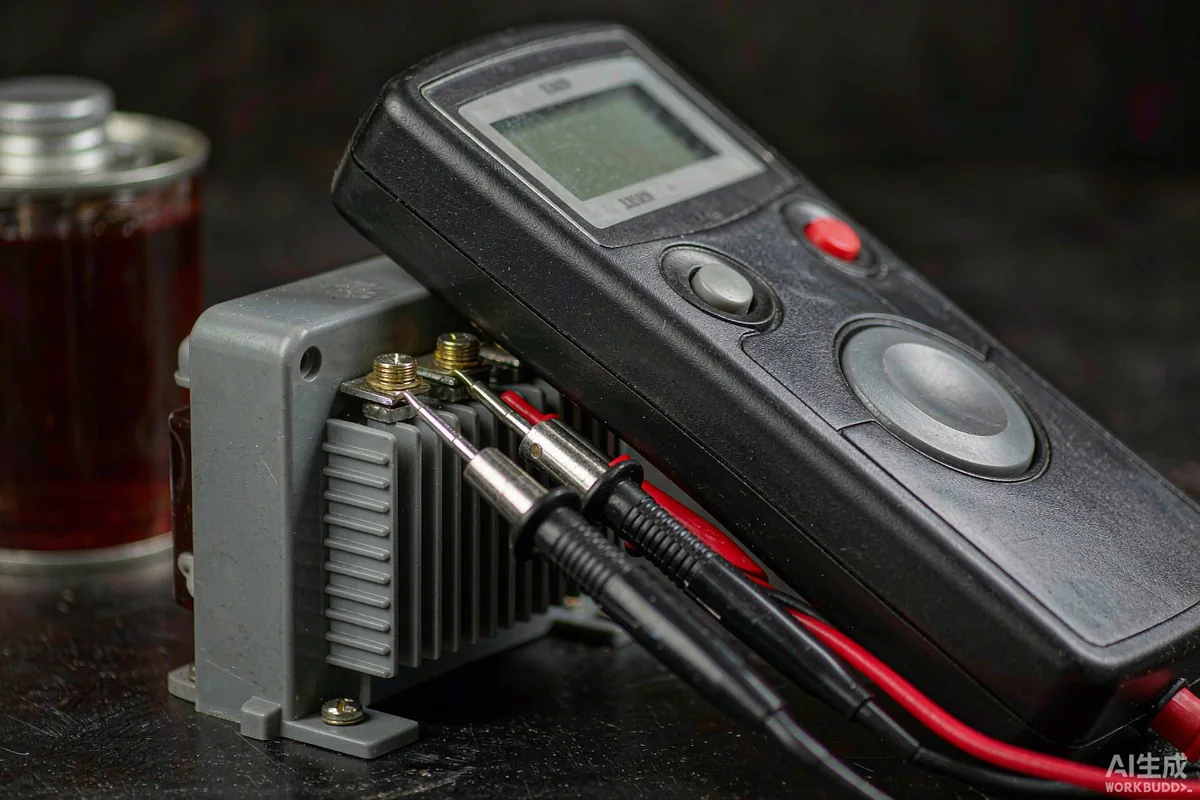
Plugs, Sockets and the Adapter Trap
A transformer changes the voltage, not the shape of the plug. Your unit needs an input side that matches the socket in your building and an output side that matches your appliance. Tell us at the time of order whether you want Type A, C or G on the input and what you want on the 110V side, and we will build it that way. It costs you nothing at that stage and saves a drawer full of loose adapters later.
That drawer is a real risk, by the way. A cheap travel adapter rated for 6A on a 1875W hair dryer or an air conditioner will get hot, and eventually it will fail. For anything drawing serious current, the connection should be a proper plug and socket or a short fixed lead, not a stack of plastic adapters. If you are installing several units, have an electrician wire them as real circuits with proper earthing.
MOQ, Lead Time and Shipping to Sihanoukville or Phnom Penh
Commercial details, since buyers ask them first. Minimum order is 10 pieces, which suits a distributor stocking a container and also works for a group of hotels or a factory buying a batch together. Production takes 15 to 25 days depending on quantity and whether you want custom labelling. We ship FOB Ningbo or Shanghai, and every unit carries a 12-month warranty.
Cambodian importers normally take the sea leg to Sihanoukville, the deep-water port that handles most container traffic, or move goods on to Phnom Penh through the river and road route. Nominate the port in your order and we will prepare the shipping documents to match. Customisation that helps here includes building the unit to your socket combination, setting the output to 110V or 120V to match your nameplates, printing labels in English and Khmer where that helps your staff, and packing each unit individually so it can be resold as it stands.
Documents and Customs
On paperwork I will only tell you what I know from the factory side. Every shipment leaves with a commercial invoice, a packing list and a bill of lading, and we can supply a certificate of origin. For Cambodia, most importers work with a local customs broker, and the broker will want the invoice and packing list in a form that matches the shipping documents exactly, line by line. Sending us your broker’s requirements before we issue the invoice is the single easiest way to avoid a clearance delay, because a mismatch in the description or the declared value is what usually stops a container.
Two practical notes from experience. Declare the goods at their real transaction value. Under-declaration is the most common cause of penalties at Cambodian ports, and the money saved is never worth the hold. And keep the power rating on the nameplate consistent with the invoice, because customs officers who know electrical goods will check both.
Ask us for the batch test record with your shipment as well. It shows input voltage, output voltage under load and no-load current for the batch your units came from, and it is a genuine document rather than a template. We test every unit we build here in Yueqing, and the record follows the goods.
One last manufacturing note. We wind with copper, not aluminium. At the same rating an aluminium winding runs hotter, and on a grid where the input voltage moves around all day, hotter is exactly what you do not want. That choice is why our units hold their output in a way that a lighter, cheaper build does not.
What to Send Us for a Quote
You do not need a finished specification. Send the equipment list with watts or amps off each nameplate, a photo of one nameplate if that is quicker, the city or province you are in so we can judge how rough your supply tends to be, the socket type at your wall, whether any of the load includes a motor or a compressor, your quantity, and your preferred port. From that we can size the unit and give you a delivery window, usually the same working day.
While you put that list together, two pages on our site are worth ten minutes. Cambodia’s grid shares a lot with its neighbours, and our guide to a Step Down Transformer for Myanmar: 230V to 110V Guide covers a very similar set of problems on a similar supply. If you are still deciding between a step down unit, a step up unit, or one box that does both, our page on step up & down transformers explains the difference in plain terms. There is also a growing set of voltage guides by country on the site covering plug types and grid quirks market by market.
If you are not sure about any of it, send the list anyway. Sizing a step down transformer for a Cambodian guesthouse or a factory sub-line is routine work for us, and ten minutes on WhatsApp beats importing the wrong capacity in a container.
Cambodia Transformer Questions Buyers Ask Most
These are the messages that come through every week, answered the way I would answer them on a call.
What size step down transformer do I need in Cambodia for 110V equipment?
Add up everything that can run at the same time, add 25 to 30 percent headroom, then go one size up if you are outside Phnom Penh or the load includes a compressor or pump. A guesthouse running air conditioners and dryers lands near 3500W, and an STU-5000 covers that comfortably.
Cambodia is 230V, so why does my transformer output drop below 110V?
Because a transformer scales what it is given. If your socket sags to 195V during peak hours, a 230V-to-110V unit will output roughly 93V. That is a supply problem, not a transformer fault. Headroom helps, and on the worst sites a voltage stabiliser ahead of the transformer gives you a steady input to work from.
Which plug types are used in Cambodia and what should I order?
You will find Type A flat two-pin, Type C round two-pin and Type G British three-pin, with some older Type E in buildings from the 1990s. Tell us your wall socket type and your appliance plug at the time of order and we build the input and output sides to match, so you are not relying on travel adapters.
Will 60Hz American equipment work on Cambodia’s 50Hz supply?
Through a step down transformer you get a clean 110V at 50Hz. Electronics do not mind at all. Induction motors run about 17 percent slower and warmer, which covers fridge compressors, pumps, blenders and some tools. Send us the model plate and we will tell you honestly whether it matters for your machine.
Do you ship to Sihanoukville or Phnom Penh, and what documents come with the goods?
We ship FOB Ningbo or Shanghai and prepare documents for whichever port you nominate, usually Sihanoukville, with onward movement to Phnom Penh. Every shipment includes a commercial invoice, packing list and bill of lading, and we can supply a certificate of origin and the batch test record for your units.
Send us your equipment list and we will size it for you. Tell us what 110V equipment you run, which province you are in, whether the load includes a motor, and your quantity. We will come back with a recommended unit, a quantity and a price, normally the same working day.
Or talk to us directly: WhatsApp +86 197 3022 6757 · Email sales@wilmall.com
MOQ 10 pcs · Lead time 15-25 days · FOB Ningbo or Shanghai · 12-month warranty