Step Down Transformer for Myanmar: 230V to 110V Guide
Myanmar runs on 230V at 50Hz, and around 110V appliances imported from the United States and Japan you need a step down transformer. That part is simple. The part that is not simple is what your wall actually hands you on a Tuesday afternoon in Yangon, because it is rarely a clean 230V. It sags, it spikes, it disappears for an hour, and it comes back with a jump that makes sensitive electronics flinch.
We build transformers in Yueqing, China, and ship them into Southeast Asia year after year. The buyers who come back happy from Myanmar are almost never the ones who bought the exact VA figure they calculated. They are the ones who left themselves room. This guide is about how to do that without simply buying the biggest unit on the list.
Why Myanmar Buyers Ask About Voltage Twice
Most of our enquiries from Yangon, Mandalay and Naypyidaw start with a number, and then immediately stop trusting it. “My supply is 230V, but my meter shows 190 sometimes.” That sentence tells me more about the right product than any specification sheet will, because it is the reality the transformer has to survive in.
What the Supply Does Over a Day
In many parts of the country, the supply behaves differently at different hours. Around midday, when air conditioners and workshop motors are all pulling at the same time, voltage drops. People describe it as a brownout, and the telltale sign is lights dimming slightly, a fan slowing down and getting louder, and a fridge compressor that sounds like it is straining. Later in the evening, when the load falls away, the voltage climbs back and can overshoot the nominal figure. Then there are the interruptions. Some townships run on scheduled rotation, and when power comes back it does not arrive gently. It arrives as a step, and that step is hard on anything with a power supply inside it.
If you run a generator for part of the day, add a fourth condition to the list. A small generator under load can deliver a rather ugly waveform, and the cheaper the generator, the uglier it gets. A transformer handles that far better than a switch-mode power supply does, which is one reason we sell a lot of copper-wound units into markets where backup power is normal.
What That Means for Your Appliance
An appliance built for 110V expects something close to 110V. When the mains feeding your step down transformer drops to 190V, the output drops with it. A motor asked to start on a lower voltage pulls more current to make the same torque, and more current means more heat in both the motor and the transformer winding. Do that every afternoon for a year and the insulation inside starts to age. This is not a dramatic failure you will notice on day one. It is a slow one that shows up as a humming noise, a warm case, and eventually a unit that trips its protection or quits.
Design Margin: Why 2000VA Is Not 2000 Watts
Here is the thing most first-time buyers miss. A transformer rating in VA and an appliance rating in watts are not the same number, and they are not interchangeable. VA is apparent power. Watts is real power. The gap between them is the power factor of the load, and loads with motors or electronics usually sit somewhere around 0.7 to 0.9.
So a 2000VA transformer is not guaranteed to run a 2000W motor happily. At a power factor of 0.8, that 2000VA is really 1600W of usable real power, and that is before you add any margin for low supply voltage. This is why a buyer who calculates 1800W of load and orders a 2000VA unit often comes back to us three months later describing a unit that runs hot.
Our rule of thumb for a market like Myanmar is simple. Size for the continuous load, add 25 percent for motor start and normal variation, and then add another 15 to 20 percent because your mains is not stable. If you want one number instead of two steps, add 40 to 50 percent to your real load and round up to the next standard size. It sounds wasteful. It is not. Running a transformer at 60 percent of its rating is what makes it last a decade instead of a season, and the price difference between one size and the next is far smaller than the cost of replacing a burnt appliance.
A Load Table You Can Actually Use
These are the appliances we see most often in Myanmar enquiries. Treat the VA column as a floor, not a target.
| Load | Typical watts | Power factor to assume | Transformer VA with margin |
|---|---|---|---|
| LED lighting and phone chargers | 50W to 200W | 0.9 | 500VA is plenty |
| Refrigerator | 100W to 250W running | 0.7 | 1000VA, compressor start is the driver |
| Washing machine | 500W to 800W | 0.8 | 2000VA to 3000VA |
| Water pump | 400W to 1100W | 0.7 | 3000VA upward |
| Power tools | 600W to 1500W | 0.7 | 3000VA upward |
| Office computer and monitor | 200W to 400W | 0.9 | 1000VA |
| Rice cooker or electric kettle | 700W to 1500W | 1.0 | 2000VA |
Notice the pattern. Anything with a motor needs far more transformer than its running watts suggest, because the first half second of operation is the expensive part. A compressor that pulls 200W while running can demand five times that for a moment as it starts, especially when the mains is already low. Those two facts stack on each other, and that is why the pump row recommends 3000VA for a load that looks like 1.1kW on paper.
Which Unit Fits a Myanmar Installation
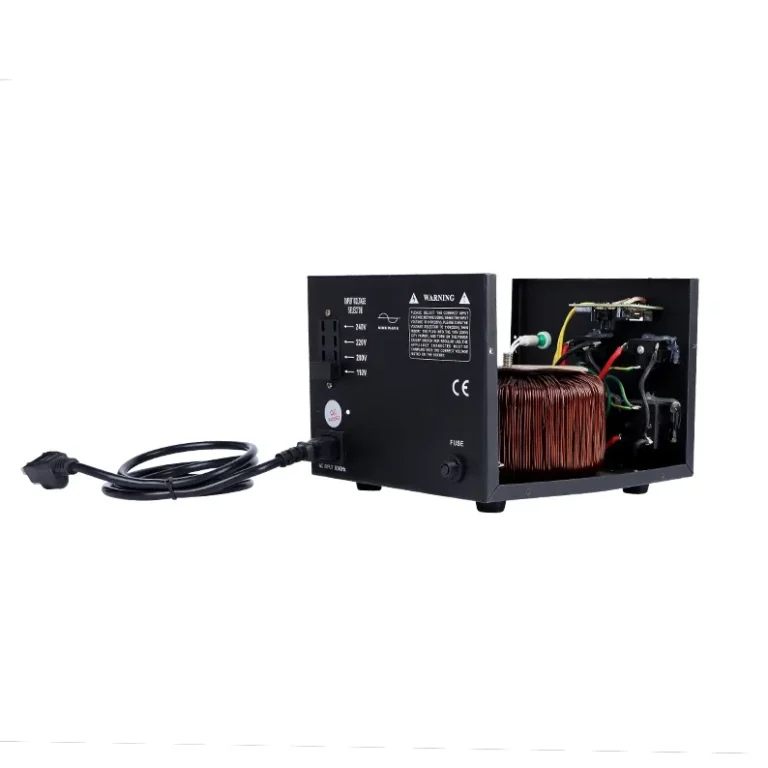
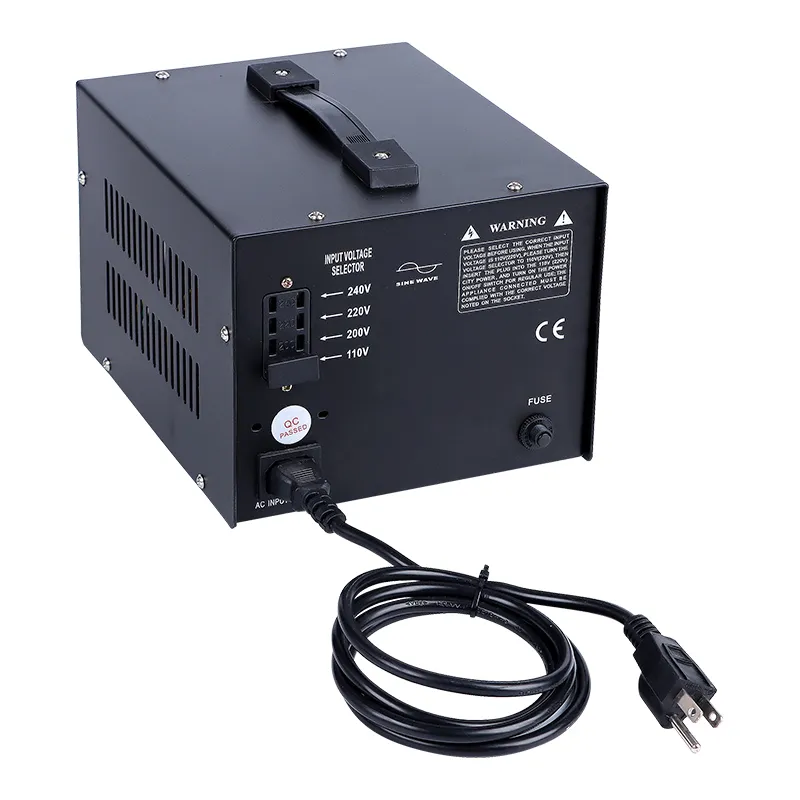
If you just need a fixed 220V to 110V conversion with protection built in, our ST-2000 is the usual answer. It is a 2000VA step down transformer with RCD protection, and it covers a guest room, a small office, a clinic consultation room, or a household running one appliance at a time. For buyers in Yangon who keep a generator for backup, having RCD protection on board matters more than it does on a stable grid, because faults find you faster when the wiring around you is doing its own thing.
If your load is heavier, or if you also need to go the other way and run a 230V tool from a 110V supply, look at the bidirectional units. The STU-3000 and STU-5000 handle both directions at higher power, and the DT-1000VA is a bidirectional automatic unit that decides the direction itself. For test benches, service workshops and anyone who needs to sweep the voltage rather than lock it to one figure, the Variac range covers 500VA, 1KVA, 2KVA and 3KVA with an adjustable output.
Not sure which family your job belongs to? Have a look at the full step down transformer range we export and send us your load list. We will tell you where you land.
Generators, Inverters and the Frequency Question
Myanmar is 50Hz, which is good news for most buyers, because the majority of 110V appliances sold in the world are built for 60Hz. A 60Hz appliance on a 50Hz supply usually runs a fraction slower, and an induction motor will turn about 17 percent slower than its nameplate suggests. For a fan or a pump that means less output. It does not usually mean damage. It does mean you should not be surprised when a pump that should deliver a certain flow rate underdelivers.
Electronics mostly do not care about frequency at all, because they rectify the supply to DC before doing anything with it. A laptop, a television, a monitor, a games console. Those will run on 50Hz or 60Hz without noticing, provided the voltage is right.
Generators introduce a different problem, and it is worth saying plainly. A transformer is a passive magnetic device, so it tolerates a rough waveform far better than a power supply does. What it will not tolerate is being run right at its limit while the generator’s voltage wanders. If your backup generator delivers 200V under load instead of 230V, the transformer has to work harder to hold up the 110V output, and the heat goes up. Keep the same margin rule in mind for generator hours as for grid hours.
Some buyers ask whether they should add a voltage stabiliser in front of the transformer. For a fixed, motor-driven load, a properly sized transformer with margin is usually the simpler answer. For sensitive electronics, a stabiliser or a small UPS has its own place. We are happy to talk through the difference, and we will say so honestly when a stabiliser is not the right purchase for you.
Installation Notes for a Wobbly Supply
A few practical points we repeat to every buyer in this region.
- Earth the unit properly. Do not run it from an unearthed two-pin extension lead, no matter how tidy the lead looks.
- Keep the input cable short and of a decent gauge. Long thin cable adds voltage drop right where you can least afford it.
- Give the transformer air on all sides. Ten centimetres of clearance around the vents is the minimum, and more is better in a hot climate.
- Do not stack appliances on top of the unit or store it in a closed cabinet with no airflow.
- If you run several appliances, stagger the starts. Let the fridge settle before you switch on the pump, and the transformer will thank you.
- Label the output socket clearly so nobody plugs a 230V appliance into a 110V outlet, or the reverse.
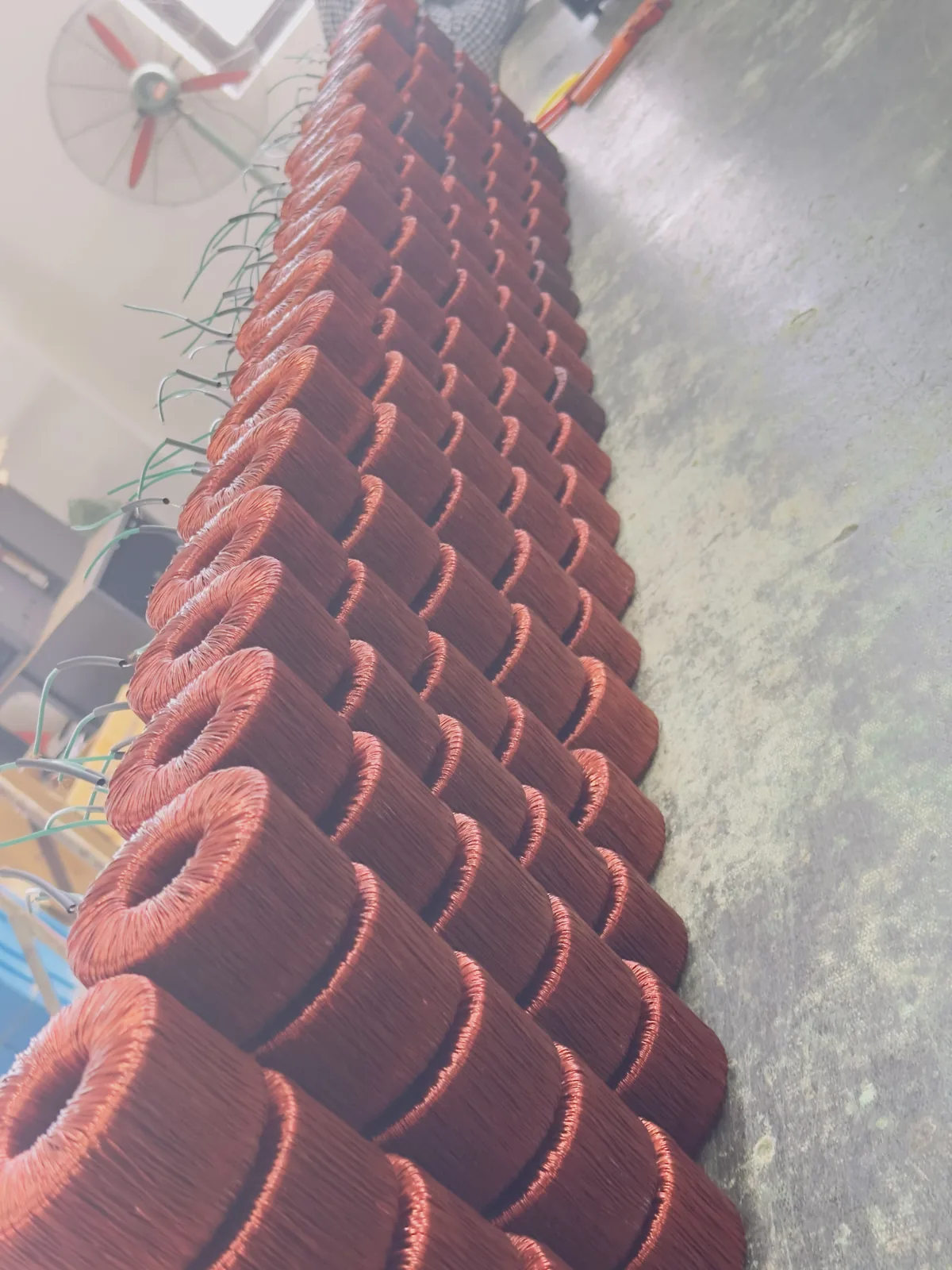
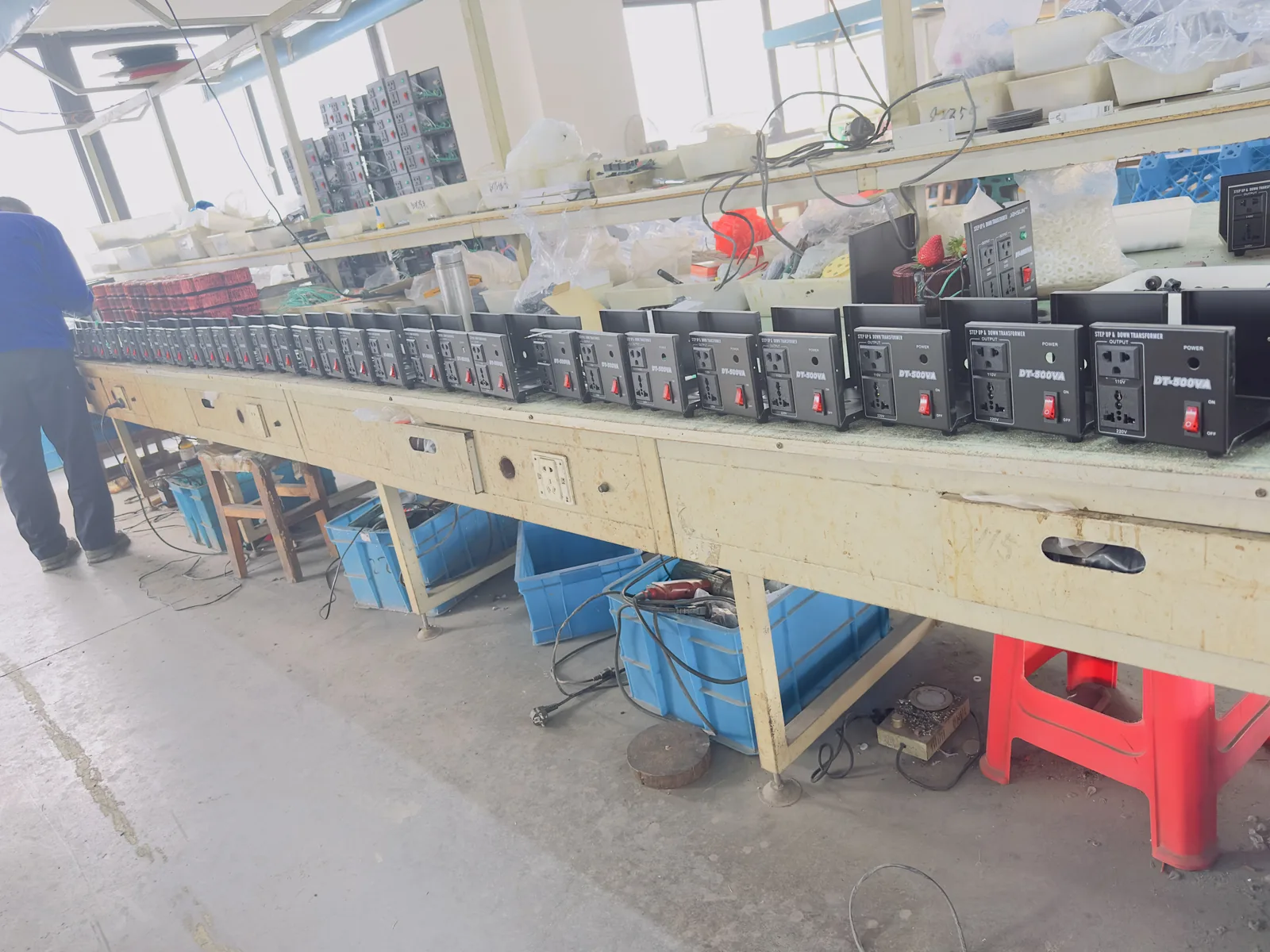
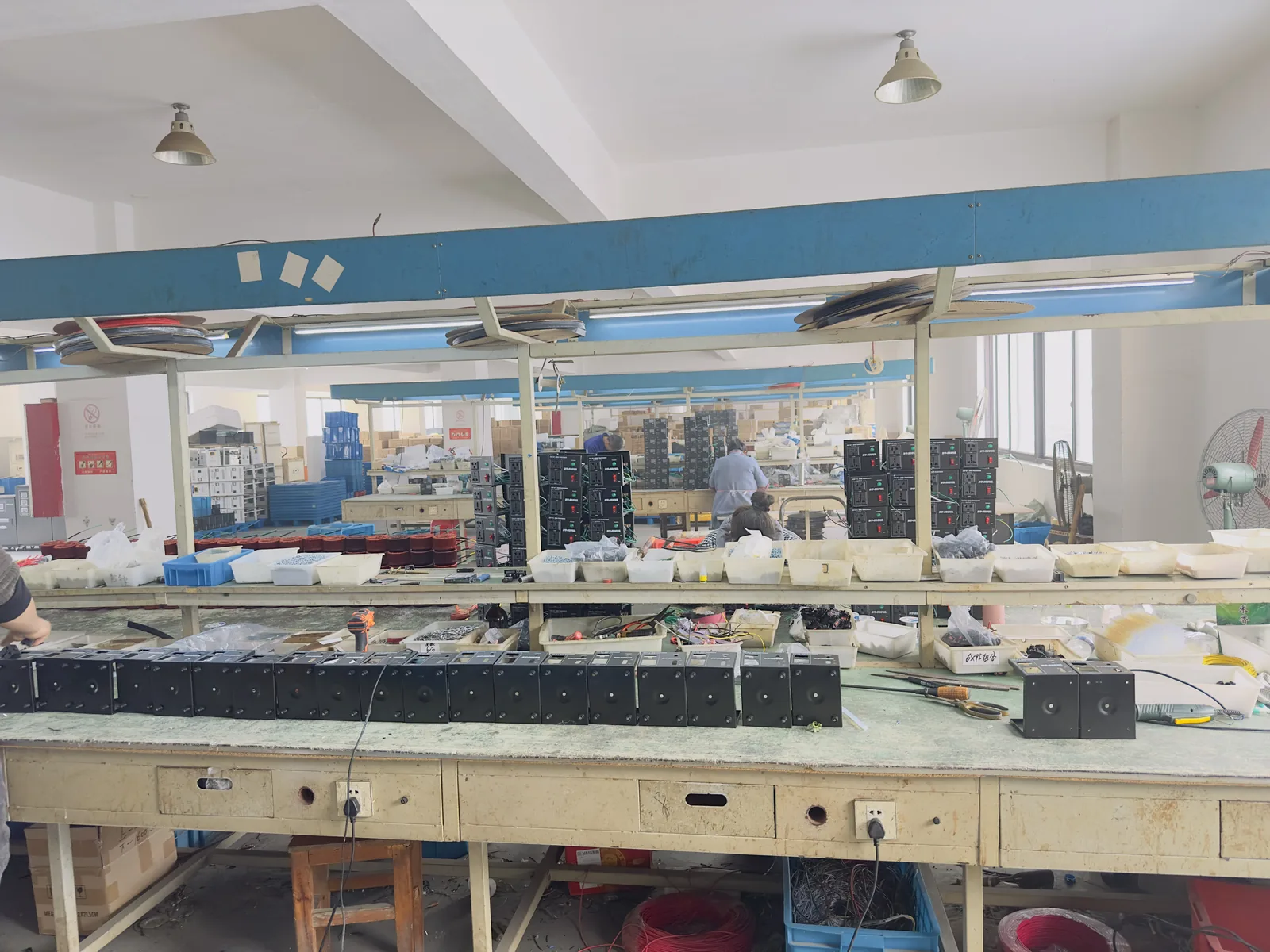
Every unit we ship is wound with copper, assembled and 100 percent tested in our own factory in Yueqing, and it goes out with a batch test record showing input voltage, output voltage under load and no-load current. You can hold that record up against the nameplate and see the numbers match. For a market like Myanmar, that piece of paper matters more than a brochure.
Freight, Packing and Lead Time
Our minimum order is 10 pcs and our lead time is 15-25 days from deposit to loaded container. We ship FOB Ningbo or Shanghai, and Myanmar orders usually move by sea into Yangon, with express air for the small trial quantities that people order to test a market before committing. Cartons are export standard with foam protection, and we can print your own brand on the label and the carton if you are building a local product line.
One thing worth checking before you order a container: confirm what your customs broker needs. Certificate of origin, commercial invoice, packing list, test report. We prepare the standard set for every shipment, and if your broker wants something specific, tell us at the quotation stage rather than two days before the vessel sails.
Buyers in other 230V markets run into the same questions about voltage behaviour. Our Voltage Converter for South Africa: 230V to 110V Guide covers a grid with its own habits, and the sizing logic is identical. If your country is not covered there, the more buying guides section lists the rest.
Step Down Transformer for Myanmar: Buyer Questions
Five questions that land in our inbox from Yangon almost every month.
What size step down transformer do I need for Myanmar?
Add up the continuous watts you will run at once, divide by a power factor of about 0.8, then add 40 to 50 percent for motor start and unstable mains. On a 230V supply that fluctuates, that extra margin is what keeps the winding cool. Send us your list and we will confirm the size.
Does my 110V appliance work on 50Hz in Myanmar?
Motors run about 17 percent slower on 50Hz than on 60Hz, so a pump or fan may deliver less than its nameplate suggests, but that is not usually damaging. Electronic equipment such as laptops, televisions and monitors rectifies the supply internally and is generally unaffected by the difference.
Can I run my appliances during a brownout?
A transformer will pass a low input voltage through, so your 110V output drops along with it. Motors draw more current when that happens, which adds heat to both the motor and the transformer. If brownouts are frequent where you are, size the unit larger and avoid starting several motor loads at the same time.
Should I use a stabiliser with a step down transformer in Myanmar?
For a fixed motor load, a properly sized transformer with margin is usually enough and keeps the setup simple. For sensitive electronics, a stabiliser or a small UPS earns its place. Tell us what you are running and we will say honestly whether you need both or just the transformer.
Can you ship step down transformers to Yangon in small quantities?
Our minimum order is 10 pcs, and we ship FOB Ningbo or Shanghai with a lead time of 15-25 days from deposit. Full orders normally go by sea into Yangon, while small trial quantities can go by express air. Tell us your quantity and your timeline and we will quote both options.
Running 110V equipment on a Myanmar supply that moves around? Send us your load list and the hours you use it, and we will size a transformer with enough margin to survive the bad afternoons.
Or talk to us directly: WhatsApp +86 197 3022 6757 · Email sales@wilmall.com
MOQ 10 pcs · Lead time 15-25 days · FOB Ningbo or Shanghai · 12-month warranty