12V vs 24V Lighting Systems: Which Low Voltage Transformer Do You Need?
When buyers first look at low voltage lighting, they usually assume 12V and 24V are near enough the same thing, so either will do. That assumption costs people real money, usually in dim fixtures at the far end of a run or in a transformer that gives up early. The two voltages are close cousins, but they are built for different cable lengths, different fixtures and different jobs.
I answer this exact question several times a week from our office at the transformer factory in Yueqing, China. This article compares 12V and 24V lighting honestly: where each one shines, where it struggles, and how to pick the low voltage transformer that matches your setup instead of guessing.
12V Lighting: The Standard for Short, Safe Runs
12V is the default voltage for low voltage lighting, and there is a simple reason for its popularity: the fixtures are everywhere. Garden spotlights, path lights, deck lights, small accent lamps, under-cabinet pucks, all of the classic styles are made in 12V versions, and that huge selection keeps prices down and styles varied. If you want a particular look and you want it cheap, 12V is usually where you find it.
The catch is distance. Because the voltage is low, even a modest cable run consumes a visible share of it. Feed 12V down thirty meters of thin wire to a set of lamps, and the lamps nearest the transformer will be bright while the ones at the end look tired and orange. That is not a faulty product, it is Ohm’s law doing exactly what it always does. You can fight it with thicker cable, but there is a practical limit.
For short loops, though, 12V is simple and proven. A typical residential garden with the transformer mounted close to the lights, loops under fifteen meters, is a perfect 12V job. The transformer itself does not need to be big, and the wiring stays flexible and easy to bury. One habit worth building with 12V: label the circuit. Low voltage cable buried in a garden looks the same whether it feeds 12V or 24V, and whoever works on the lights in five years will not remember which is which. A small tag at the transformer and at the far end costs nothing and prevents a very confusing afternoon later.
24V Lighting: Built for Longer Runs and Bigger Loads
24V exists for one dominant reason: it halves the current for the same wattage, and lower current means less voltage drop on the same cable. Double the voltage, and for identical power you draw half the amps, so the wire loses only a quarter as much along the way. That one change lets a 24V system run two to three times further than a 12V system before the far end dims.
That makes 24V the sensible choice for long garden borders, commercial landscape jobs, signage, architectural lighting and any run that stretches across a parking lot or a building facade. LED strip lighting also leans toward 24V for long lengths, because a 24V strip can be driven in longer continuous runs before you need to inject power again.
There is a trade-off. The fixture selection at 24V is smaller than at 12V, and some popular 12V lamp styles simply do not come in 24V. If your fixtures are already chosen, match the transformer to them; if you are still choosing, decide the run length first and let that pick the voltage. 24V also handles higher total wattage per circuit more comfortably, because the current stays manageable. A 200W run at 12V draws over 16 amps, which forces heavy cable and invites trouble at every connection point. The same 200W at 24V draws about 8 amps, a much more comfortable figure for standard landscape cable and connectors. When a layout adds up to serious wattage, that current number alone can settle the voltage question for you.
Voltage Drop: the Real Difference Most Buyers Ignore
Let me put some numbers on this, because voltage drop is the single most common reason people switch from 12V to 24V after a failed install. The voltage a lamp actually receives equals the transformer output minus everything the cable eats. Cable loss grows with cable length, grows with current, and shrinks when the cable gets thicker.
At 12V, a hundred watts of lamps draws about 8.3 amps. At 24V, the same hundred watts draws only 4.2 amps, so a given cable loses a quarter of the voltage it would at 12V. That is why a 24V system tolerates a long skinny cable run that would starve a 12V system. If your lights sit a long way from the power point and you have already bought 12V fixtures, the practical answer is a thicker cable, not a bigger transformer.
The other side of the coin: a 12V transformer loaded too heavily for its cable will show voltage drop right at the terminals, and the symptoms look like a transformer problem when the transformer is innocent. Measure the voltage at the far-end fixture before you blame the box.
LED Compatibility: What a Transformer Needs to Feed Modern LEDs
LEDs changed the rules for both voltages, because a transformer sized by watts alone is no longer a safe bet. Most LED fixtures run fine on a magnetic low voltage transformer, but the total LED wattage is usually far lower than the old halogen load the transformer was designed around. Run a 300VA unit on just 20 watts of LED and some units behave erratically, they can overheat or fail to start because there is too little load to regulate properly.
The safe approach is to read the transformer spec for LED compatibility, and to keep the LED load above the minimum the manufacturer states. If the box says nothing about LEDs, treat it as untested and ask. Our engineers at the factory test the JMB lighting range against LED loads before shipping, precisely because buyers kept getting burned by units that could not handle the new bulbs.
If your project is a large LED installation, tell us the exact LED wattage and run length rather than just asking for “the biggest transformer”. The right unit for 400 watts of LED at 24V over 40 meters is a very specific thing, and we would rather spec it than sell you a generic box. A word on dimming while we are here. If you plan to dim your LED lighting, confirm the transformer and the dimmer work together as a pair, because some magnetic units dim LEDs poorly even when each component works fine alone. We keep a short list of tested combinations at the factory, and buyers regularly save themselves a frustrating evening by asking us before they order a dimmer.
Safety at 12V and 24V: Both Safe, Same Rules
Here is a question we get a lot, and the answer surprises people: is 24V more dangerous than 12V? For practical lighting purposes, no. Both voltages are far below the threshold where a human body feels a dangerous shock, and both are considered touch-safe under normal conditions. The reason 24V is common in machine tools and building sites is exactly that same safety, at a voltage that tolerates longer cable.
The real safety rules apply to the transformer, not the output side. The transformer input connects to mains, so it must be mounted in a dry, ventilated, out-of-reach place, protected by the right fuse or breaker, and grounded properly. The low voltage cable running to your lights is the safe part of the system. Do not let that lull you into ignoring the 220V side of the box.
Which Low Voltage Transformer Should You Order?
Now the practical part. Start from your fixtures, because the fixture voltage is non-negotiable. A 12V fixture on a 24V transformer burns out fast, and a 24V fixture on 12V just sits there dim. Match the transformer output to the fixture rating, then size the VA by adding up every watt on the circuit and multiplying by at least 1.25 to leave headroom.
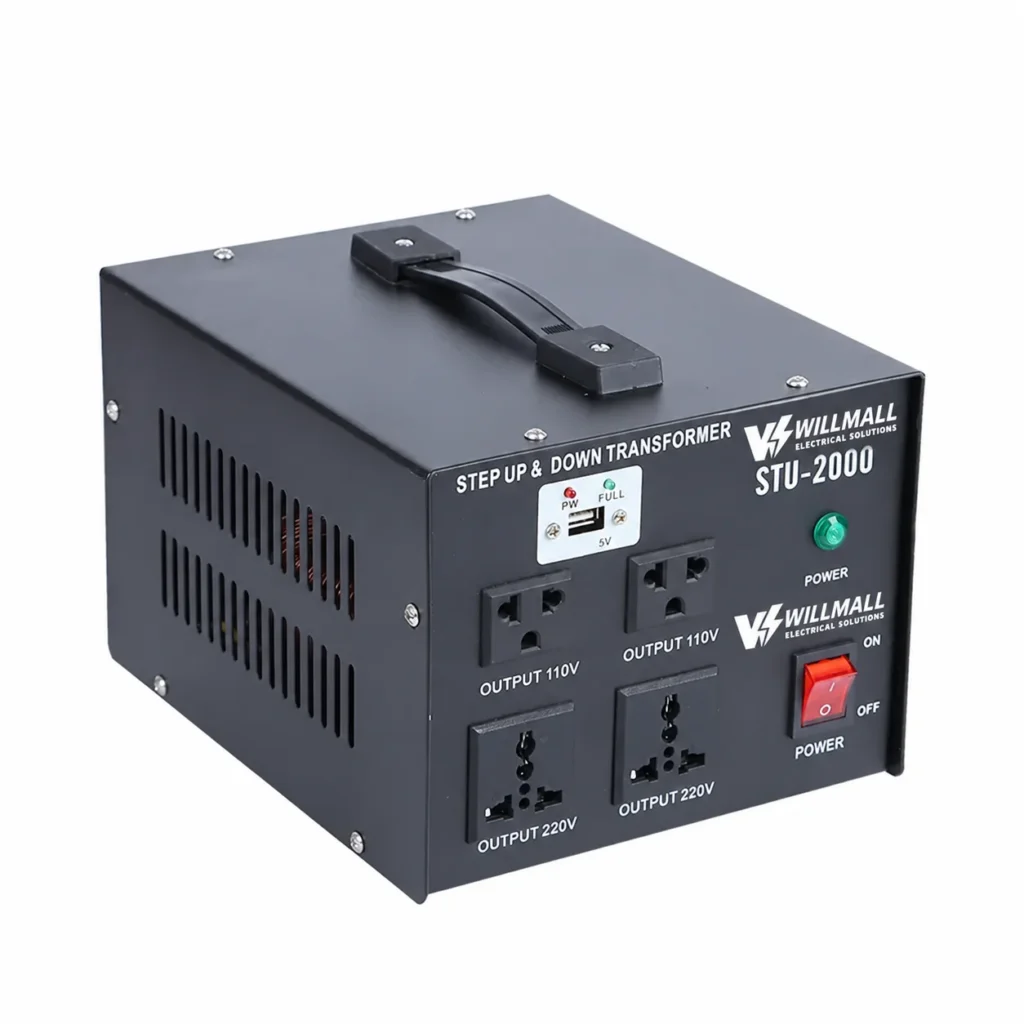
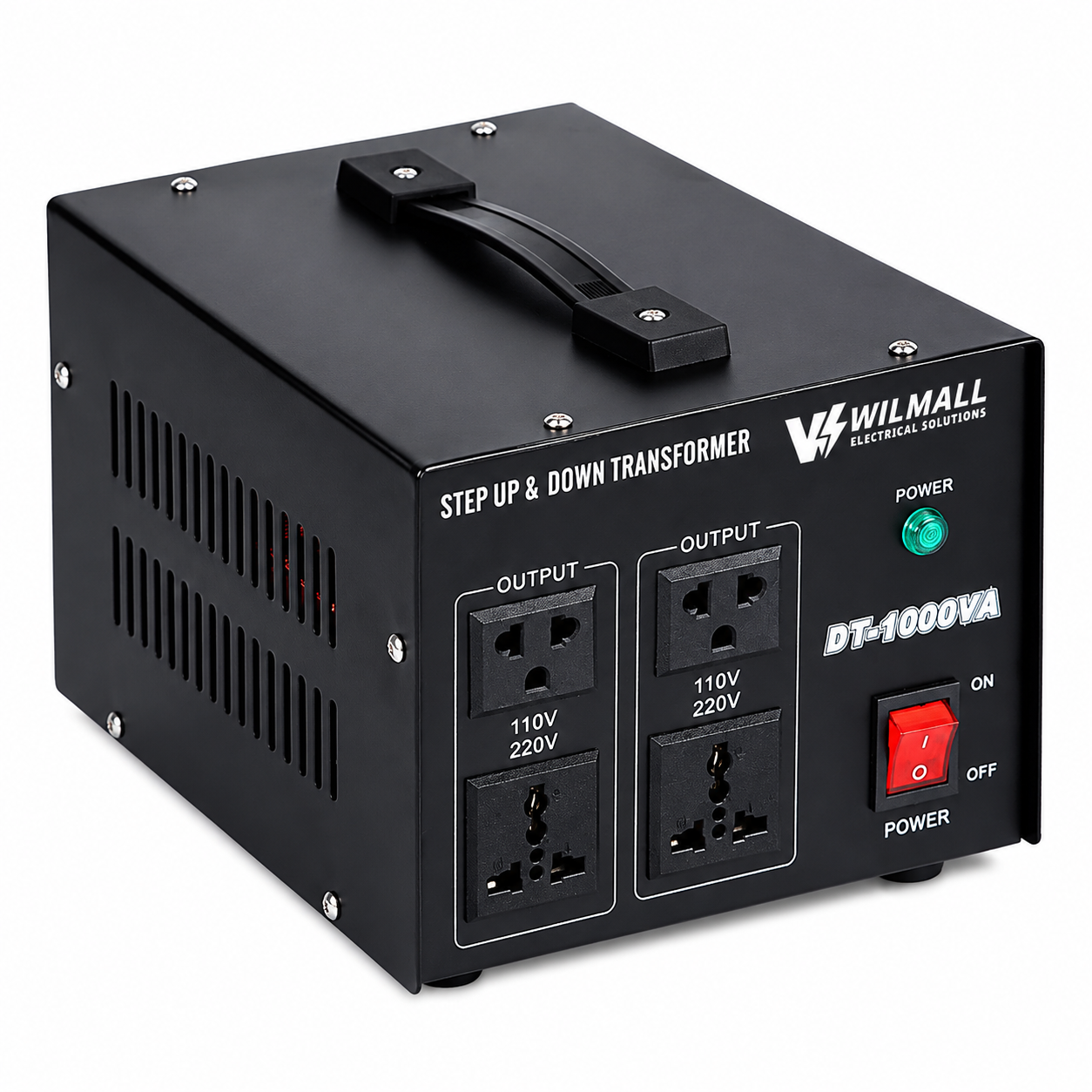
For typical residential garden runs under fifteen meters, a 12V safe portable lighting transformer from the JMB range is the common fit. For control panels, machine lighting and longer industrial runs, a 24V control transformer covers the job, and many buyers keep both voltages on the shelf so they can handle any request the same day. The full control transformer range starts at 25VA and runs up to 50kVA, with 220V or 380V input and 12V, 24V or 36V output taps.
If your fixtures, cables and transformer arrive together and the far end is still dim, step through it in order: cable gauge first, then run length, then total load. Nine times out of ten the cure is a thicker secondary cable or splitting the run, not a more expensive transformer.
12V vs 24V Lighting Questions from Buyers
These are the follow-up questions people send after they start comparing voltages.
Can I mix 12V and 24V fixtures on one low voltage transformer?
No, keep the voltages separate. A transformer only outputs one voltage, and mixing fixtures built for the other voltage will burn them out or leave them dim. If you need both, run two circuits with a 12V low voltage transformer for one and a 24V unit for the other.
Which is better for LED strip lights, 12V or 24V?
For short strip runs under five meters, 12V is fine and fixtures are cheaper. For longer continuous runs, 24V is better because the lower current reduces voltage drop, so the strip stays evenly bright over more length. Choose your strip voltage first, then match the low voltage transformer to it.
Is a 24V low voltage transformer safe for outdoor landscape lights?
Yes. Both 12V and 24V are touch-safe low voltages, which is exactly why a 24V low voltage transformer is common outdoors. The transformer itself must sit in a dry, protected location because its input side is mains voltage. The low voltage cable running to the landscape lights is the safe part of the system.
Why are my 12V lights dim at the end of the run?
That is voltage drop in the cable. The wire resistance eats part of the 12V supply over distance, so the far fixtures receive less voltage and look dim. Fix it with a thicker secondary cable, a shorter loop, or switch to a 24V low voltage transformer, which drops far less over the same cable.
What size transformer do I need for 12V LED garden lights?
Add up the wattage of every fixture, multiply by about 1.25 for safety headroom, and round up to a standard VA size. A set of ten 12W fixtures needs roughly 150VA, so a 150VA or 200VA low voltage transformer works. Keep total load under 80 percent of the VA rating for reliable running.
Stuck between 12V and 24V, or unsure about run length and wattage? Send us your fixture count, wattage, run distance and mains voltage. We will confirm the right low voltage transformer from the factory range and quote it the same day.
Or talk to us directly: WhatsApp +86 197 3022 6757 · Email sales@wilmall.com
MOQ 10 pcs · Lead time 15-25 days · FOB Ningbo or Shanghai · 12-month warranty