What Is a Low Voltage Transformer and What Does It Do?
Strip away the jargon and a low voltage transformer is a simple thing: a box that takes the mains voltage off your wall and steps it down to something smaller and safer. Feed it 120V or 220V, and it hands you 12V, 24V or 36V on the other side. That is the whole trick. The reason people buy them is what happens downstream, because a lot of lighting, controls and safety gear is simply not built to run on wall voltage.
I work at a transformer factory in Yueqing, China, and we build and export these units every month. Buyers message us on WhatsApp asking “what exactly is this thing, and do I even need one?” before they order. So this article is the answer I type out again and again, in plain language, the way I would explain it to a customer standing on our factory floor.
What a Low Voltage Transformer Actually Does
Think about a phone charger for a second. Wall voltage is too high for your phone’s battery, so the charger converts it down. A low voltage transformer does the same job for bigger things: landscape light bulbs that run on 12V, control panels that want 24V, machine safety lights that run on 36V, doorbells, solenoid valves, small contactor coils. Anything designed around a low voltage supply needs one of these boxes in front of it.
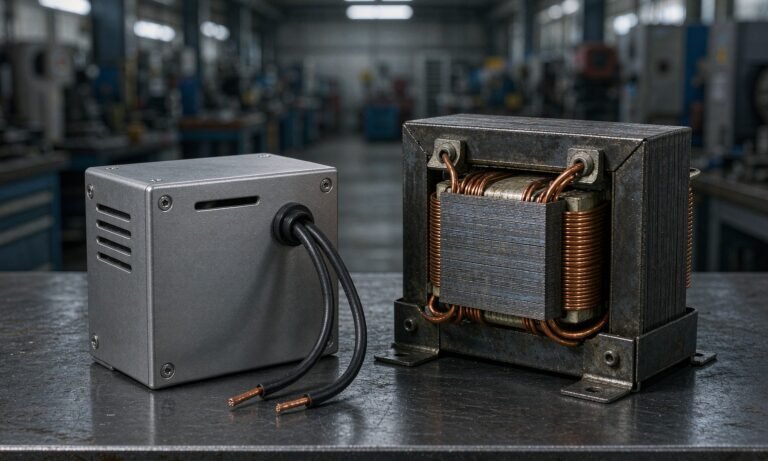
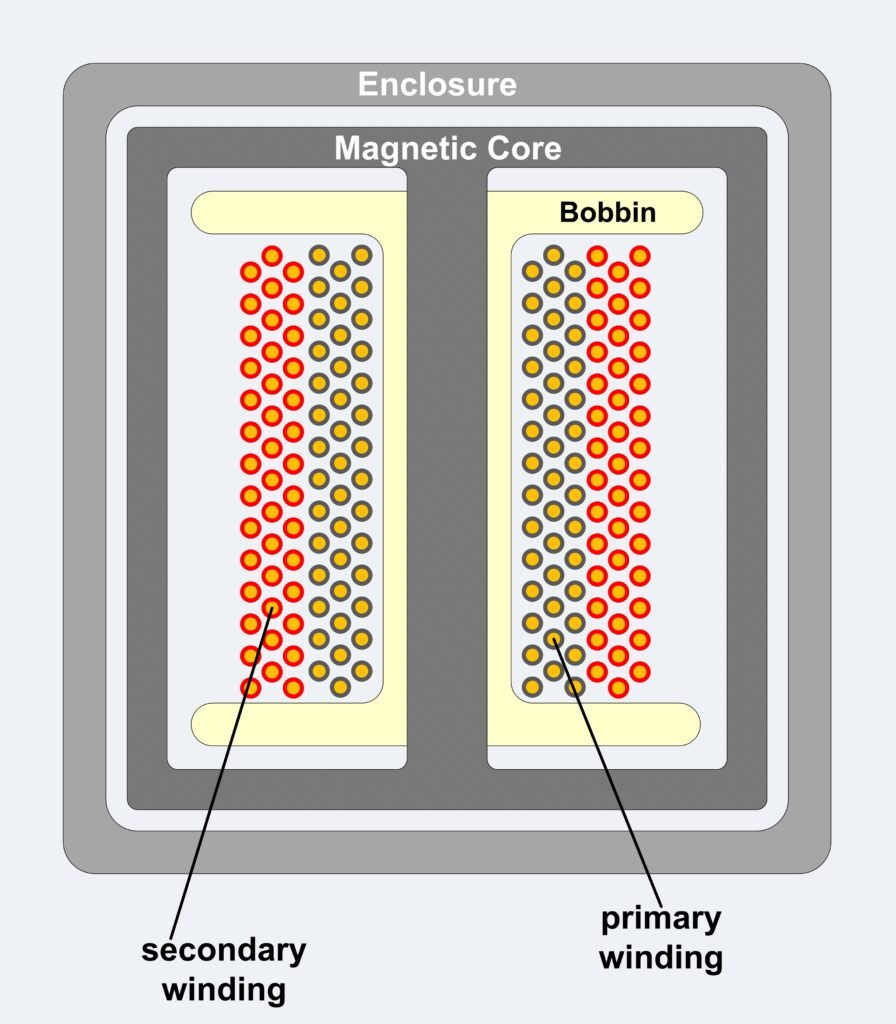
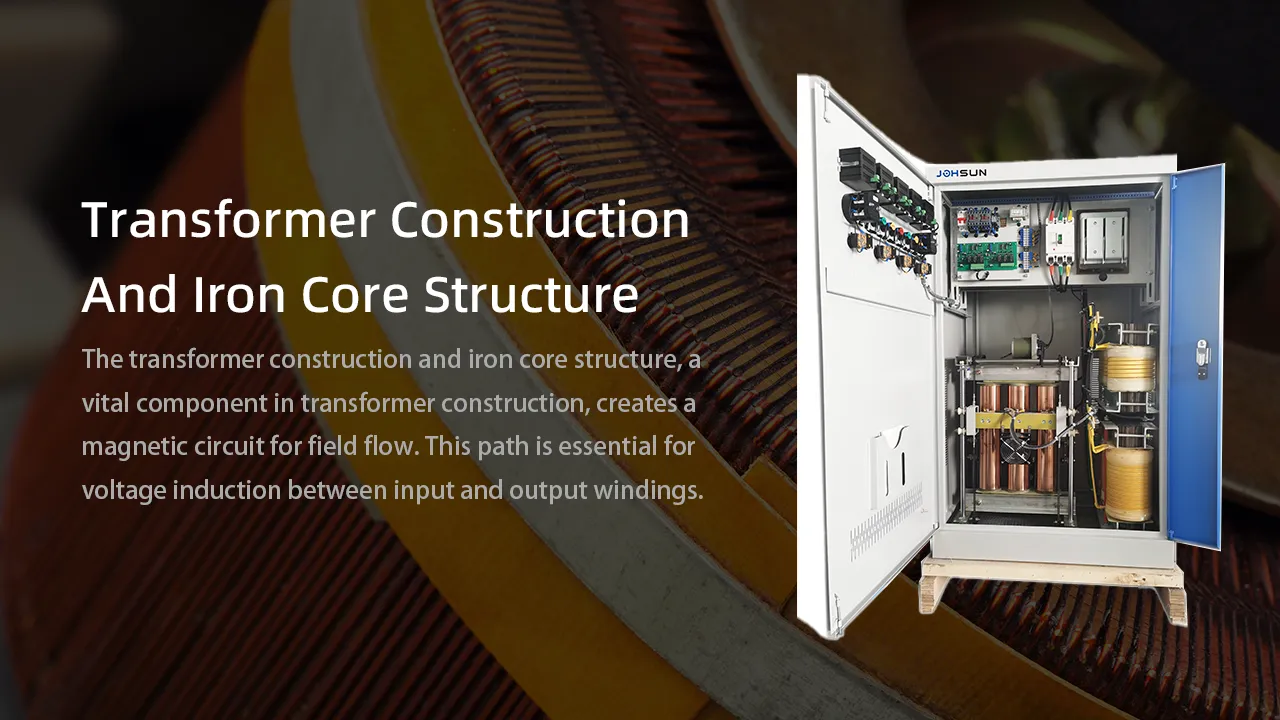
Inside, there is no software and no magic. You have a coil of copper wire on the input side, a second coil on the output side, and a stack of steel laminations linking them magnetically. The ratio between the two coils decides the output voltage. We wind those coils in our own workshop in Yueqing, so when a customer asks for a slightly different output or a custom tap, it is a normal Tuesday for us, not a special project.
Three things a low voltage transformer gives you matter in the real world. Lower voltage is genuinely safer to touch and to wire near water. Fixtures designed for 12V or 24V last longer when fed exactly what they expect. And because the secondary circuit is separated from the mains, a fault on the light side does not travel back up the line the way it would with a direct connection.
The Common Output Voltages: 12V, 24V, 36V and the 110V Confusion
Output voltage is the first spec a buyer names, so let us go through the standards you will actually meet.
- 12V output is the workhorse of accent and landscape style lighting, LED tape and MR-style spot lamps. Run lengths are short, the lamps are small, and 12V keeps everything touch-safe outdoors.
- 24V output is common in control panels and for longer LED runs, because you can push the same watts over thinner wire with less drop than at 12V.
- 36V output shows up a lot in machine-tool safety lighting and portable work lamps, which is why our JMB lighting transformers come with 12V, 24V and 36V taps on the output.
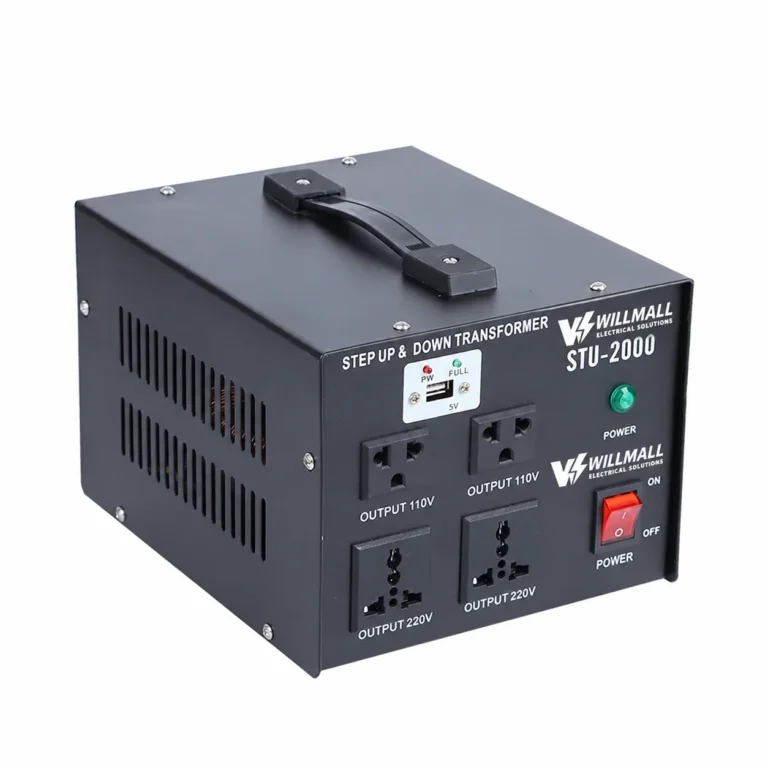
- 110V output is a different animal and it trips people up. Units that step 220V mains down to 110V exist to run appliances built for the North American market, not to run lighting. Do not order one thinking it will power your 12V fixtures.
The word “low voltage” gets thrown around loosely, so here is the clean rule we use on order forms: if the output is 12V to 36V, you are in low voltage lighting and control territory. If the output is 110V or 120V, you are in step-down appliance territory, and that is a separate conversation. Our step up vs step down transformer guide explains that difference in more detail if you need it.
Where You Will Find a Low Voltage Transformer Working
Once you know what to look for, these boxes are everywhere. Walk through a workshop and you will see a 36V lighting transformer feeding the little lamps inside every machine tool, because 36V is the voltage that will not kill an operator reaching into a live machine. Look at the garden lights on a house at dusk, and a weatherproof 12V transformer is probably mounted near the power outlet feeding them. Open an industrial control cabinet and the chances are high that a 24V control transformer sits in the corner powering the PLC and the relays.
Construction sites use low voltage portable lighting transformers to run 24V hand lamps in wet or cramped areas. Factories run safety lighting, signal lamps and small motors through them. Even your doorbell at home is a tiny low voltage transformer hiding behind the chime. Each job has its own favourite voltage, but the job of the transformer is the same in every case.
The applications list is also a good way to spot the wrong purchase. A transformer meant for a doorbell will not run a string of 12V garden lights all night, and a lighting unit is not the right tool to feed a control cabinet that needs a regulated 24V supply with a clean secondary. Match the type to the job, and the box will run for a decade without complaint.
Control Transformer vs Lighting Transformer vs Isolation Transformer
This is the question that confuses most first-time buyers, and honestly the names do not help. A “control transformer” and a “lighting transformer” both step voltage down, but they are built for different duty. A control transformer sits in a panel feeding relays, contactors and PLCs, so it is sized for short bursts of inrush current when coils pull in. A lighting transformer feeds lamps for hours at a time, so it has to carry a steady load without cooking itself.
Our JMB lighting control transformer sits right in the middle of that range. It accepts 220V or 380V input and delivers 12V, 24V or 36V, from 25VA up to 50kVA, and buyers use it for machine lighting, portable lamps and small control circuits alike. If you are not sure which family your job belongs to, that is exactly what a factory sales engineer is for, we answer questions like this all day and we would rather you order the right box once.
Isolation is a separate layer on top. An isolation transformer still steps voltage down, but its secondary winding is completely separated from the primary, which gives you a floating output that is safer around wet conditions and cleaner for sensitive electronics. If your load is a control system rather than a lamp, that separation often matters more than the exact output voltage. For the wider picture, our transformer knowledge guides pull all of this together, from control transformers to isolation units to how VA ratings really work.
What a Factory-Built Unit Looks Like Inside
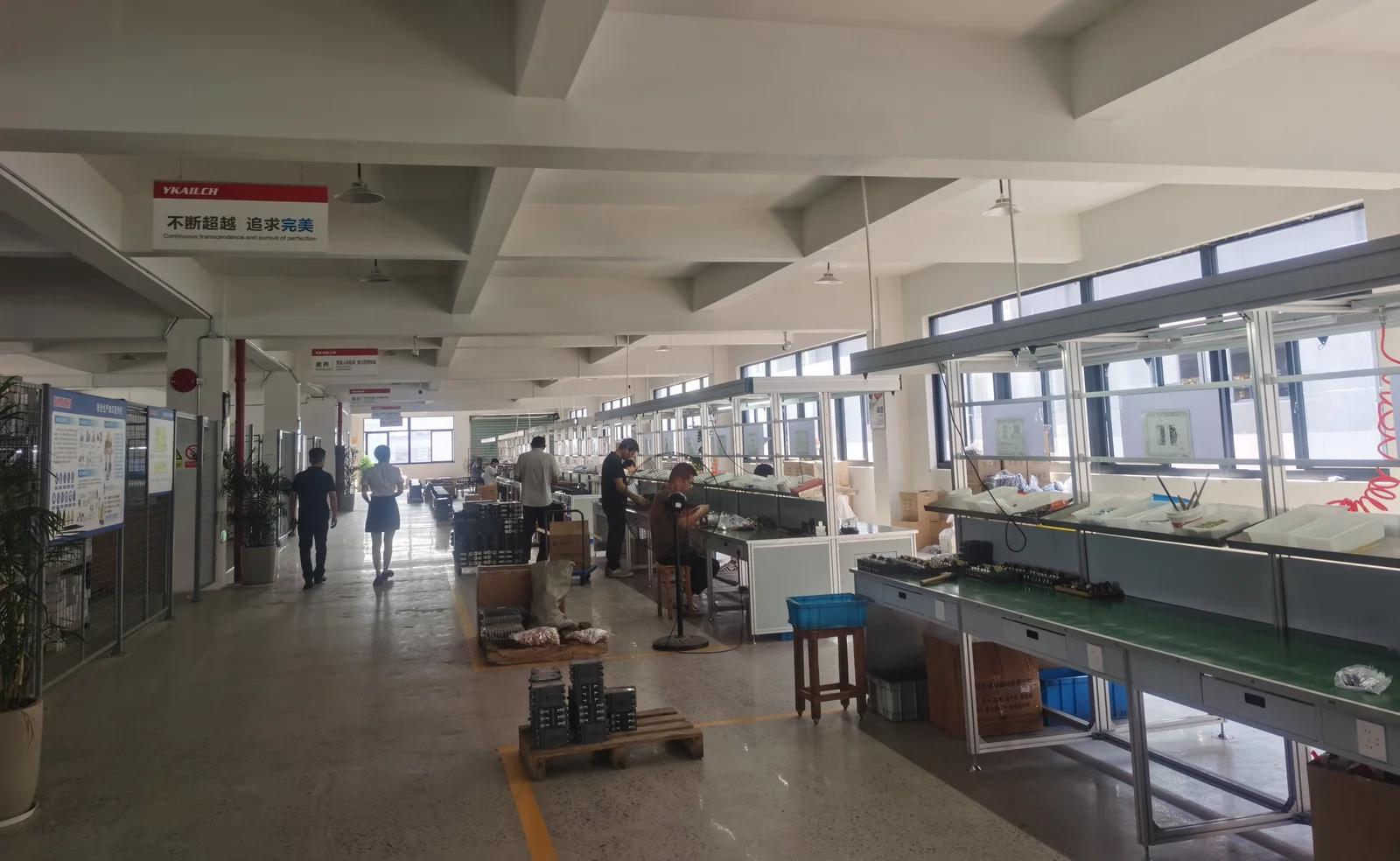
Because we are the people winding the coils, we can tell you what separates a unit that runs for fifteen years from one that hums, heats and dies in two. It starts with copper. We wind with copper wire, not aluminium, because aluminium runs hotter at the same rating and hot insulation fails early. It continues with honest sizing, a 100VA core is a 100VA core, and no printed label changes that. And it ends with testing. Every unit we ship is wound and 100% tested in our own factory in Yueqing, and you get a test record from that batch showing input voltage, output voltage under load and no-load current.
That is not a premium service we upsell. It is how a transformer should leave a factory, and we do it on a 25VA lighting unit the same way we do it on a 50kVA machine transformer.
One honest note before you buy: a low voltage transformer is a magnetic device, so it will hum a little and it will get warm under load. That is physics, not a defect. What you want to avoid is a unit that runs hot enough that you cannot hold your hand on it, and that comes down to copper content, core quality and honest VA rating.
How to Decide Whether You Need One
Here is a quick mental checklist we walk buyers through. Do your fixtures or your control gear run on 12V, 24V or 36V? Then yes, you need a low voltage transformer in front of them. Is your mains 220V or 380V but your equipment expects a low voltage supply? Same answer. Are you actually trying to run a 110V or 120V appliance from a 220V wall? Then you need a step down unit, which is a different product. And if you are running LED fixtures, make sure the transformer you pick is happy with LED loads, because that deserves its own conversation.
If you are not sure, send us a message with the nameplate details of your equipment and a photo of the wiring. We will tell you straight whether you need a low voltage transformer and which output voltage your job actually calls for.
Low Voltage Transformer Questions Buyers Ask Most
Here are the five questions that show up in our inbox every week.
What is a low voltage transformer used for?
A low voltage transformer steps mains voltage down to 12V, 24V or 36V so lighting, control circuits and safety gear can run safely. Typical jobs are landscape lighting, LED strips, machine safety lamps and 24V control panels. If your equipment is designed for low voltage, it needs one of these in front of it.
Can a low voltage transformer run LED strip lights?
Yes, if the transformer is compatible with LED loads. LED strips that are rated 12V or 24V need a matching low voltage transformer with enough VA headroom. Tell us the total wattage of your strip and the input voltage of your wall, and we will confirm a suitable unit before you order.
Is 12V or 24V output from a low voltage transformer safe to touch?
Generally yes, the 12V and 24V output of a low voltage transformer is considered touch-safe under normal conditions, which is why it is used for outdoor lighting and machine lamps. The transformer input still carries live mains, so the box itself must be kept dry and out of reach. The low voltage side is the safe part.
What is the difference between 12V and 24V low voltage transformers?
The difference is output voltage and how far you can run the cable. A low voltage transformer set for 24V lets you push the same wattage over thinner wire with less drop than one set for 12V, so longer runs usually go 24V. 12V suits short runs with small fixtures. Both voltages are standard on our JMB range.
Do I need a low voltage transformer for landscape lighting?
If your landscape fixtures are rated 12V, yes, you need a low voltage transformer between the mains outlet and the lights. Size it by adding up all fixture wattage and keeping the load under 80 percent of the VA rating. For outdoor use the transformer should sit in a dry, protected spot.
Need a low voltage transformer and not sure which output or VA size fits your job? Tell us your mains voltage, the fixture wattage and your country, and we will recommend the right unit from our factory range.
Or talk to us directly: WhatsApp +86 197 3022 6757 · Email sales@wilmall.com
MOQ 10 pcs · Lead time 15-25 days · FOB Ningbo or Shanghai · 12-month warranty