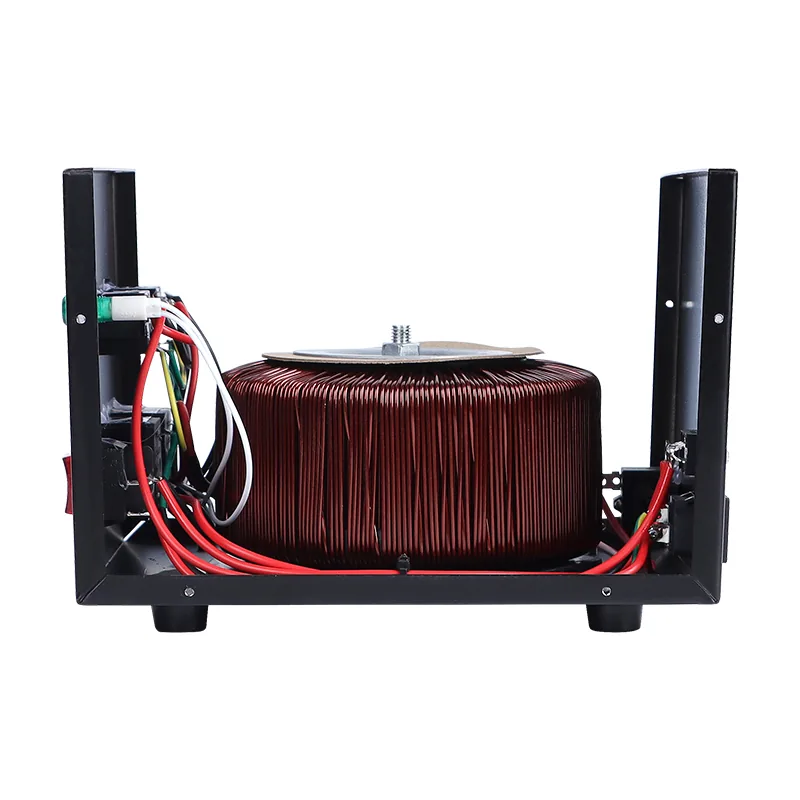
Step Up Transformer for Thailand | 110V to 220V | Wilmall
Step Up Transformer for Thailand | 110V to 220V
Thailand’s national grid supplies 220–230V AC at 50Hz, so the classic problem in the kingdom is the reverse — bringing in 110V appliances. But a growing number of Thai businesses, workshops, and site engineers face the opposite challenge: they have a 110V supply — from a US-spec generator, a 110V solar inverter, or imported American electrical infrastructure — and they need to run 220V equipment. A step up transformer for Thailand converts that 110V input into a stable 220V output, letting one power source feed standard Thai machines, tools, and appliances. This guide explains when you need one, how it works, and how to size it correctly.
When Do You Need a Step Up Transformer in Thailand?
Most people assume Thailand is entirely 220V, and they are right about the grid. The 110V cases come from private power sources and imported equipment:
- US-spec generators. American-made or US-market generator sets — common on Thai construction sites, resorts, and farms — are wound for 110/120V output. Everything plugged into them that is rated 220V needs a step-up transformer.
- Solar and inverter systems. Some imported solar inverters, UPS units, and battery systems are configured for the US market and deliver 110V. Home and small-factory installations in Thailand often keep a 110V bus from these systems.
- Imported US infrastructure. Factories and warehouses built around American power systems — 110V lighting circuits, 110V workshop distribution — may keep 110V in some areas while Thai-standard 220V machines run elsewhere.
- Export and test benches. Thai manufacturers and repair shops that work on products destined for the US or Japan often maintain a 110V test bus, then need to step it up to 220V to power their own production equipment or 220V test instruments.
- Remote sites and island resorts. Locations off the grid frequently run on whatever generator is available, and US-pattern 110V sets are among the most affordable on the second-hand market.
If your situation is the mirror image — a 220V supply and a 110V appliance bought from the US or Japan — you need a step-down transformer instead, which Wilmall also supplies across the same product range.
How a 110V to 220V Step Up Transformer Works
A transformer converts voltage by the ratio of turns in its two windings. For a 110V-to-220V unit, the secondary winding has twice as many turns as the primary, so the output voltage is twice the input. In exchange, the output current is halved — power (voltage × current) stays roughly constant minus small losses. This makes the transformer an elegant and inexpensive solution for both temporary and permanent 110V-to-220V conversion.
Two construction styles are common:
- Isolation type. Separate primary and secondary windings with no electrical connection between them. Provides galvanic isolation, cleaner for sensitive equipment, and larger for the same rating.
- Autotransformer type. A single winding with a tap, where part of the winding is shared between input and output. Smaller, lighter, and cheaper, but without galvanic isolation.
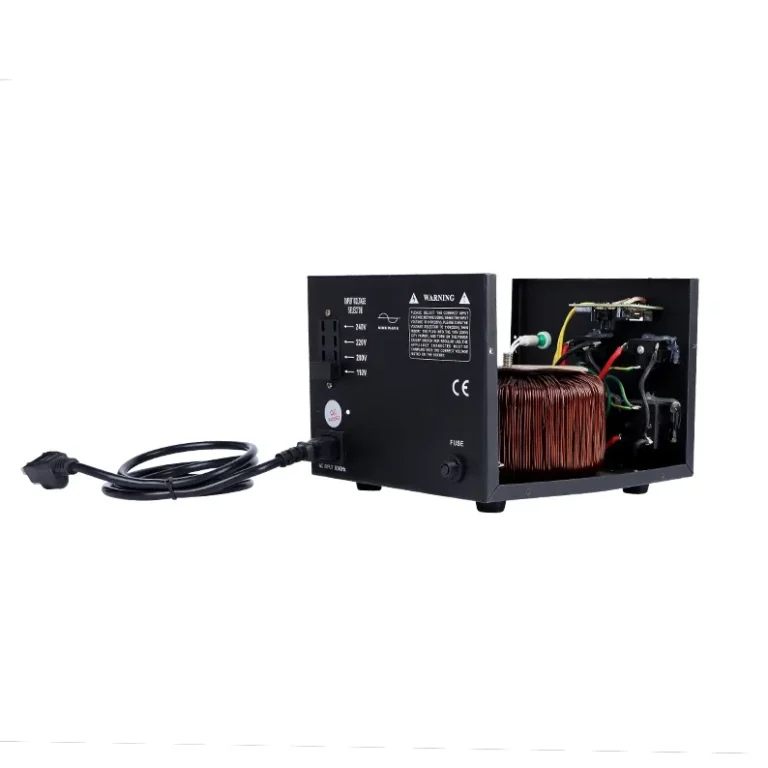
Wilmall manufactures both. The ST series covers single-phase isolation step-up units from 500VA to 30KVA, and the STU series offers the same ratings in a more compact autotransformer form. For three-phase input from a 110V three-phase generator, the DT series provides a proper three-phase step-up winding arrangement.
Sizing a Step Up Transformer for Thailand
Correct sizing protects both the transformer and your equipment. The golden rule is to add 20–30% margin to the total wattage of everything you plan to run at once, and significantly more for motors:
| Total 220V Load | Recommended Transformer VA | Notes |
|---|---|---|
| Up to 300 W | 500 VA | Lights, TV, phone chargers |
| 300–600 W | 1000 VA (1 KVA) | Fans, refrigerators, small tools |
| 600–1200 W | 2000 VA (2 KVA) | Water pumps, washing machines |
| 1200–2500 W | 3000 VA (3 KVA) | Air conditioners, welders |
| 2500–4000 W | 5000 VA (5 KVA) | Workshop groups, commercial coolers |
| 4000 W and above | 10 KVA–30 KVA | Whole buildings, industrial equipment |
Motor loads need special attention. A single-phase motor draws 4–6 times its running current at start. If a 1HP (750W) water pump is in your circuit, treat it as a 3000–4000W starting load when sizing, even though it runs at 750W. When in doubt, send Wilmall the full list of appliances and we will calculate the rating for you.
Frequency: 50Hz vs 60Hz Considerations
Thailand operates at 50Hz, but many US-spec generators run at 60Hz, and some dual-purpose sets can be switched between them. The frequency question is straightforward:
- Transformers themselves work on both 50Hz and 60Hz. A 110V-to-220V transformer rated for 50/60Hz operates correctly at either frequency.
- Motors and compressors are the sensitive part. A motor designed for 60Hz run on 50Hz runs slower and runs hotter; a 50Hz motor on 60Hz runs faster. Check the nameplate of motor-driven equipment before connecting.
- Resistive loads — heaters, incandescent lamps, kitchen appliances — are essentially frequency-independent and always safe.
If your generator runs at 60Hz and the equipment is Thai 50Hz, you need to address motor compatibility separately from voltage. Wilmall can help you match the right transformer, but the frequency mismatch must be settled at the load, not the transformer.
Installation and Safety Notes
A step-up transformer raises voltage — get the basics right and it will serve for years:
- Earth the transformer case. Every Wilmall unit ships with an earthing terminal; connect it to a proper earth rod or the generator’s ground.
- Fuse both sides. A fuse or breaker on the 110V input and a correctly rated breaker on the 220V output protects wiring and load. Do not skip the output protection because “the transformer limits current” — it does not.
- Use an RCD where people can touch equipment. In wet or outdoor sites, residual current protection can prevent fatal shocks.
- Check the generator’s capacity. The transformer’s output rating cannot exceed the generator’s own capacity. A 5KVA transformer on a 3KVA generator will simply sag and trip.
- Keep ventilation clear. Step-up units run warm at full load; mount them away from walls and other heat sources, especially in Thailand’s climate.
Applications Across Thailand
Thai customers use 110V-to-220V step-up transformers in:
- Construction sites running 220V tools from US-spec generator sets
- Resort and restaurant kitchens fed by 110V backup generators
- Farms and aquaculture sites with solar/inverter systems on a 110V bus
- Export factories testing 220V products from their 110V test supply
- Workshops and repair shops using US-imported power distribution equipment
- Off-grid island homes converting inverter output for standard Thai appliances
Why Buy from Wilmall Transformers?
Wilmall Transformers is a low-voltage transformer factory in Yueqing, Zhejiang, China, exporting to Southeast Asia — including Thailand — for 15 years. Our step-up transformers are built for tropical, dusty, and humid conditions: high-grade silicon steel cores, double-insulated copper or aluminium windings to your choice, Class F insulation, and full load testing before dispatch. Every unit carries CE/RoHS compliance and a 12-month warranty.
We supply factory direct, which means competitive pricing and direct communication with the people who actually wind your transformer. MOQ is just 10 units, and standard production takes 15–25 days. Custom capacities from 500VA to 30KVA, three-phase versions, enclosures, input/output voltage taps, and OEM branding are all available.
Step Up Transformer for Thailand FAQ
Can I run a Thai 220V air conditioner from a 110V generator?
Yes, if the transformer is sized for the air conditioner’s starting current (usually 3–5× running watts) and the generator has enough capacity. Inverters and compressor motors both need the margin, so a 2–3KVA transformer is typically the minimum for a small split-type unit.
Is the output of the transformer exactly 220V?
The output follows the input ratio. If the 110V supply is stable at 110V, the output is close to 220V. If the supply sags to 95V, the output sags to about 190V. For fluctuating generator output, consider a stabiliser or a model with output taps.
Does a step-up transformer waste electricity?
Losses are small — typically 2–5% of the load, mostly as heat. An autotransformer wastes less than an isolation transformer of the same rating.
What is the difference between ST and STU series?
ST is a full isolation step-up transformer with separated windings; STU is a compact autotransformer. For equal capacity, STU is lighter and cheaper, ST gives better isolation and is preferred for sensitive electronics and safety.
Do you ship to Bangkok or Pattaya?
Yes. We ship throughout Thailand by sea to Laem Chabang or Bangkok port, and smaller orders by air or courier. Lead time is 15–25 days from order confirmation plus transit.
Ordering and Lead Time for Thai Buyers
Ordering a step up transformer for Thailand is a standard process with our factory. The lead time is 15 to 25 days from order confirmation, and sea freight from Ningbo or Shanghai to Laem Chabang or Bangkok typically takes 15 to 25 days, so plan about 30 to 50 days for container shipping. For a small order, air freight is faster, though the cost per unit is higher. The MOQ is 10 pieces for standard models. Every order includes the commercial invoice, packing list, and batch test certificate, and we can arrange the certificate of origin if your customs broker needs one. For Thai buyers, whether you are a household with US-spec equipment or a business importing for resale, send us your quantity and destination port and we will confirm the price and freight. We ship to Thailand regularly, so the paperwork path is well-trodden.
Request a Quote / Contact Wilmall
Tell us your generator or inverter voltage and frequency, the total load in watts, and whether the equipment is motor-driven. Our engineers will confirm the right step up transformer for Thailand within one working day. Contact us on WhatsApp, by email at info@wilmall.com, or through the inquiry form on this page. Wilmall Transformers — 15 years of factory-direct transformer supply from Yueqing, China.