Step Down Transformer for Yemen: 230V to 110V Guide
If you are reading this from Sana’a or Aden, you already know the wall socket is only half the story. Yemen’s nominal supply is 230V at 50Hz, but in practice a great many homes and shops run their 110V American and Japanese appliances off a petrol generator or a solar inverter, because the public grid is damaged across large areas and cannot be relied on day to day. The transformer you buy has to work on all three sources, not just on a steady wall.
I build step down transformers in Yueqing, China, and Yemen has been a steady part of our export book for years, mostly through traders in Aden and through buyers who route stock via Dubai. The pattern of questions is consistent, so here are the answers the way I would give them on a call, without the brochure voice.

Yemen Supply: 230V, 50Hz, but Three Sources in One Building
On paper the grid is 230V at 50Hz, the same as most of the Middle East and North Africa. In reality the experience in Yemen is that the utility feed is intermittent where it exists at all, and a lot of 110V equipment is fed from a generator or from a battery and inverter system for most of its running hours. That changes the brief for the transformer completely.
A transformer is a ratio device. Feed it 230V and it gives 110V. Feed it 250V from a genset running light and it gives about 120V. Feed it 200V because the grid is sagging and it gives about 95V. None of those are faults in the transformer. They are the input being passed through. So the unit you choose has to tolerate a wide input band and still keep the 110V side inside what your appliance will accept.
The 50Hz point matters for motors, as it does everywhere. A transformer never changes frequency, so a 60Hz North American compressor wired through a step down unit still sees 50Hz and runs a little slower and warmer. Kit with a switch-mode power supply is not bothered by the frequency. The practical split is: fridges, freezers, pumps and fans need the frequency note; TVs, routers, chargers and most office kit do not.
Plug Types You Will Meet: A, B, C, D and G
Yemen is a mix, more so than most markets, because equipment has arrived from the US, Europe, India, China and the Gulf over many years. You will see Type A and Type B, the ungrounded and grounded North American patterns. You will see Type C, the two-pin Euro plug. You will see Type D, the older Indian three round-pin pattern, still on older wiring. And you will see Type G, the fused British pattern, which is common on newer installations and on Gulf-sourced goods.
For you this means the transformer outlet should match the appliance, and the lead into the wall should match the socket you actually have, whether that is a generator outlet or a building socket. We fit the outlet your machine uses and can supply the right input lead. If you are stocking for resale, the safe move is to carry a small set of adapter leads rather than guess one pattern for the whole country.
One more practical note: generator outlets are not always earthed the way a building socket is. An RCD on the 110V side still protects people, but confirm the generator frame is bonded to earth before you rely on it. This is a wiring point your electrician handles, not the transformer, but it is the kind of detail that decides whether the protection actually works.
Generators, Solar Inverters and Waveform
The question I get most from Yemen buyers is whether a transformer will survive a generator. The short answer is yes, because an iron-core transformer with copper windings has no electronics in the power path. A diesel or petrol generator puts out a waveform close to a sine wave, and the transformer passes it straight through. The motor on the 110V side sees roughly what it would see from the grid, minus a little regulation.
The catch is the inverter. Many homes run a battery bank charged by solar, and the cheap end of that market is the modified sine wave inverter. A transformer will pass a modified sine wave just as it passes anything, but a 110V motor fed a modified sine wave runs hot and loses life. So the rule is simple: run motors off the generator or off a pure sine wave inverter, not off a modified sine wave unit. The transformer is not the weak link; the inverter type is.
If your site runs both a generator and solar, think about the changeover. Every switch between sources is a small surge on both sides. Fitting surge protection on the input is inexpensive and it protects the transformer’s insulation over years of daily switching, which in a Yemeni household that changes source several times a day is not a theoretical concern.
Sizing When the Load Switches Sources Mid-Run
Start from the nameplates. A 110V chest freezer is around 200W running. A bar fridge 120W. A microwave 1000W to 1500W. A washing machine with a motor and heater 1500W to 2500W on heat. A small water pump 400W to 1200W with a hard start. A sewing machine or a small workshop tool 300W to 750W. A clinic or a pharmacy may run a vaccine fridge plus a dispensing machine, which is two motors plus electronics.
Then decide what runs at once and be honest. In a house the freezer never stops, and the iron, microwave and vacuum run one at a time. In a shop the freezer, the drinks cooler and the lighting may all be on, and a generator sized for the running load still has to cover the start surge of the compressor when it kicks in.
Multiply every motor and compressor by the start factor, 2.5 to 3 times running watts. A freezer compressor at 300W running can pull 900W to 1000W for an instant, and a transformer sized to 300VA will buzz, trip or cook on every start, especially when the generator is already loaded. I never quote refrigeration on running watts alone, and neither should your supplier.
Household, Shop and Small Clinic Loads
A home install normally centres on one or two heavy appliances with a few light ones around them. The imported freezer on its own is an ST-1500 or ST-2000 job. Put a fridge, microwave and coffee machine in the same kitchen and they share an ST-2000 with RCD protection, because they cycle one at a time. If that home also runs a water pump, keep the pump on a separate unit so its start surge does not reach the freezer.
Shops and clinics are where the STU series earns its keep. A drinks cold room, a pharmacy fridge and a dispensing machine on one feed is a mixed load with more than one motor, and the STU-3000 on its own circuit keeps a fault in one box from taking the cold chain down. The STU-5000 covers a larger shop or a small workshop running several imported tools.
For control and signalling gear, the TC series control transformer is the right part when the 110V load is a coil, a relay bank or a small control panel rather than a power appliance. It is built for that duty and it is cheaper than oversizing a power transformer for a control circuit. If your enquiry is about a machine control supply rather than a freezer, mention it, because the answer is a different product line.
Reference Table for Yemen Setups
These are the enquiries we get most from Aden and the Dubai trade. Get in the ballpark with the table, then give us the real nameplate data.
| Application | Typical load | Suggested unit | Why this one |
|---|---|---|---|
| Household, one imported freezer or fridge, often generator-fed | 120 – 400 W | ST-1500 or ST-2000 | Start surge, not running load, sets the size |
| Household kitchen plus entertainment | 800 – 1600 W | ST-2000 with RCD | Mixed loads, one heavy item at a time |
| Shop drinks cold room | 1200 – 2800 W | STU-3000 on its own circuit | Fan, compressor and defrost on one feed |
| Pharmacy or clinic | 1000 – 2500 W | STU-3000 bidirectional | Fridge plus dispensing machine |
| Small workshop with imported tools | 1500 – 3500 W | STU-3000 or STU-5000 | Motor starts through the day |
| Machine control supply | 50 – 500 W control | TC series control transformer | Coil and relay duty, not power load |
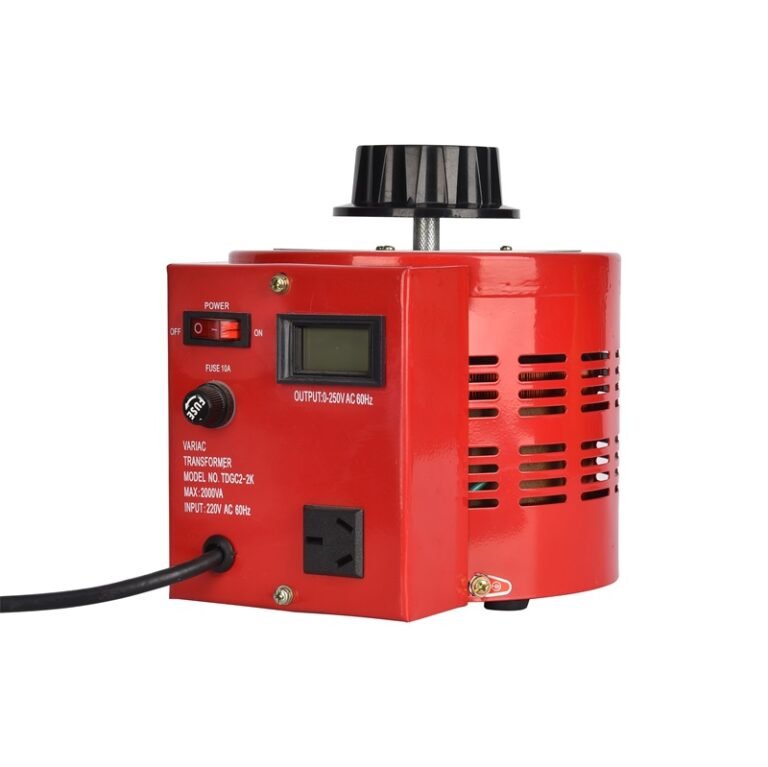
| Bench testing imported gear | 500 – 2000 W variable | Variac 1KVA to 3KVA | Adjust output to check nameplate |
The table assumes a supply near 230V. In Yemen the generator may sit higher and the grid lower, so two units on separate circuits beat one big box, and the RCD on each protects a different part of the load. A shop that loses one circuit can still trade on the other.
Aden Port, Dubai Transshipment and the Paperwork
Yemen is served two ways. Cargo can land at the Port of Aden, which is the direct route for goods cleared into the south and for distribution from there. A great deal of stock also routes through Dubai, because the Gulf is a hub for regional trade and many Yemeni buyers already have agents there. Either way, plan the clearance as carefully as the production.
Goods go FOB Ningbo or Shanghai, which puts the sea freight in your hands or your agent’s. Tell us the discharge port and consignee early, at quotation, so the bill of lading, packing list, commercial invoice and certificate of origin all agree with the entry your agent lodges. Getting it right before we load beats rewriting a bill after the vessel sails.
Small-batch tiered demand is normal for Yemen, because many buyers order a few units at a time and reorder as they sell. The minimum order of 10 pieces suits that, and we can label and socket each batch to match the enquiry. If you are building a stock profile, tell us the mix you expect and we will pack it so the container clears in the right groups.
What We Build and How We Supply Yemen
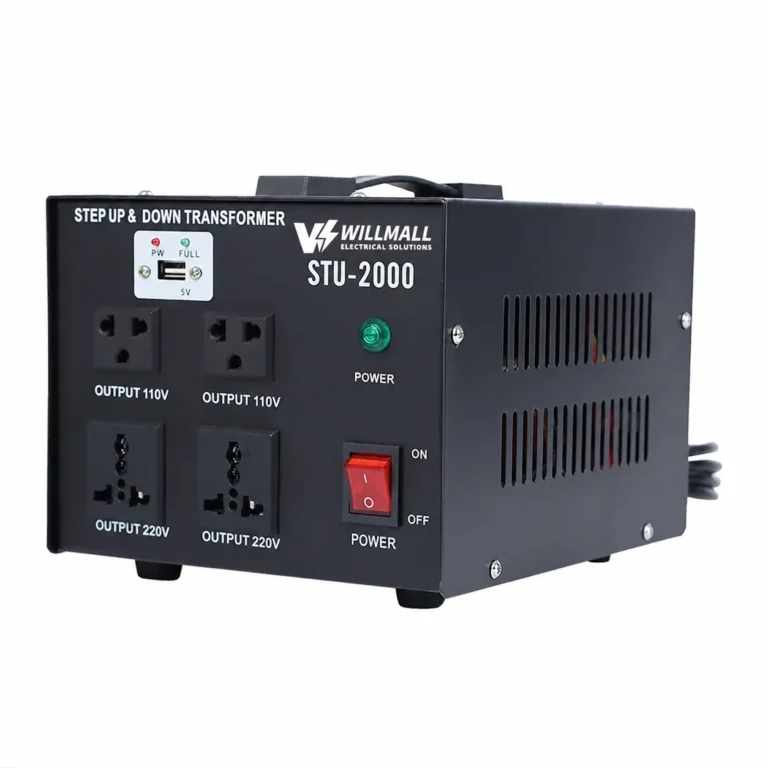
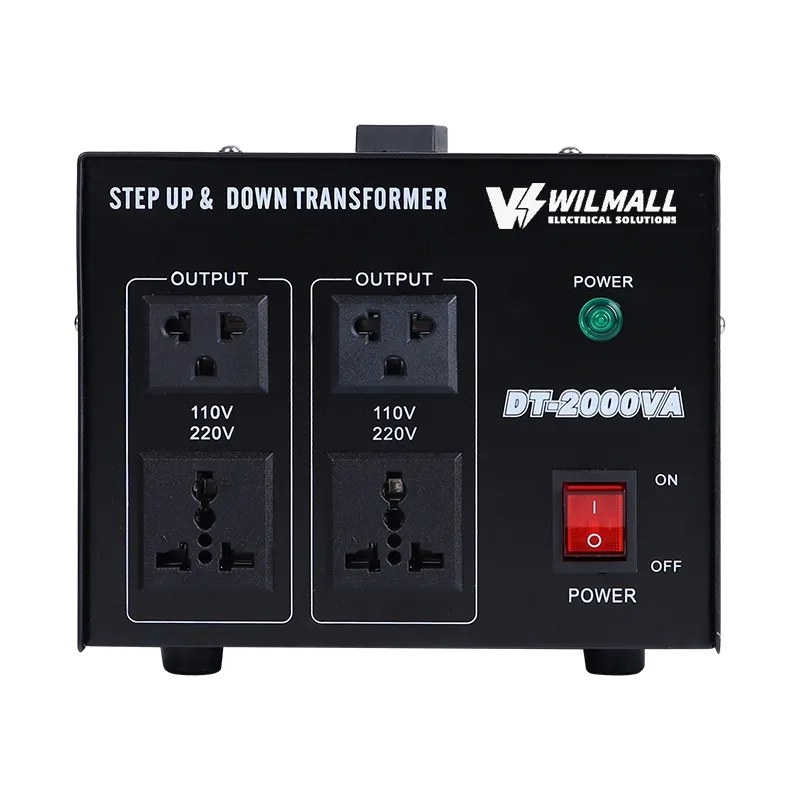
I work from the factory, not a trading desk, so the unit I name is the one on our line. The ST-2000 is a 2000VA step down unit, 230V in and 110V out, RCD built into the case. For an Aden household group or a single imported compressor it is the unit I quote most into the Yemen trade, with the ST-1500 taking the smaller single-appliance jobs, mostly refrigeration.
The bigger sizes sit in the STU series. STU-3000 and STU-5000 step up as well as down, which matters here because stock often arrives from North America, the Gulf and Europe at once and the same box may need to go both ways. The TC series control transformer covers machine control supplies, and the DT-1000VA is our automatic bidirectional unit for desks and trolleys.
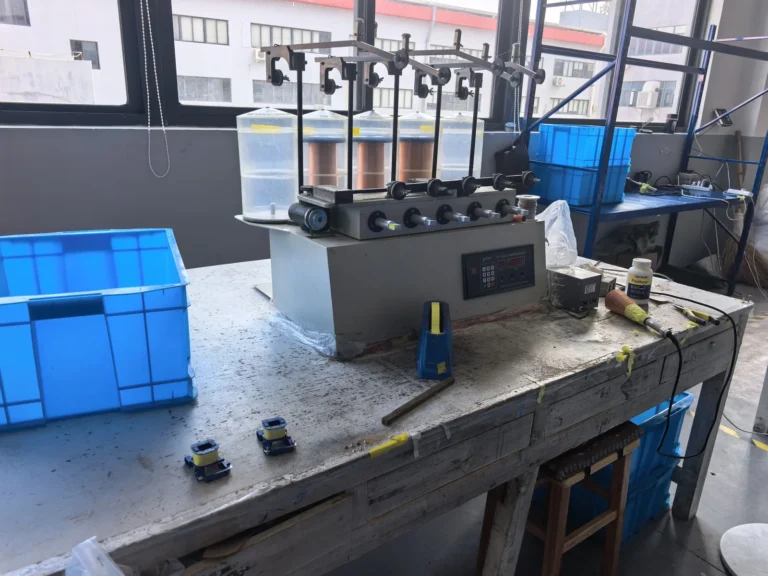
Freight goes FOB Ningbo or Shanghai. A 12-month warranty goes with every unit. Our coils are copper and each unit is fully tested before it goes out from the Yueqing plant. A batch test record comes to you with input voltage, output under load and no-load current, the document that settles any warranty dispute down the line. We take orders from 10 pieces, and production spans 15 to 25 days, the final date set by quantity and any custom labelling.
For terms we use T/T with 30 percent deposit and 70 percent against the B/L copy, or a sight letter of credit, or Trade Assurance where the buyer prefers it. We do not accept usance L/C, since the stretch between shipment and payment on those is too far for a factory to hold.
Getting a Size Without a Finished Specification
You can start without a complete specification. Send what you have: the equipment list with each nameplate wattage, a photo of the nameplate if it is quicker, how many machines need a 110V feed, which have motors or compressors, whether the site runs a generator or solar as well, and where the unit will sit. Give me that and I will size the unit, quote the count and set a delivery date, often the same working day.
Two write-ups to read while you draw the list up. Our Transformer Supplier for the Middle East note covers the wider regional trade and the routing buyers use. For machine control supplies rather than power loads, the control transformers page explains the TC series and where it fits. There is a set of voltage guides by country for everywhere else on the map.
If a rating is unclear, send a photo of the plug and we will work it out. Sizing a step down transformer for Yemen is routine for us, and we would rather spend ten minutes on WhatsApp than have you find out mid-outage that the unit you bought cannot start the freezer on the generator.
Frequently Asked Questions
These are the questions Aden traders and shop owners ask most, with my straight answers underneath.
What voltage does Yemen use and will a transformer work off a generator?
Yemen is nominal 230V at 50Hz, but many homes and shops run 110V appliances off a petrol generator or solar inverter. A step down transformer for Yemen works on all three sources because an iron-core unit with copper windings has no electronics in the path. Just keep motors on a pure sine wave inverter, not a modified one.
Which plug type should my transformer have for Yemen?
Yemen mixes Type A, B, C, D and G, so fit the socket your 110V appliance actually uses, not the wall type. We fit the right outlet and can supply the input lead your generator or building socket needs. The ST-2000 ships with the socket you specify.
Why should I size up the transformer in Yemen?
Because the input swings. A generator light can sit near 250V and the grid can sag to 200V, so a fixed-ratio unit passes both through. Size up so the 110V side stays in range, and split loads onto separate units. The ST-2000 with margin is the unit I quote most for Yemen homes.
Can I run a 110V freezer on a modified sine wave inverter?
No, not safely. A transformer passes whatever waveform it is given, but a modified sine wave inverter makes a 110V motor run hot and lose life. Run motors off the generator or a pure sine wave inverter. The STU-3000 on its own circuit suits a freezer plus fan.
How do I order transformers for resale through Aden or Dubai?
Minimum order is 10 pieces, built and tested in our Yueqing factory, shipping FOB Ningbo or Shanghai to Aden or via Dubai. Lead time is 15 to 25 days, with custom labelling and sockets per batch. A step down transformer for Yemen with your name on the faceplate is a normal request.
Send us the 110V machines you run in Yemen, which have motors or compressors, and what source feeds them. From that we can put together a recommended unit, a count and a price, most often the same working day, and it stops a bad-size order before it ships.
Or talk to us directly: WhatsApp +86 197 3022 6757 · Email sales@wilmall.com
MOQ 10 pcs · Lead time 15-25 days · FOB Ningbo or Shanghai · 12-month warranty