Step Down Transformer for Senegal: 230V to 110V Guide
Most buyers in Dakar and Saint-Louis write to us the same way: they have an American fridge, a 110V freezer, or a machine from the US that simply will not run on the wall socket. Senegal’s supply is 230V at 50Hz, which sounds simple, and for a kettle it is. For a compressor it is a different story, because the voltage in the Dakar area moves around more than the nameplate suggests, and that movement is exactly what wears motors out early.
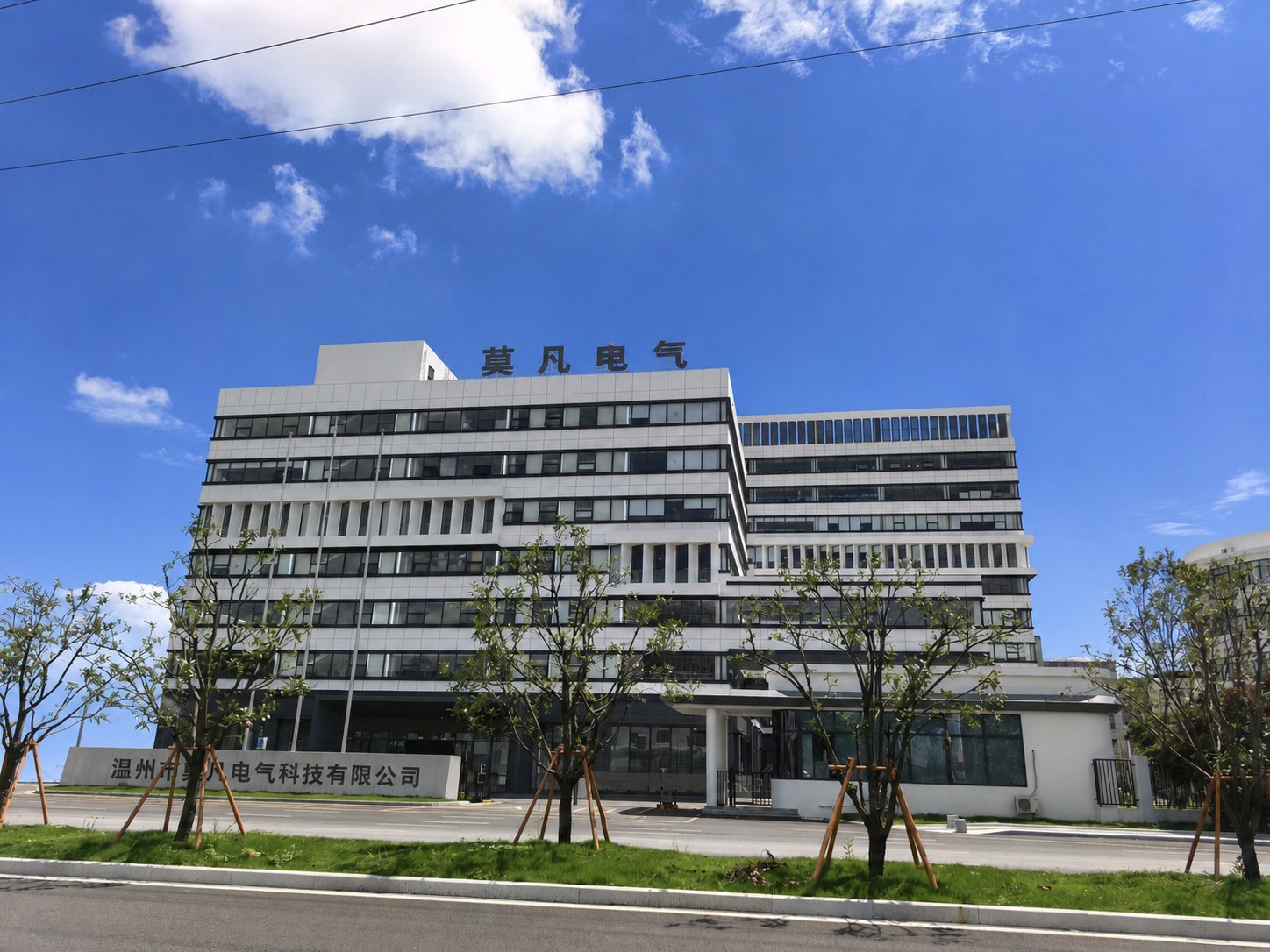
I work in a transformer plant in Yueqing, China, and Senegal has been on our export list for years. Orders come through importers in Dakar, through shops supplying the household market, and through contractors fitting out restaurants, cold rooms and clinics. The questions repeat, so I have written the answers down here the way I would give them on a call, without the sales talk.
Senegal Power Supply: 230V, 50Hz, and Why Dakar Swings
SENELEC runs the grid at a nominal 230V, 50Hz. That puts Senegal in line with France, most of Europe and the wider francophone belt. The 50Hz figure is the part North American buyers miss. A transformer changes voltage and never frequency, so a 110V 60Hz machine wired through a step down unit still sees 50Hz on the secondary. Electronics on a switch-mode supply take no notice of the frequency. Motor-driven kit does, and it runs a little slower and a little warmer than at home.
The bigger issue in Senegal is the swing. Dakar and the coastal strip get a supply that is not always a steady 230V. During the day, with air conditioners and welding shops drawing hard, the voltage at the end of a long feeder can drop. In the small hours, when demand falls, it can rise above nominal. A transformer with a fixed ratio passes that swing straight through to your 110V equipment, so whatever you buy needs headroom at both ends.
That is the first reason I tell buyers here to size with margin. A unit that is comfortable at 230V in becomes marginal when the input drifts to 200V or climbs to 250V, and the 110V side drifts with it. Give the appliance room and you protect it, and you also stop the unit from overheating on a hot afternoon when the supply is high.
People sometimes ask whether a stabiliser would be better than a transformer. The two are not the same tool. A stabiliser holds voltage, a transformer changes it. If your wall is 230V and your machine is 110V, you need the transformer first. If the 230V side is wild and your 110V load is sensitive, you can add an AVR ahead of the transformer, but for most homes in Dakar a well-sized transformer with margin does the job on its own.
Plug Patterns in Senegal: Type C, D, E and K
Senegal uses a mix of plug types, and you should check before you fit anything. Type C, the ungrounded two-pin Euro plug, turns up everywhere. Type D, the older three round-pin pattern, is still common on older installations. Type E, the French two-pin with earth, is the standard for new builds and is what you will meet in modern Dakar apartments and offices. Type K, the Danish pattern with the earthing pin on the socket, appears in some equipment and installations.
What this means for you is practical. If your 110V appliance arrived with a North American two-pin or three-pin plug, none of those mate directly with a Type E wall socket, and the transformer outlet has to match the appliance, not the wall. We fit the socket your machine actually uses, and we can supply an adapter lead where the site expects a Type E faceplate. Do not assume one plug fits the whole country.
If you are reselling into the region, remember that the same box often has to work in Mauritania, The Gambia and Mali, because Dakar is the gateway for all three. Those neighbours run close to the same 230V, 50Hz supply, so a unit built for Senegal generally travels, but the plug and label are where the small differences live. I see a lot of Dakar traders who buy one batch and send part of it north by road, and the box has to look right at the destination too.
Sizing for a 230V Grid That Does Not Sit Still
Start with the rating plates, not the model numbers and not memory. A 110V chest freezer might pull 200W running. A bar fridge 120W. A microwave 1000W to 1500W. A washing machine with a motor and a heater can be 1500W to 2500W on heat. A small workshop compressor 750W to 1500W with a hard start. A salon hair dryer or a clipper board is light but a barber shop running several at once adds up.
Then work out what runs together and be honest about it. In a house the freezer and fridge never stop, and the iron, microwave and vacuum run one at a time. In a restaurant the cold room, the prep fridge and the dishwasher heater may all be drawing at the push of a lunch service, and that is the number that matters. On a farm outside Thiès the pump and the workshop tools may run together because that is the working day.
Finally, multiply every motor and compressor by the start factor. Use 2.5 to 3 times running watts for the instant it kicks off. A freezer compressor that draws 300W running can pull 900W to 1000W for a fraction of a second, and a transformer sized exactly to 300VA will buzz, trip or cook on every start. Refrigeration is the usual casualty, which is why I never quote a freezer on running watts alone.
A point worth making about the swing again: when the supply is low and a compressor tries to start, the start current is worse, not better, because the motor is fighting both the load and the low voltage. That is the moment a marginal unit fails. Sizing up is cheap insurance against the worst hour of the day, not against the average one.
Household Loads Versus Commercial Loads
Most households ask for two things at once: a big motor load and a handful of small ones. A lone imported freezer is the simple case, it takes an ST-1500 or ST-2000 on its own. When the kitchen adds a fridge, a microwave and a coffee machine, they sit together on one ST-2000 with RCD protection since they seldom run together. Feeding a whole house from a single North American panel is unusual here and usually means we move up to the STU series.
Commercial work is where the STU series earns its place. A cold room for a butcher, a fish shop or a hotel kitchen holds a compressor, a fan and a defrost heater, and the defrost cycle stacks a short burst of heat on top of the running load. A salon or a clinic with several chairs runs several motors at once. For these I quote the STU-3000 or STU-5000, bidirectional, on its own circuit, so a fault in one box does not take the cold chain down.
I also see a lot of requests for label and outlet customisation from Senegalese importers. They want their own name on the faceplate and French on the rating label, which is normal for the francophone market. We are set up for both, and it does not change the lead time in a way that matters. Tell us the wording you want and we print it.
Reference Table for Senegal Setups
These are the enquiries we get most from Dakar and the regional trade. The table gets you near; after that, send the actual nameplate numbers.
| Application | Typical load | Suggested unit | Why this one |
|---|---|---|---|
| Household, one imported freezer or fridge | 120 – 400 W | ST-1500 or ST-2000 | Compressor start decides size, not running watts |
| Household kitchen plus entertainment | 800 – 1600 W | ST-2000 with RCD | Mixed loads, one heavy item at a time |
| Shop or restaurant cold room | 1200 – 2800 W | STU-3000 on its own circuit | Defrost burst plus fan on one feed |
| Salon, clinic or several chairs | 1500 – 3000 W | STU-3000 bidirectional | Several motors drawing together |
| Workshop with imported tools | 1500 – 3500 W | STU-3000 or STU-5000 | Motor starts through the working day |
| Office desk or reception trolley | 300 – 1000 W | DT-1000VA automatic | Modest load, works either way |
| Bench testing imported gear | 500 – 2000 W variable | Variac 1KVA to 3KVA | Adjust output to check against nameplate |
The table assumes a supply hovering near 230V. In Senegal that is optimistic at the edges of the day, so two units on separate circuits beat one big box almost every time. Fault containment is worth more than the small saving from buying one larger unit, and a butcher who loses one cold room circuit can still trade on the other.
Dakar Port, Transshipment and the Paperwork
Senegal sits on the coast, so most cargo lands straight at the Port of Dakar rather than routing through a neighbour. That is a real advantage for lead time and for clearing, because your agent deals with one port and one customs regime. Goods for Mauritania, The Gambia and Mali often pass through Dakar too, which is why so many regional importers keep stock on the peninsula.
We ship FOB Ningbo or Shanghai, which means you or your clearing agent run the main ocean leg and choose the sailing that suits your schedule. Name the discharge port and the consignee when we quote, so the bill of lading, packing list, commercial invoice and certificate of origin all match the entry your agent files. Sorting that out on our floor costs far less than correcting a bill once the ship has sailed.
Plan stock around the sailing plus clearance, not just the production window. If you are ordering for a shop fit-out with a fixed opening date, build the sea time into the plan and tell us the deadline so we can work back from it. A common mistake is to order too late and then pay express air freight on a heavy steel box, which is the most expensive way to move a transformer.
What We Build and How We Supply Senegal
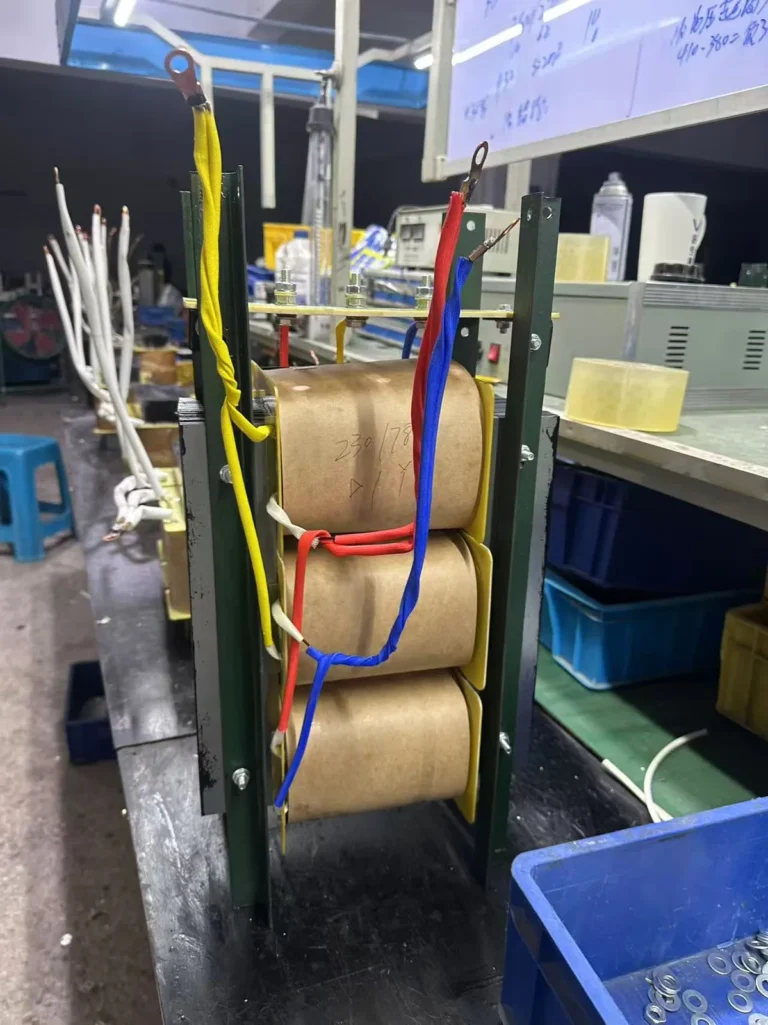
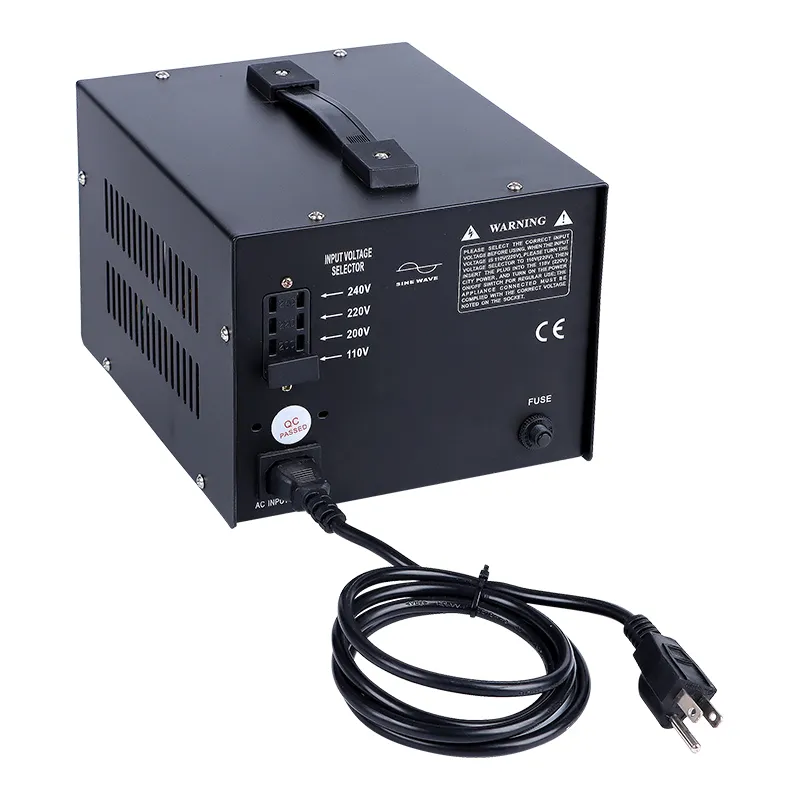
I sit at the factory end, not a trading desk, so I can name the unit leaving the bench. The ST-2000 is our 2000VA step down unit, 230V in to 110V out, with the RCD in the casing. For a Dakar household group or one imported compressor it is the unit I quote most for West Africa, and the ST-1500 covers the smaller single-appliance jobs, mostly fridges.
For the larger loads we turn to the STU range. STU-3000 and STU-5000 step up as well as down, which matters here because a market that imports from North America, Europe and Turkey at once needs to go both ways. The DT-1000VA is our bidirectional automatic unit for offices, reception desks and trolleys where a modest load has to work either way without anyone thinking about it.
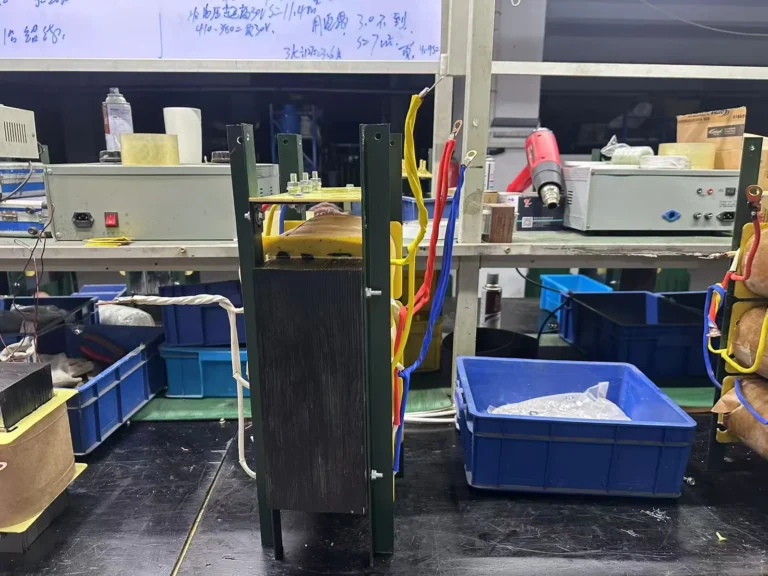
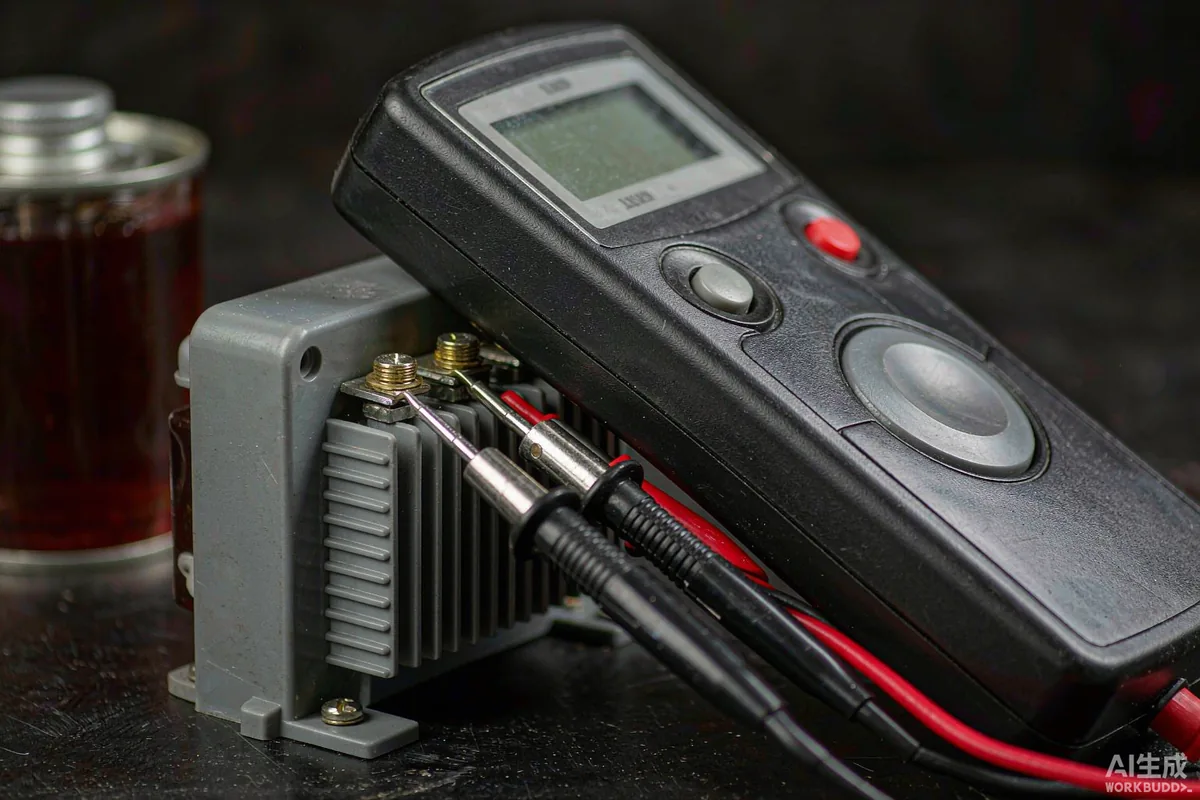
We ship FOB out of Ningbo or Shanghai. Each unit comes with a 12-month warranty. Copper is what we wind with, and we check every unit end to end before it leaves our Yueqing works. With the unit you receive the batch test sheet listing input voltage, loaded output and no-load current, and that paper is what closes any later warranty query. The minimum run is 10 pieces, and the build takes 15 to 25 days, with volume and custom labelling fixing the exact date.
On payment we take T/T at 30 percent upfront and 70 percent on the bill of lading copy, or an at-sight L/C, or Trade Assurance if that fits the buyer. We do not take usance letters of credit, because the gap between shipment and payment on those is too long for a factory to carry on its own books.
Getting an Accurate Size From Your Equipment List
A finished spec is not needed to begin. Send what you can: the equipment list with the wattage off each nameplate, a photo of the nameplate if that is faster, how many machines take a 110V feed, which carry motors or compressors, whether the site also runs a generator, and where the unit will be mounted. From that I can size it, price the quantity and name a ship window, usually the same day.
A couple of pages worth a glance as you write the list. Our West Africa Voltage Guide covers the neighbouring markets with the same 230V, 50Hz supply, so the sizing logic carries across the region. For whether you need to step down, step up or both, the step up & down transformers page explains each arrangement. We also keep voltage guides by country for the rest of the world.
If a rating is unclear, send a photo of the plug and we will work it out. Sizing a step down transformer for Senegal is routine for us, and we would rather spend ten minutes on WhatsApp than have you find out during a hot afternoon that the unit you bought cannot start the freezer.
Frequently Asked Questions
These are the questions Dakar importers and shop owners ask most, with my straight answers underneath.
What voltage and frequency does Senegal use?
Senegal runs on a nominal 230V supply at 50Hz, provided by SENELEC. Wall sockets are mainly Type C, D, E and K, so the transformer outlet must match your appliance. Because the Dakar supply swings through the day, a step down transformer for Senegal such as our ST-2000 needs margin at both voltage ends.
Why does the Dakar voltage swing matter for my 110V appliance?
A transformer passes input changes straight to the output. If 230V drifts to 200V, a fixed-ratio unit gives about 95V out, and a motor at low voltage draws more current and runs hot. Sizing up protects the load. The ST-2000 with margin is the unit I quote most for Senegal homes.
Can I run a 110V freezer on a generator in Senegal?
Yes. A generator produces a near-sine waveform and an iron-core step down transformer for Senegal handles it without electronics in the path. Just note genset regulation is looser than the grid, so sensitive boards benefit from a stabiliser. The STU-3000 on its own circuit suits a freezer plus fan.
Which plug type should my transformer have for Senegal?
Fit the socket your 110V appliance actually uses, not the wall type. Senegal uses Type C, D, E and K on the wall, while your machine may carry a North American plug. We fit the right outlet and can add a Type E lead. The ST-2000 ships with the socket you specify.
How do I order step down transformers for resale in Dakar?
Minimum order is 10 pieces, built and tested in our Yueqing factory, shipping FOB Ningbo or Shanghai to the Port of Dakar. Lead time is 15 to 25 days, with custom French labelling available. A step down transformer for Senegal with your name on the faceplate is a normal request for us.
Tell us what 110V machines you run in Senegal, which have motors or compressors, and whether you have backup power. That is all we need to send a suggested unit, a quantity and a quote, usually the same day, and it heads off a wrong-size order before it leaves.
Or talk to us directly: WhatsApp +86 197 3022 6757 · Email sales@wilmall.com
MOQ 10 pcs · Lead time 15-25 days · FOB Ningbo or Shanghai · 12-month warranty